

Namaste in the Land of Gods (part 3)
Posted by: Maria in June 2025 (1 year, 5 months ago)
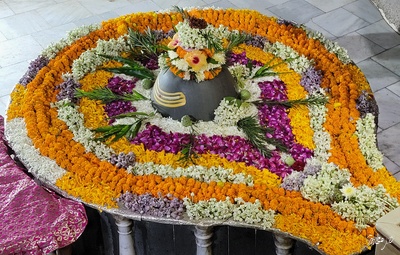
The examples of Hindu traditions that can be explained by science are endless... I was going to learn about many of them "live" during our visits to some of the Hindu temples and ashrams in Uttarakhand. Our first visit on my one-week spiritual journey in India was to a special place for my friend - the Maa Anandamayee Ashram in Haridwar, a one-hour drive away from Dehradun. A holy woman named Maa had founded this ashram many years ago and it was still holding regular prayers and was serving as both a boarding school and a place where people could escape from the hustle and bustle of daily life in search of spirituality. My friend had spent several weeks there but this is an experience you need to be ready for before diving way too deep, and, at this stage, I was still exploring.
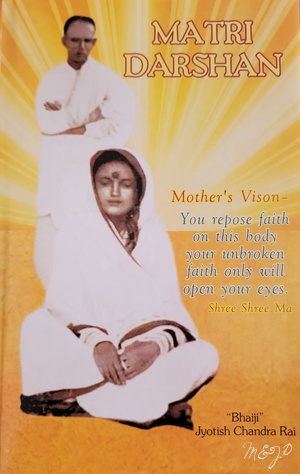
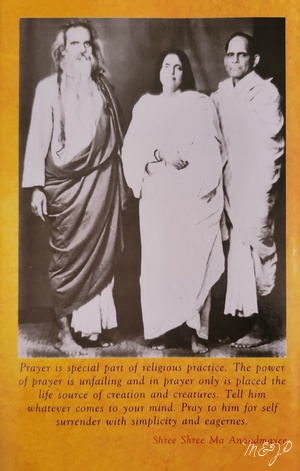
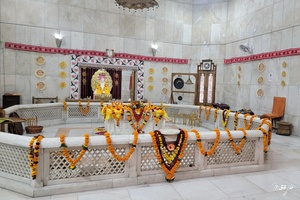
That day we only spent a couple of hours in the ashram and attended the morning prayer at 7am (we had left Dehradun at around 5am…). Sitting cross-legged for so long was pretty hard and I had to stretch my legs a couple of times. Later on, I learnt that you should never point your feet at an altar or a priest in a temple… The prayer was a recital of sacred texts in Sanskrit, so without understanding, I tried to simply listen to them as if they were songs in a foreign language, concentrating on the rhythm. The voice of the lady priest was enchanting and relaxing. The kids from the boarding school were reciting and chanting with her from time to time. Then there was a captivating and transcending concert of several musical instruments and chanting, and the main priest decorated Maa’s grave in the center of the temple with fresh flower garlands and offerings from the devotees. Two young future monks came to each person in the room, carrying candles. I watched what the other two elderly people did - getting some smoke with their hands and placing them on their faces - and repeated the gesture. I believe it symbolised taking the energy and the spirituality with us after the prayer. I also tried to meditate during the prayer, but my attempts that day were not really successful. It felt more like I had simply attended a ritual, instead of immersing myself in one with all my heart and soul. Later on, I was going to learn that every experience, whether good or bad, teaches you a lesson, and I guess that day my lesson was that you do not need to try hard but just let yourself go… When we exited the ashram, a kind monk gave us fruits that I took with one hand. This is where I learnt another lesson - to always give or accept objects with two hands, or if it is really not possible, with the right hand, which is the pure one. Touching people or giving them objects with the left hand, considered unclean, will be considered an insult, which also explains why Indians only eat with the right hand.
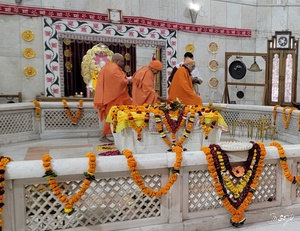
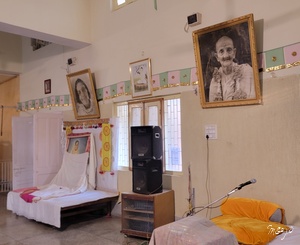
After the prayer in the Maa Ashram, we visited a few Hindu temples in the vicinity, including the beautiful Daksha Mahadev temple dedicated to Shiva. I always wore my black scarf around my head, trying to show respect and blend in with the Hindu devotees.
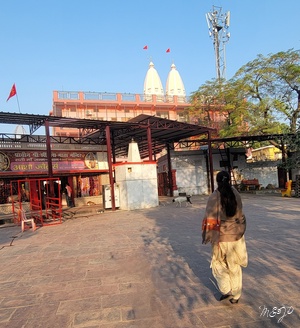
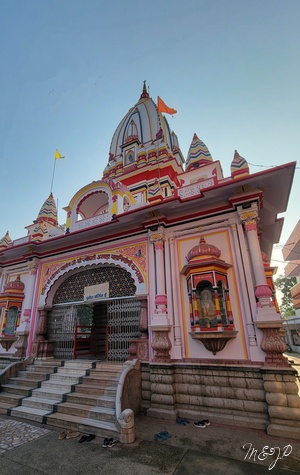
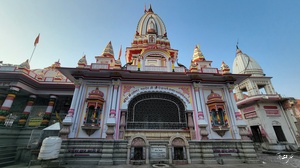
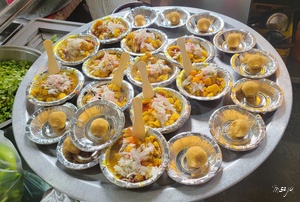
As it was slightly cold outside, we distributed food to those in need and to the holy men praying around the temples.
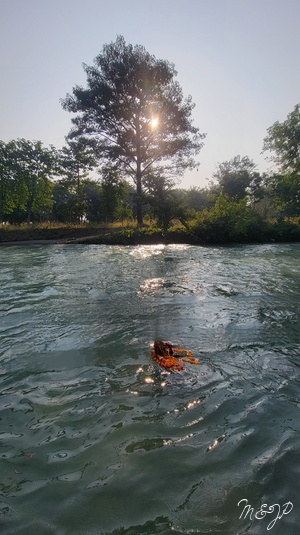
And the icing on the cake! I saw for the first time the Ganga - the most holy of all rivers in India. Even though I did not go into the water, I placed a few drops on my head, as a sign of respect to this river that the Hindu regard as a caring mother and goddess.
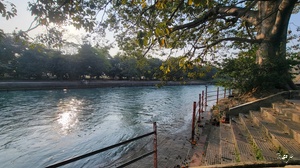
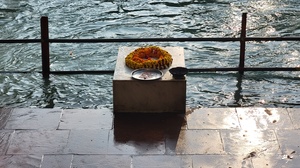
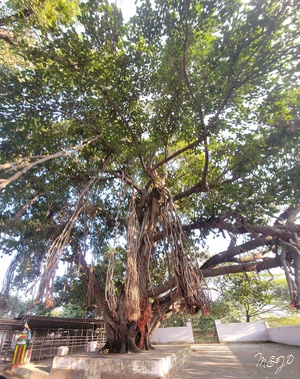
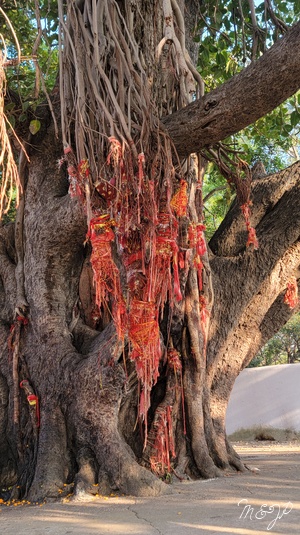
Next to the Ganga, there was a huge Bodhi tree where people had tied red thread bracelets, each symbolising a wish. This species of trees is considered holy for both Hindus and Buddhists - the Buddha is said to have attained enlightenment under one of them, and in the Bhagavad Gita Krishna says that he is the peepal tree - another name for the Bodhi tree.
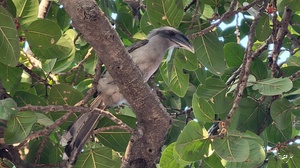
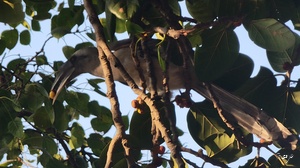
A bunch of gorgeous hornbills were pecking at the tiny figs hanging from it!
The following day we visited the famous city of Rishikesh where the Beatles Ashram is located.
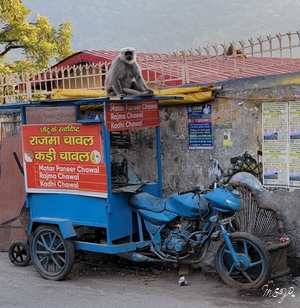
First, we stopped in a local cafe to take in the gorgeous views of the Ganga and the surrounding mountains from above.
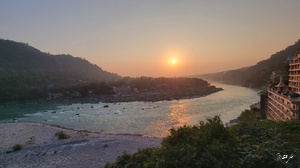
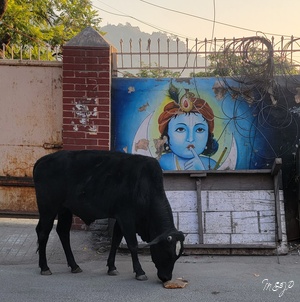
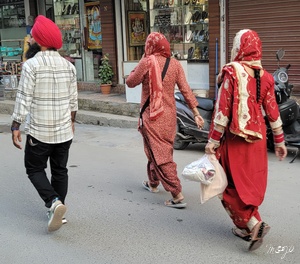
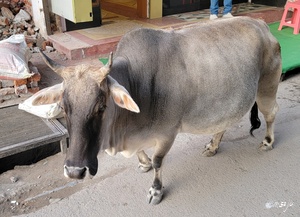
After wandering around the tiny streets of the city full of cute cows, we reached the Ganga.
We sat on a rock next to the river and meditated for a while, focusing on the reflections on the water flowing peacefully downstream.
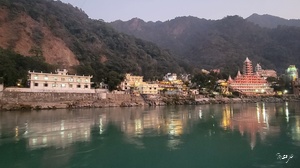
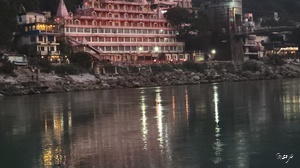
There were many people praying or meditating, sometimes standing in the water…
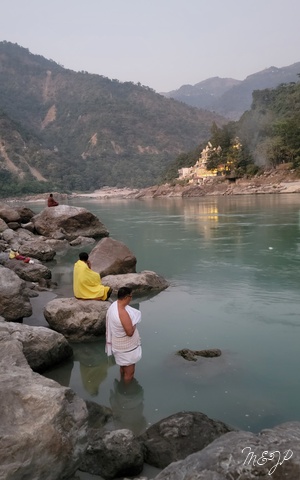
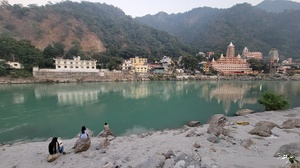
At sunset, we joined the devotees, locals and tourists along the ghats (the steps leading to the river) to attend the Ganga Aarti - a mesmerizing ritual that takes place every evening at the ashrams situated on the banks of the Ganga.
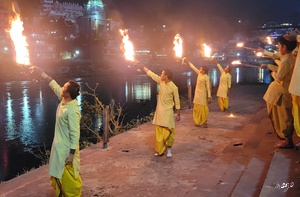
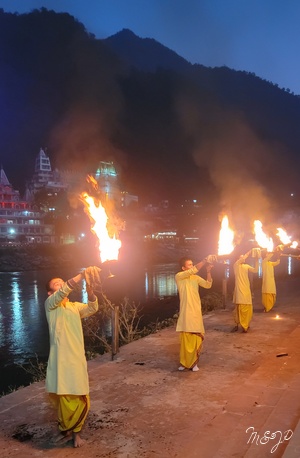
Each ashram has its own ritual, involving the chanting of hymns, the lighting of diyas (or oil lamps) that are circled in a clockwise manner, and rhythmic movements performed by priests, monks and gurus.
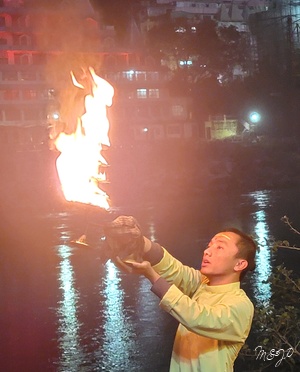
The Ganga Aarti is the most important event related to the holy river. The idea of the ritual is to show gratitude and respect to the divine entity, and the atmosphere during it is serene.
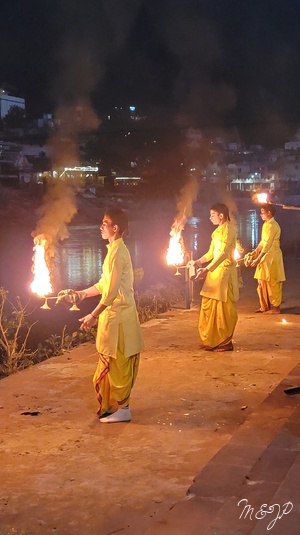
It is believed that participating in this ritual brings blessings and purifies the soul.
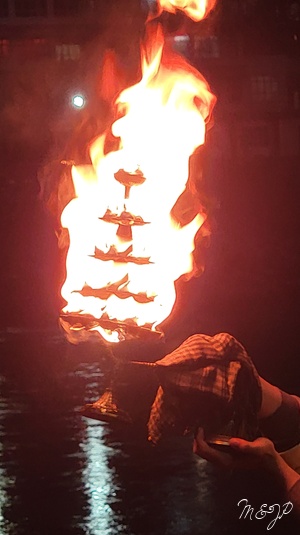
Our third "temple day" was a really special one. We visited Tapkeshwar Mandir - a very local temple in a natural cave dedicated to Lord Shiva, located next to the Yamuna river in Dehradun. I needed some explanations from my friend in order to understand what I was seeing inside this holy place…
Shiva, also known as the Destroyer, is one of the principal deities of Hinduism. When the world becomes evil, he destroys it to make way for beneficial changes. Shiva has many aspects, benevolent as well as fearsome. In benevolent aspects, he is depicted as an omniscient Yogi who lives an ascetic life as well as a householder with his wife Parvati and his two children, Ganesh - the Elephant God, and Kartikeya - the God of War. In his fierce aspects, he is often depicted slaying demons. Shiva is also known as Adiyogi (or the first Yogi), regarded as the patron god of yoga, meditation and arts. Nandi the Bull is Shiva’s sacred animal form, his means of transportation, and his most ardent worshiper. The other attributes of the god are the serpent king around his neck, symbolizing Shiva’s control over fear and death, the adorning crescent moon next to his head, symbolizing time's cyclical nature balancing creation and destruction, the holy river Ganga flowing from his hair, the third eye on his forehead that turns everything in front of it into ashes when opened, the trident as his weapon (similar to the one of the sea god Neptune), and the damaru as his favourite musical instrument.
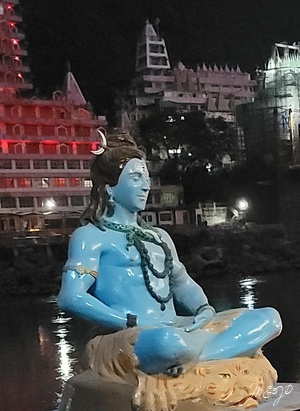
The Supreme Goddess (Devi) is regarded as the equal partner of Shiva and the energy and universal creative power that underlies and sustains all existence (Shakti). Shakti is generally personified as the wife of a specific Hindu god - particularly Shiva, for whom she took forms as Durga, Kali, and Parvati. Also, in Hindu custom, the wife of a man is considered his Shakti - for example, in the epic “Ramayana”, Sita - the wife of Rama - was his Shakti.
Shiva and Shakti are the masculine and feminine principles that are complementary to each other. The male is a static vessel, or pure consciousness, which creates the universe through the female dynamic energy of Shakti, or nature. In temples Shiva is usually represented as a lingam (or a stylized phallic symbol) in the the centre of a lipped, disk-shaped object, the yoni (or the "womb", the "source" or the "vagina"), symbolising the divine feminine force and goddess Shakti. The lingam and the yoni represent the union of Shiva and Shakti, the source of all creation and the balance of the universe. However, the feminine and the masculine are not balanced, which explains why our world is not perfect. If in real life the aesthetics, the expression of the feminine, were as important as the economics, the expression of the masculine, our world would have been balanced.
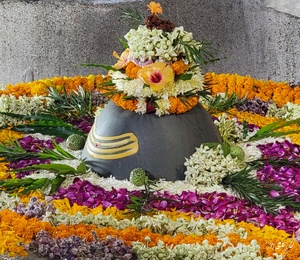
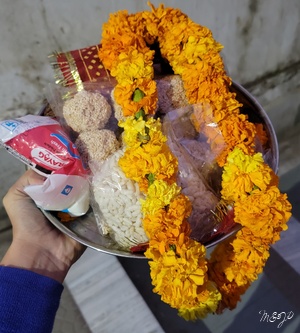
The interior of the Tapkeshwar Mandir Temple was so charming and serene. Touching the cool floor of the cave with our bare feet felt calming and relaxing. When we entered the temple in the evening, we saw in the middle of the main cave the altar with the lingam in the middle of the round disk, symbolising Shiva and his wife Parvati (or Shakti). The altars in temples, like this one, are made from silver, gold or brass because these materials are good conveyors of energy - another scientific side of Hinduism. A few guys were cleaning the cave and my friend told me that they were preparing Shiva for bed… So we waited patiently until they had finished and then, together with the other visitors and devotees, approached the altar to make offerings - pouring milk, Shiva’s favourite drink, on the phallus and wrapping around it the flower garlands we had bought from the street vendors in front of the temple. A little bit further, in another cave, there were rocks symbolising Shiva, his wife Parvati and their son Ganesh. We gave the sweets and remaining flower petals from our offerings package to the priest standing nearby, who put them next to the deity forms and placed red dots on our foreheads. Then we entered the third and last cave of the temple and simply sat down cross-legged, closed our eyes and meditated… Initially, I found this complicated as I felt overwhelmed by the whole ceremonial aspect of our visit. It had been slightly scary trying to mimic what other people were doing in order not to draw attention to myself since I was obviously the only non-Hindu in the temple. But then the coolness of the floor, the sound of dropping water and the strange peacefulness despite the dozens of devotees constantly walking in and out the cave did the trick, and I managed to concentrate on my inner self and ignore the sounds, movements and smells around me…
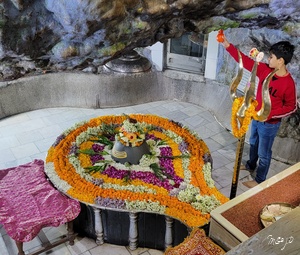
After our meditation, we stopped at the statue of Hanuman - the Monkey God, who is an incarnation of Shiva. My friend said a prayer, and the priest placed another dot on our foreheads and wrapped colourful thread bracelets against evil around our wrists. When we were on the point of exiting the temple, we witnessed a lot of people making a beautiful flower mandala, symbolising the impermanence of life, on the round disk around the lingam and learnt that the evening prayer was going to start soon. So we decided to stay and it was one of the most mesmerising rituals I had ever witnessed. My friend explained that there were three prayers in this temple every single day - at sunrise, at sunset and at dusk, and most of the people helping with the preparations and the puja (prayer) were volunteers. One of them arrived directly from the forest where he had gathered wild flowers, which smelled beautifully the wet soil and the leaves. He was helping create the flower mandala with surprising expertise! If I had to hire florists, I was going to pick, without any hesitation, all these volunteers - they were putting all their heart into it and their skills were outstanding! Different types of flowers are prescribed for different kinds of puja. It took almost an hour to prepare the temple for the ceremony - can you imagine doing that three times a day every day?
When the puja finally started, it was yet another level of wonders! The volunteers were playing different musical instruments, including cymbals, conches and the famous damaru - a two sided drum which has a surprisingly deep and rhythmic sound. Everyone was clapping their hands, while chanting hymns praising Shiva and Shakti and seeking their blessing. The priest lit the fires and placed them on the flowers around Shiva. The rhythm of the chanting and the hand clapping accelerated. The whole experience was uplifting and truly inspiring. The ubiquitous devotion, contentment and joy were genuine and contagious. Even though I did not understand the words of the hymns and prayers, I was clapping my hands and really enjoying the transfixing sounds, increased by the acoustics in the tiny cave. The devotee who had brought the wildflowers from the forest and was relentlessly shaking his damaru in rhythm had closed his eyes and appeared to be in trance, with a beautiful smile on his face. I do not think that it is possible to see anything like that at any daily Catholic or Protestant mass in the Western world… The whole experience felt transcending. At the end of the puja, we approached the priest who placed yet another dot on our foreheads and gave us some sweets to take home - this time I received them with both my hands. I was learning fast!
Later on my friend explained that the main chant was a prayer to Shiva: "You are my mother, You are my father, You are my nearest, dearest friend. You are the beginning, You are the middle, and You are beyond the end. I love You so, You help me see. See You in everyone, see You in me. For I’m in You and You’re in me.". I found the words really beautiful and their significance was eye-opening as well. Hindus, like Buddhists, believe that everything is impermanent. We are all going to die and have to try to avoid attachment - attachment to objects but also attachment to human beings. Instead of concentrating so much love on family members and friends and suffering when they pass away, we can concentrate on loving the source, the creator of all human beings, who will never die. Instead of relying on our relationship with impermanent human beings, we can rely on the creator of these human beings, which will spare us from suffering when we lose the people around us.
Before leaving, we could not miss whispering a wish in the left ear of the statue of Shiva’s bull Nandi, yet another ritual. We also stopped at the statue of Durga - a form of goddess Parvati, Shiva’s wife - in the main cave. In Hindu culture, there are two major festivals celebrated every year, both signifying the victory of good over evil - Diwali or Deepavali, the festival of lights, and the less famous outside of India Navratri, when devotees worship the goddess Durga by wearing clothes in nine different colours with different significance for each of the nine days of the festival. It is believed that doing so brings prosperity, blessings and good luck. The Navratri festival begins with the bright and vibrant orange which signifies energy and happiness, followed by white - a symbol of peace and purity, red for beauty and fearlessness, royal blue considered good for health and wealth, yellow standing for happiness and brightness, green signifying new beginnings and growth, grey standing for the strength of transforming, purple signifying the power of intellect and peace, and finally, on the ninth day, peacock green believed to fulfill the desires of the devotees.
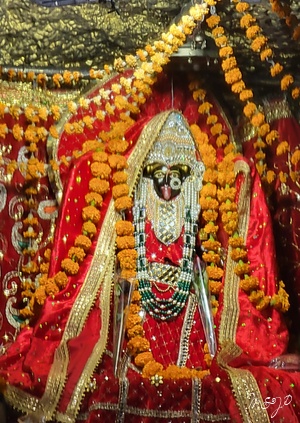
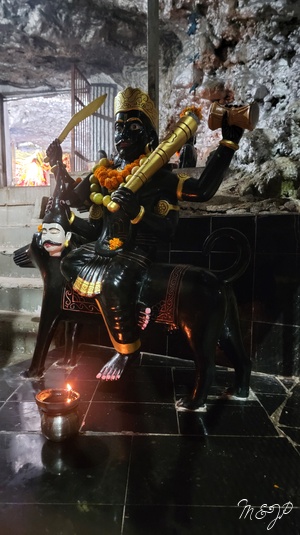
Next to the Tapkeshwar Mandir Temple, there was also a tiny temple dedicated to Kali, the fierce and powerful goddess representing transformation, time, change, and destruction. The altar was beautifully decorated, and the goddess was depicted with four arms and dark in colour. I like the transformation aspect of it as this is what I was in India for - a change and a fresh start!
After all these transforming and transcending experiences, we met a friend for drinks at a local rooftop bar. With our three colourful dots on our foreheads and thread bracelets around our wrists, we were obviously coming directly from a temple, but this seemed perfectly fine! Indians are open minded and you will never be judged! Also, isn’t emotional fulfillment one of the four aims of human life according to Hinduism?
You might think that visiting temples would eventually become boring for anyone, but it was definitely not my case. Each temple, puja and aarti were different and taught me something new about Hinduism and Buddhism. Our fourth "temple day" was actually a visit to a Buddhist monastery in Clement Town - a Tibetan colony in Dehradun.
The 14th Dalai Lama and many Tibetans have sought refuge in India, which explains the existence of many Tibetan colonies in the country.
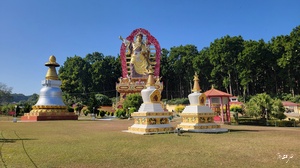
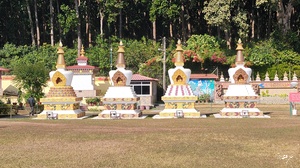
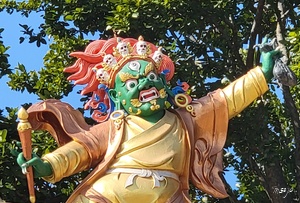
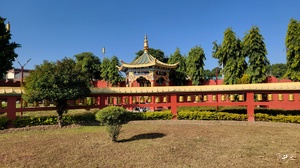
The Mindrolling Monastery that we visited is a Tibetan Buddhist Center boasts the stunning Great Peace Stupa. It is 185 feet tall and 100 square feet wide, which makes it the world's largest stupa.
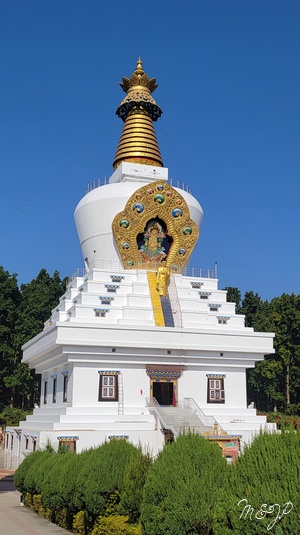
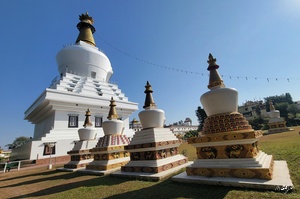
The visit, which started with a friendly chat with a bunch of red-robed monks at the entrance, reminded us of our trip to Tibet a couple of years ago.
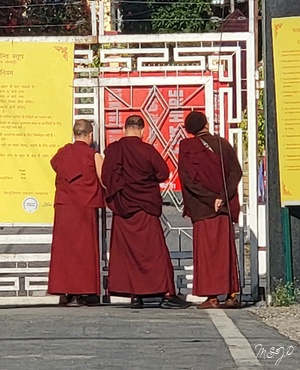
The grounds were very green and peaceful, with hundreds of rainbow prayer flags.
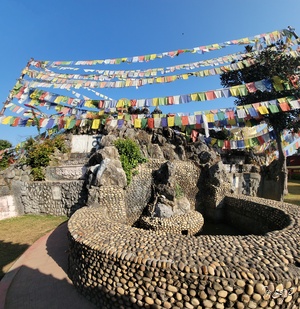
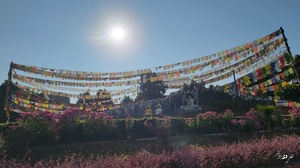
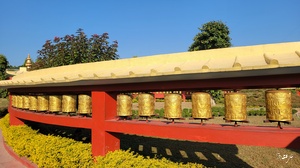
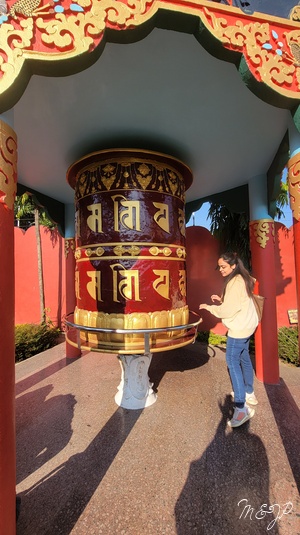
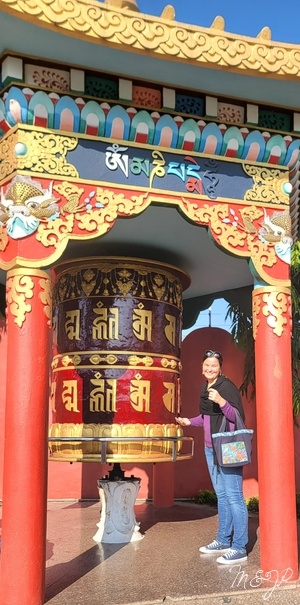
We turned the hundreds of golden prayer wheels, activating the blessing of the mantras in them.
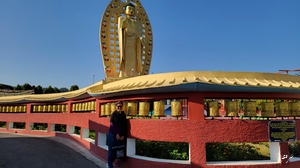
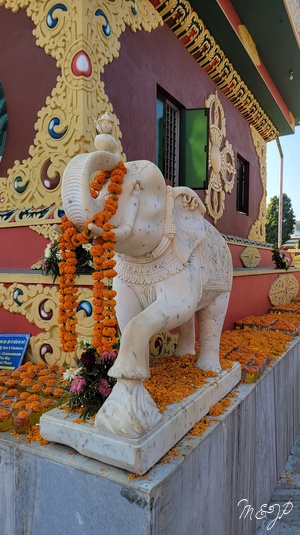
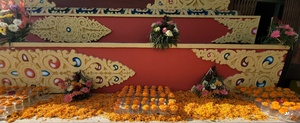
We also admired the ubiquitous decorations of bright orange marigold flowers, the colourful paintings in the temples, the impressive giant statues of the Buddha and Guru Rinpoche - the guru whose statues are everywhere in Bhutan and in Tibet, the signs with wisdoms along the path, and the dazzling white stupas.
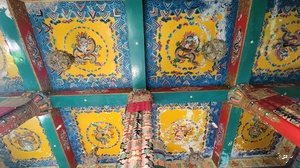
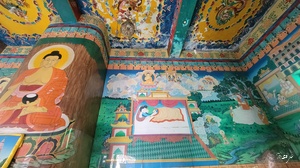
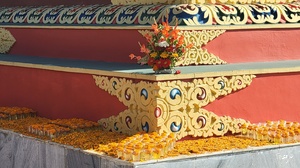
Finally, we removed our shoes to enter the Great Peace Stupa with gorgeous mural paintings depicting Buddhist stories. There were even some butter sculptures next to the Buddha statue inside the stupa!
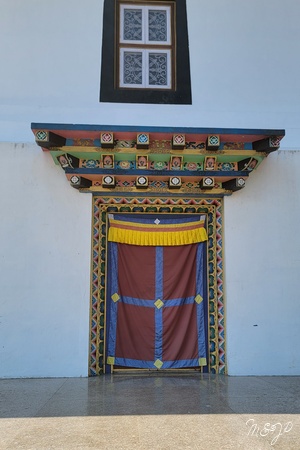
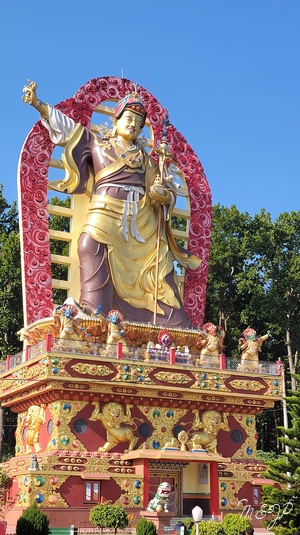
For our last "temple day" (or meditation day if you would prefer), we returned to Haridwar. In order to reach the magnificent Chandi Devi Temple on the top of the southernmost mountain chain of the Himalayas, we had to hop on a cable car, offering scenic views of the Ganga and Haridwar. It is one of three places in the city revered by devotees as Peethas, or places of worship where desires get fulfilled, the other two being the nearby Mansa Devi Temple and Maya Devi Temple.
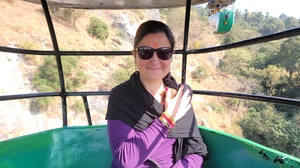
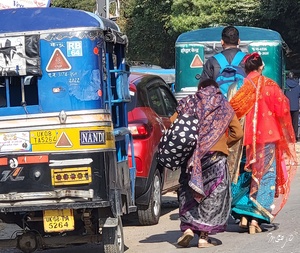
The goddess Chandi is a form of goddess Parvati, Shiva’s wife. We removed our shoes, bought offerings for the goddess (everything in the box was supposed to make her beautiful, from the sparkling piece of red cloth to the bangles and the henna for the hands…), and entered the temple.
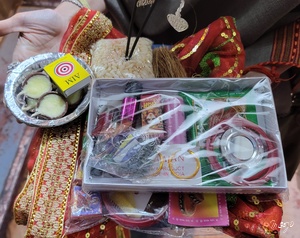
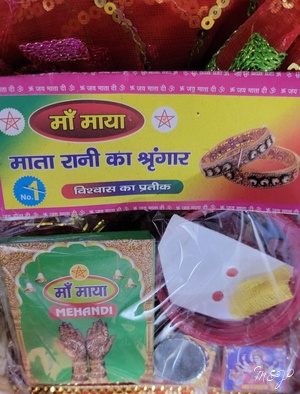
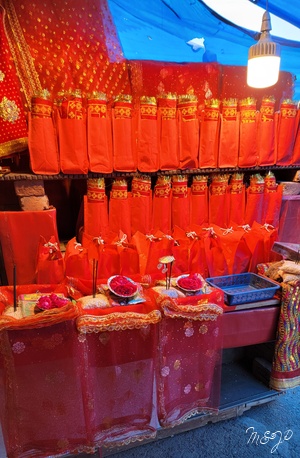
We gave our offerings to the priests, made a wish, and my friend said a prayer. The priests also gave us a few bangles as a gift from the goddess.
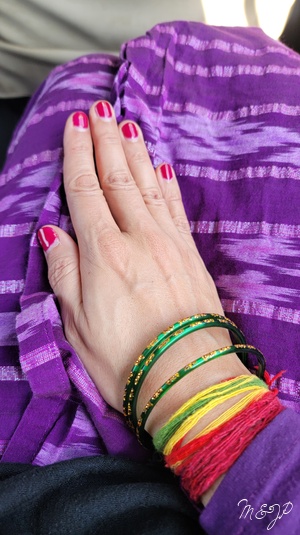
After that and as always, we sat down in front of the statue of the goddess and closed our eyes for meditation. I was trying to concentrate on my breathing and my inner self when suddenly I felt my eyes filling up with tears and a strange emotion getting hold of my chest. My friend told me that it was normal to cry and the goddess usually brought such emotions into those who came to see her. Or maybe I was simply too tired from this intense emotional journey, who knows…
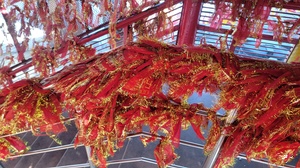
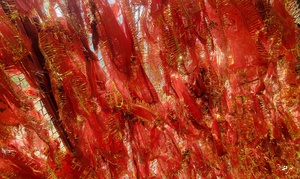
On the same day we also visited the nearby Anjani Temple, dedicated to the goddess Anjani - Hanuman’s mother, worshipped as a family deity. In the temple, we came across statues of Anjani Devi holding baby Hanuman in her lap, and a separate Hanuman statue. Hanuman is also known as the Monkey God as his shape is half-monkey, half-human. The reason for that is that his mother Anjani once angered a sage who cursed her to be transformed into a monkey. When the nymph begged for pardon, the sage calmed down and said that she would regain her original form after she bore a son who would win great renown. Hanuman’s father is the wind god Vayu who gave him the ability to fly. In the “Ramayana” - one of the most important epic stories from ancient India - Hanuman is the most devoted follower of the legendary prince Rama, and uses his special powers and qualities to help the latter rescue his wife, Sita, kidnapped by the demon King Ravana. This is why the Monkey God is known as the slayer of demons, evil and negative energies and worshipped by people who want to get rid of negative influences, such as evil spirits and ill-intentioned humans. The priest next to the statue of Hanuman in the Anjani Temple said a prayer for us and, after asking whether we were married, added a prayer for my husband. It was beautiful to watch him lighting together the two candles, symbolising our couple. The priest also gave me a thread bracelet to tie around my husband’s wrist and a small lucky charm made from red thread to bring home for prosperity. Whether you believe in all these rituals or not, it will still be a special moment! The funny part of the experience was when the priest asked about our names and thought that I, and not my friend, had the Indian name and was actually Indian. It had happened many times during this trip - people had randomly started speaking to me in Hindi, especially in the temples where I wore a long skirt and a scarf around my head!
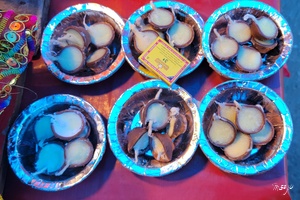
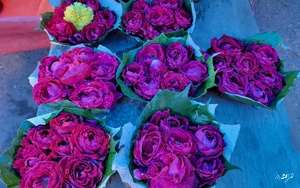
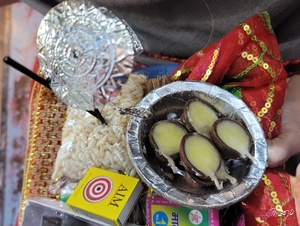
The third temple we visited on that day was a tiny but special one - the 11th-century Maya Devi Temple. The inner shrine consists of statues of goddesses Maya in the centre, Kali on the left and Kamakhya on the right, who are all incarnations of Shakti. Maya is the three-headed and four-armed deity of Haridwar. Kamakhya is regarded as the goddess of desire. There are also two other goddesses present in the inner shrine who are forms of Shakti as well, but they are not visible. The temple is also considered special for another reason. It is believed that Sati, the first divine consort of Lord Shiva (the other one being Parvati, who was Sati's reincarnation after her death), sacrificed her life because of her father's insulting demeanor towards her husband. Lord Shiva got furious to know that his consort had died to keep his honor and carried Sati’s body, making a tour of the entire universe. During his trip, different parts of Sati fell in various corners of the world. It is believed that the naval and heart of Sati were found in the very place where the Maya Devi Temple stands today in Haridwar. Since this is one of the three temples where desires get fulfilled, my friend and I meditated there for a while and received yet another dot on our foreheads and another thread bracelet on our wrist!
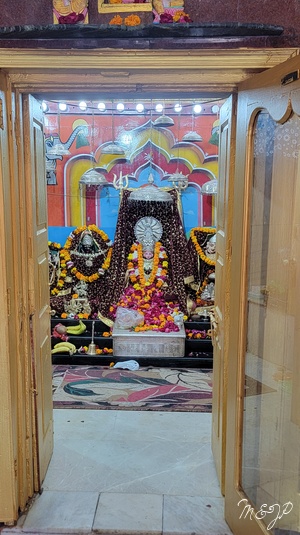
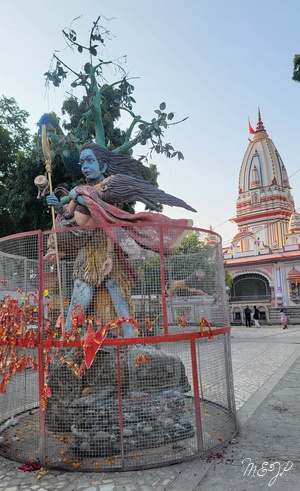
After visiting so many temples, it became easier and more familiar to buy flowers and sweets for offerings, remove my shoes, pay my respects to the deities by joining my palms and slightly bending my head, light a candle, hold out my hand for a priest to tie a thread bracelet around my wrist, sit cross-legged in front of a deity, close my eyes and meditate, and let another priest place a dot between my eyes… Even though I was not putting any religious beliefs in these gestures, there was something so calming and positive in the sequence of rituals. The smells of the incense and the flowers, the sounds of the ubiquitous water next to most temples, the chanting and the music, the lights of the candles… It felt like a giant jigsaw puzzle had fallen in place to help me concentrate on myself and start this journey of self-awareness, peace and internal happiness.
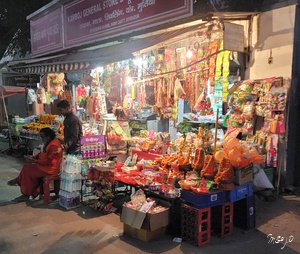
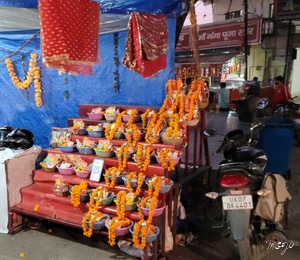
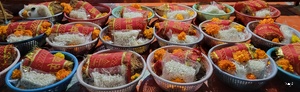
You might ask why India? After all, one can meditate anywhere in the world. The only thing you need to do is focus, ignore the internal and external noises, and find inner peace. Well, like my friend said, it is not the same to meditate in Europe and in India. And she went even further - it is not the same to meditate in Delhi and in Dehradun, the Land of Gods… In India, you can feel the spirituality not only in the temples, but everywhere, even in the craziness of the streets and the colourful markets.
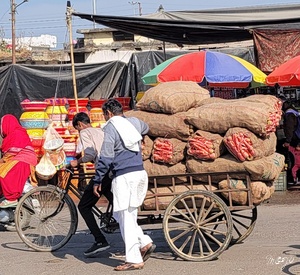
There you do not have much choice but to start focusing, concentrating and meditating. Not only because your sanity simply depends on it, but also because you will be able to feel the omnipresent energy and spirituality with every single cell, atom and vibe of your body, mind and soul. In order to start this journey of self-awareness though, you need to be in a special mindset. It is only when you have hit rock bottom and are up against the wall that you can realise the value of spirituality. When you are at your lowest and there is nothing you can do, you accept, like Draupadi, that everything is only divine intervention and time is an illusion. You will not have any other choice but to surrender and start your spiritual journey.
While you can meditate by simply relaxing your body in a quiet space (if this is enough for you, you are truly a genius), praying (this method requires genuine and fervent devotion), focusing on a single point as a way of staying present, after either closing your eyes or keeping them open (this can be a color, a shape, a wish, an object, a noise, a scent, something in your imagination, your third eye or the flame of a candle) or, the easiest way for me, breathing.
However, the best way to meditate in my opinion is a combination of relaxing your body in a comfortable position (I like to sit cross-legged on the floor) in a quiet space, gently closing your eyes, focusing on a body part like your third eye, and breathing (starting with a few deep breaths to relax your body and mind - breathe in deeply through your nose and slowly exhale through your mouth). Your breath should be flawless - you do not need to control it, but simply let it be. The method of counting the number of times you inhale and exhale is a great way to keep you focused as well. The whole purpose of mediation is to stay present. The thoughts about the future and the past will constantly pop up in your mind and you should not fight them, just acknowledge them and focus on the point you have chosen or simply on your breath.
Breathing is the fuel of our body, but there are different ways of doing it depending on the moment of your day or even your life. For example breathing during meditation or shavasana is different from breathing during your active yoga practice. Also, when you are stressed, you should try to breathe through your stomach and not through your chest, because the time for the breath to reach your stomach from your nose and mouth is longer, and therefore helps you relax. The way you breathe is also one of the most important things you need to master during your yoga practice. If your breathing is not correct, you are simply working out, but definitely not doing yoga. My trip to India was the moment when, after more than 10 years practising yoga in Singapore, Hong Kong and the US, I finally learnt, thanks to my Indian yoga teacher Vijay, how to breathe, connect the breathing to the yoga poses in order to make them correctly, and therefore take all the benefit from my yoga practice! He helped me break the pattern of bad posture, align my body and understand what my health issue was and how to work on it.
The third and last healing element of my retreat in the East was going to be the breathing, or the yoga practice with my amazing Indian yogi friend and the best yoga teacher in the world…
Disclaimer: This article represents the understanding of the author during a trip to India. It does not contain any dietary, health or other recommendations. While most of the information provided is based on verified sources, the author shall not be responsible for any interpretation made from the content of the present article.

You like what you read?
Explore and learn more about India !!!
-
 P for Paradise and Provence (part 2)
Stunning nature - You cannot leave Marseille without hiking to … -
 P for Paradise and Provence (part 1)
France used to be divided into historical regions, which do … -
 The Valley of Roses and Kings (part 2) The Valley of Kings
The Valley of Roses is famous not only for its … -
 The Valley of Roses and Kings (part 1) The Valley of Roses
Out of all the flowers in the world the rose … -
 In the heart of the Silk Road (part 4) Khiva and the Desert Castles
Khiva - It took us 6 hours, almost a whole … -
 In the heart of the Silk Road (part 3) Bukhara
Bukhara - While Tashkent is a modern city with some … -
 In the heart of the Silk Road (part 2) Samarkand
Samarkand - No name is so evocative of the Silk … -
 In the heart of the Silk Road (part 1) Tashkent
The Great Wall of China, Machu Picchu, the Pyramids of … -
 The Land of Giants at the End of the World (part 2)
We crossed for the third time the border between Argentina … -
 The Land of Giants at the End of the World (part 1)
No visitors come back from Antarctica in the same state … -
 A Vitamin Sea Christmas in the Mediterranean
Human beings are full of contradictions! When we used to … -
 Spring Colours in the Kingdom of the West (part 6) Morocco is yellow
Morocco is yellow - Besides the yellow hues of the … -
 Spring Colours in the Kingdom of the West (part 5) Morocco is red
Morocco is red - Besides the red hues of the … -
 Spring Colours in the Kingdom of the West (part 4) Morocco is orange
Morocco is orange - Our first encounter with the legendary … -
 Spring Colours in the Kingdom of the West (part 3) Morocco is green
Morocco is green - The Rif Mountains east of Tangier, …
