

The Land of Giants at the End of the World (part 1)
Posted by: Maria in January 2026 (9 months, 3 weeks ago)
No visitors come back from Antarctica in the same state of mind as on the day of their departure. The surreal experience in this other world on Our Small Planet changed us as well. Probably the most accurate description for the way we felt on our return from the Seventh Continent was gobsmacked, thunderstruck, speechless, or something along these lines… You get the picture! And somehow, in the back of our heads, we wanted the magic of our three-week Antarctica cruise to last a little bit longer, even though we had some doubts as to whether any place on Earth was going to bring us any excitement close to what we had experienced in the Great White South. So, we decided to extend our travel with a 4WD campervan road trip through the wilderness of another place that had made us dream for years - Patagonia! It did not disappoint at all and was exactly what we needed before going back to civilization.
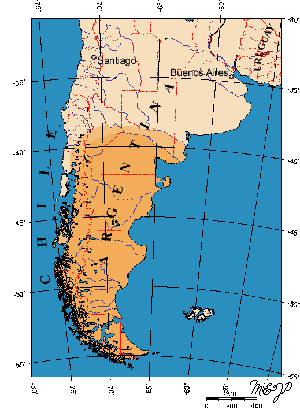
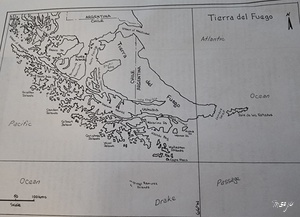
Patagonia is not a country or a state, but the southernmost region of South America, stretching between the Colorado River (Río Colorado) in Argentina to the north, the Drake Passage to the south, the Pacific Ocean to the west and the Atlantic Ocean to the east. This huge territory of about 1,043,076 sq km (402,734 sq mi), or roughly the size of the combined areas of California and Texas in the United States, is shared between two countries - Argentina and Chile. The region, which comprises the southern section of the Andes Mountains and countless rivers, lakes, fjords, lagoons, forests and glaciers, is home to some of the most stunning and pristine national parks in the world. If you are an outdoor enthusiast who loves wilderness, hiking and wildlife watching, this is your place, provided that you do not underestimate its size or miscalculate the season of your visit!
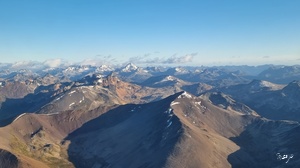
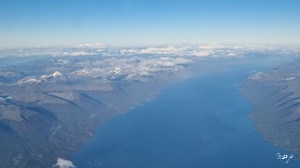
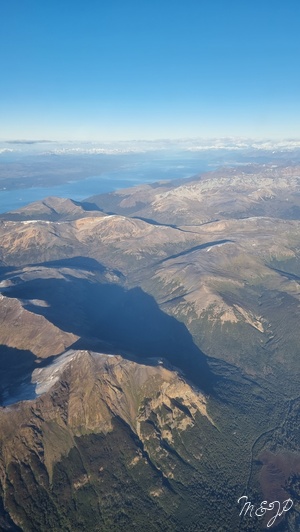
The best season for a trip to Patagonia is undeniably the southern hemisphere's summer from November through April, when days are longer and warmer (except the high season, and therefore crowded months, of January and February), and you should spend at least two weeks there (this is the bare minimum!). Also, Argentina’s capital Buenos Aires (Patagonia’s primary gateway) or Chile’s capital Santiago de Chile, depending on where your international flight connects with the domestic one to Patagonia, should be part of the trip, and are worth a few additional days. Coming from Europe, we flew to Ushuaia through Buenos Aires and, after the end of our Patagonia road trip, spent four days exploring the capital city, as well as another day for a delightful day trip to the town of Colonia del Sacramento in Uruguay.
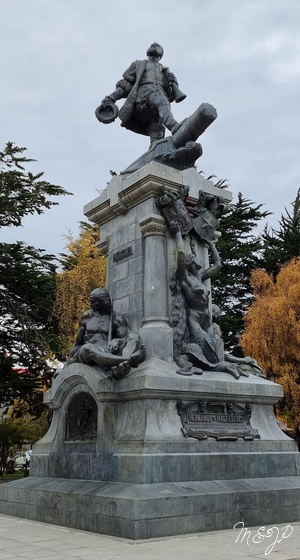
The name "Patagonia" comes from the Portuguese word "patagão" (or the Spanish word patagón), used in 1520 by the Portuguese explorer Ferdinand Magellan - the leader of the first European expedition into the area - to describe the native tribes of the region. According to the several hypotheses for the use of this word, Magellan might have associated the local tall people he met to a giant fictional character named “Patagon” from an early 16th-century popular Spanish cavalry novel, or specifically referred to their big feet ("pata" meaning "foot" in Portuguese/Spanish) and named their land "Patagonia" or "The Land of the Big Feet". There were many more reports of these huge natives from several other explorers and sailors over the years. In 1569, Francis Drake’s ship captain mentioned meeting "huge natives, of '7 foote and a half'" (7.5 ft or more than 2.2 m). In 1834, Charles Darwin wrote in his diary during the Second Voyage of HMS Beagle that "During our previous visit (in January), we had an interview at Cape Gregory with the famous so-called gigantic Patagonians, who gave us a cordial reception. Their height appears greater than it really is, from their large guanaco mantles, their long flowing hair, and general figure: on an average, their height is about six feet (1.8 m), with some men taller and only a few shorter; and the women are also tall; altogether they are certainly the tallest race which we anywhere saw.". Early maps of the New World sometimes labelled the area "regio gigantum" ("region of giants"), and the name, as well as the mythical perception, stuck that this was a Land of Giants!
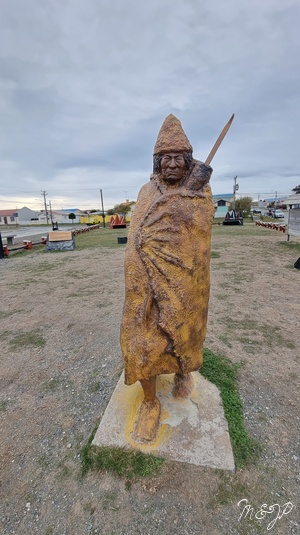
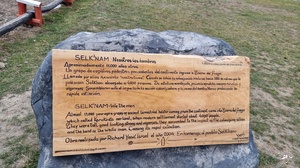
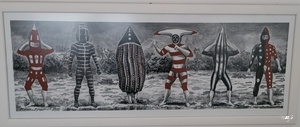
The people Magellan called "Patagonians" are now believed to have been the Tehuelche - one of the several indigenous tribes inhabiting the region when European explorers first arrived - who tended to be taller than the Europeans of the time, but definitely not giants. The main indigenous people of Patagonia also included the Kaweskar, the Yamana, the Mapuche and the Selk'nam. All these tribes mostly lived off hunting guanacos and rheas, fishing and gathering. They had perfectly adapted to the cold climate of Patagonia by extensively using fire on land and in the center of canoes while traveling the waterways, wearing animal furs or, for those who wore little to no clothing, covering their bodies within animal fats and oils (such as seal grease), and having a high-protein, high-fat diet, rich in game like guanaco and marine mammals. However, introduced European diseases, human zoos, scientific studies, forced labour, sheep ranching causing the displacement of the guanacos and rheas on which their livelihood depended, cultural suppression, and outright extermination had a devastating effect on their already small numbers and unique languages and traditions. While both Argentina and Chile are mainly a potpourri of European nationalities, there are still indigenous people living in Patagonia, even though some tribes or languages are almost extinct. We found some traces of their culture in the pieces of artwork sold in one of the tiny souvenir shops in Punta Arenas in Chile. One of them depicted men wearing elaborate body paint and masks, representing various spirits during the Selk'nam people's Hain initiation ceremony, when young men were initiated into adulthood.
Patagonia is also known as the End of the World (or el Fin del Mundo), referring to Chile being the southernmost country and Ushuaia in Argentina being the southernmost city in the world (the title is challenged by the Chilean Puerto Williams though, but it is disputable whether the latter is a city or a village). The port of Ushuaia is also the final sign of civilization seen by most Antarctica-bound ships and travellers! In these vast and deserted lands, the feeling of being alone and in the middle of nowhere will be your constant companion, and it will even intensify once you start driving on The End of the World Route (or Ruta del Fin del Mundo) in Chile - the southernmost highway in the world with Ushuaia as its terminus, or riding the Train of the End of the World (or El Tren del Fin del Mundo) - the southernmost functioning railway in the world from Ushuaia to the Tierra del Fuego National Park in Argentina.
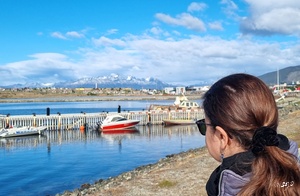
Ushuaia (meaning "deep bay" in the Yamana language) has also been nicknamed "the Argentinian gateway to Antarctica", and was the starting point of both our cruise to the Seventh Continent and our Patagonia road trip after we came back from the Great White South. The city is located in a wide bay on the southern coast of Isla Grande de Tierra del Fuego - the main island of the Tierra del Fuego archipelago (or “Land of Fire” because of the many fires for warmth and signaling the first European explorers observed when approaching the coastline). The group of islands is located off the southernmost tip of the South American continent across the Strait of Magellan, is split between Chile and Argentina and includes the infamous Cape Horn in Chile - the north edge of the also notorious Drake Passage, the treacherous and rough strait between South America and Antarctica. The views of the Andes Mountains to the north and of the Beagle Channel to the south from Ushuaia are simply stunning.
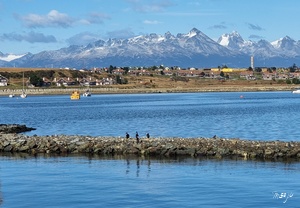
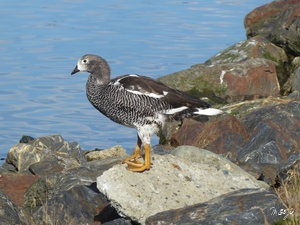
Also, even though you are not hopping on an Antarctica cruise, seeing the ships to the White Continent in the city’s harbour is an exciting experience on its own, and you can even hop on one of the Beagle Channel cruises instead!
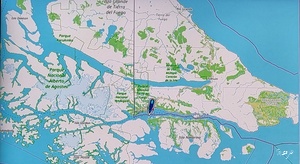
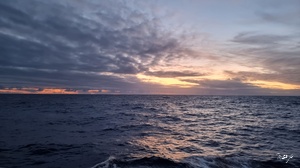
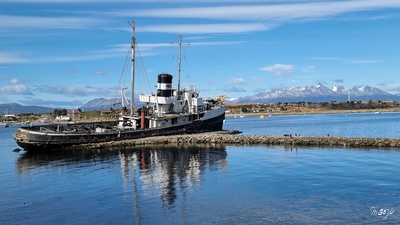
While strolling along the harbour boardwalk, you cannot miss either the famous and picturesque shipwreck of the St. Christopher - a WWII rescue tug beached in 1957, or the iconic End of the World and Ushuaia Letters signs.
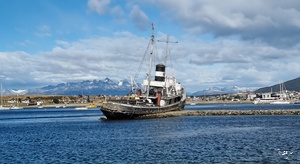
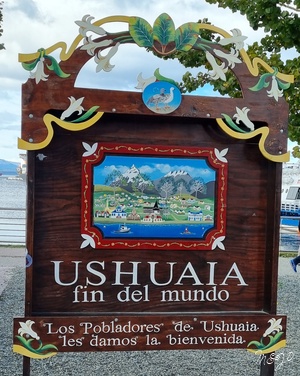
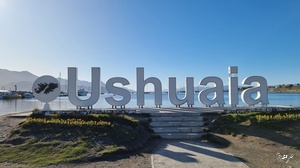
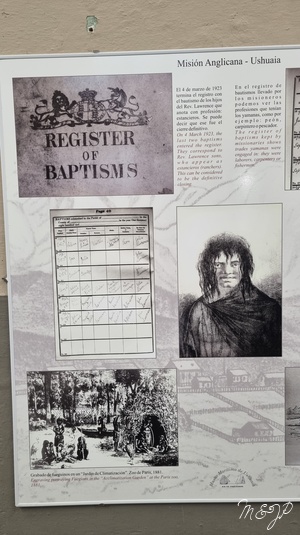
Ushuaia’s history is fascinating as well. While the Europeans first explored the Tierra del Fuego islands during Ferdinand Magellan's expedition of 1520, the earliest-known human settlement in the region dates to c. 8,000 BC. Ushuaia itself was founded informally by British missionaries in 1870. Not long after that, Argentina, alarmed by the British presence, moved to establish its own authority there with a penal colony for its most infamous and dangerous criminals and political enemies, modeled after the one in Tasmania in Australia. Escape from there was similarly difficult because of its geographical isolation, and the prisoners also became forced colonists, spending much of their time building the town, as well as the roads, the bridges and even the railway around. After the prison closed in 1947, the Argentinian government turned the city into a naval base to support the country’s Antarctic claims. Later, the former prison was converted into the current Museo Marítimo de Ushuaia (the Ushuaia Maritime Museum). The visit to this iconic building is a must-do, and there is quite a lot to see! The museum is the perfect place to learn more about the city’s history and inhabitants, from the indigenous people to the European explorers, missionaries, ranchers, gold prospectors, smugglers, sea lion hunters and inmates, but also about its nature and art.
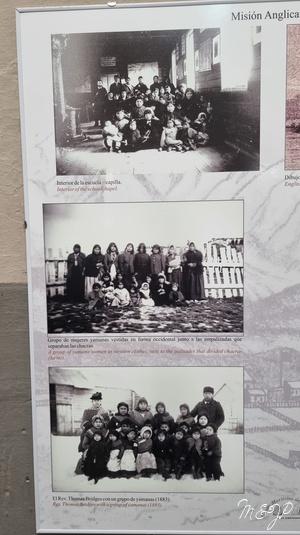
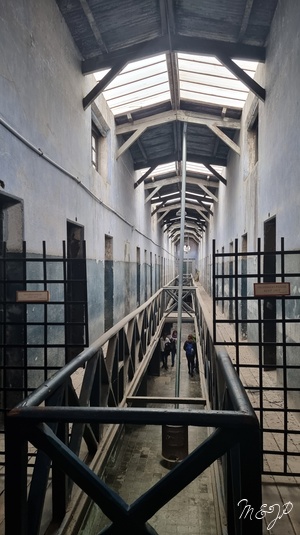
You can walk the narrow corridors and peer into the cells of the prisoners. Some of them achieved great notoriety, such as the serial killer Mateo Banks, aka "The Mystic", who killed eight people - three of his brothers, his sister-in-law, two nieces and two workers, Cayetano Santos Godino, aka "El Petiso Orejudo" ("Big-Eared Short Man"), who at the age of 16 was responsible for the murder of four children, the attempted murder of seven other children, and seven counts of arson, and the Russian anarchist Simon Radowitsky, who assassinated Buenos Aires police chief Ramón Lorenzo Falcón.

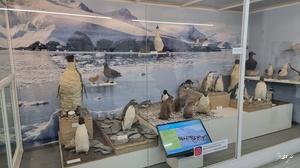
The museum also illustrates the maritime history of the region and of Antarctica with the reconstruction of a Yamana bark canoe and a collection of scale models of ships, including Magellan’s galleon Trinidad, the legendary Beagle, the Norwegian Roald Amundsen’s Fram (whose expedition was the first to reach the South Pole on 14 December 1911), the British Robert Scott’s Discovery (whose expedition reached the South Pole less than five weeks after Amundsen's), the British Sir Ernest Shackleton’s Endurance and the French Jean-Baptiste Charcot’s Le Français and Pourquoi-Pas. The museum also contains marine art and natural history exhibits, including those of all types of penguins you can come across in Patagonia and Antarctica.
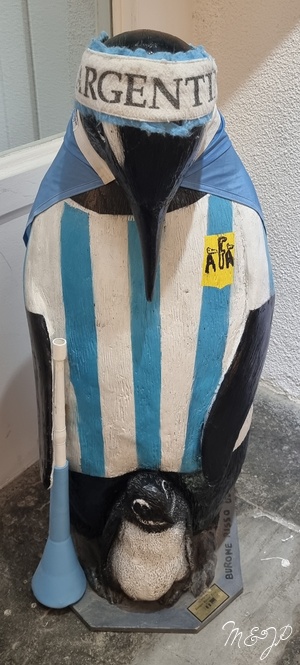
Besides its former prison, the bustling city of Ushuaia boasts many other historic buildings, including the cute colourful churches of Iglesia de la Merced, built in 1903, and Iglesia parroquial de Ushuaia, built in 1898.
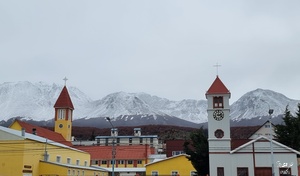
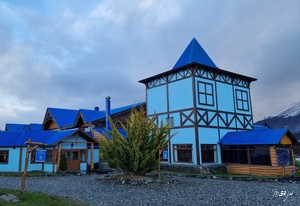
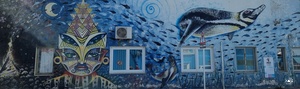
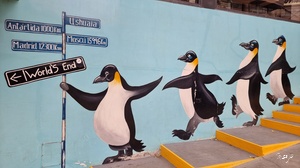
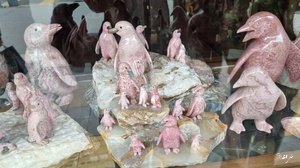
There is also lots of art, and in particular street art, with tons of penguins and other marine life, of course!
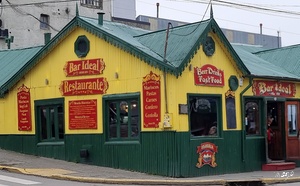
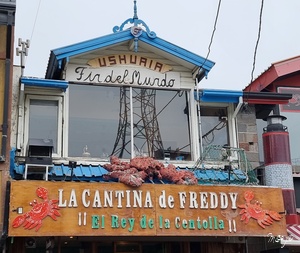
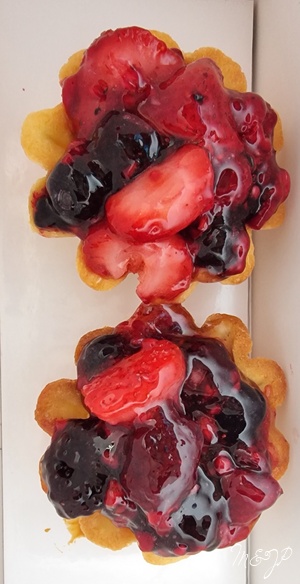
Finally, you cannot miss Ushuaia’s culinary temptations, from popular family restaurant chains such as Tante Sara, where you can try some of the delicious Argentinian meat, to local institutions such as Bar Ideal - the oldest bar in the city, La Cantina Fueguina de Freddy - famous for their hot king crab, and Ramos Generales El Almacén - a historic restaurant in a warehouse built in 1906 and filled with old objects, and known for its Patagonian dishes and homemade pastries. Their highlight is the Patagonian Fruits Pie, the most awesome berries cake ever, which goes perfectly well with mate - the slightly bitter and caffeine-rich infused herbal drink, made by soaking dried yerba mate leaves in hot water and quite similar in taste to the Japanese matcha. Also similar to matcha, mate is more than just a drink - it is an important social bonding experience and part of the local culture!
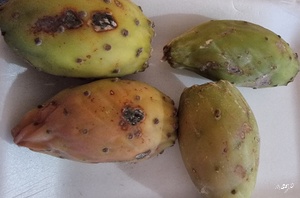
For those who do not have a sweet tooth, you can pick for your dessert a few prickly pears from one of the local grocery shops. They are delicious!
We saw Ushuaia and its jaw-dropping surroundings during three different seasons - in summer at the beginning of March when we arrived for our Antarctica cruise, in autumn at mid-April when we came back and set off for our road trip throughout Patagonia, and in winter at the end of April when we came back again before hopping on a plane back to Buenos Aires.
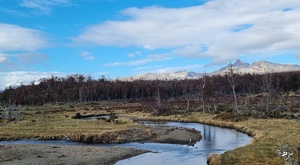
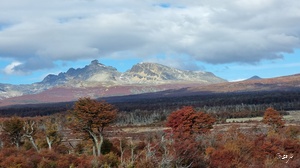
While the landscapes were different each time, they were equally spectacular…
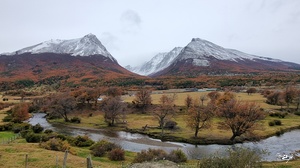
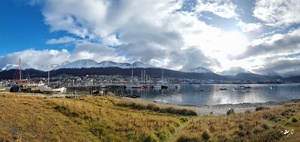
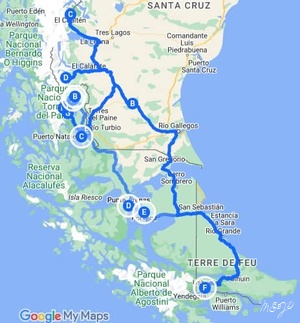
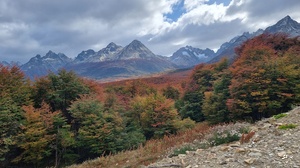
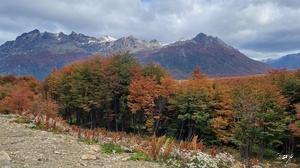
Immediately after having disembarked from the Antarctica ship, we picked up our 4WD campervan, which was actually a camper cabin mounted on a pickup truck designed for off-road trips, and headed north. The beginning of our road trip was full of breathtaking autumn colours in the forests around Ushuaia…
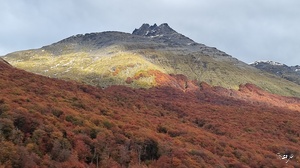
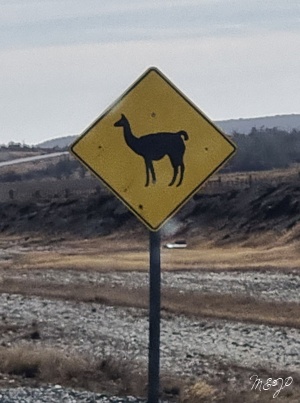
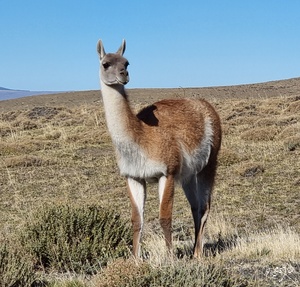
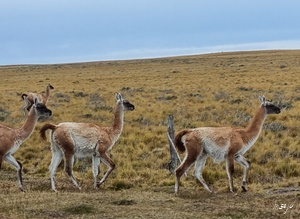
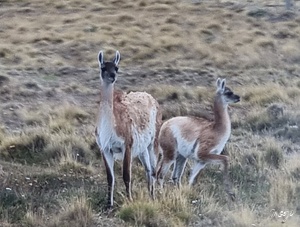
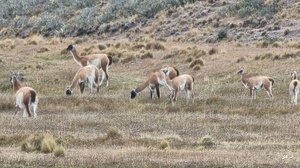
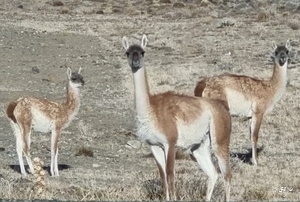
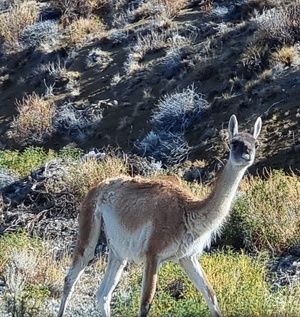
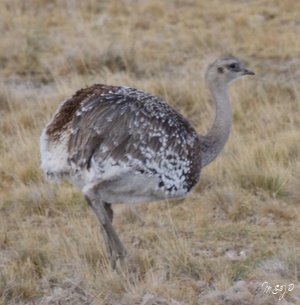
We also saw for the first time some rheas - the South American cousins of the Australian emus, and lots of cute guanacos - one of two wild South American camelids (yes, they are from the same family as the camels), the other species being the vicuñas. The similarly looking llamas and alpacas from the same family are actually domesticated animals.
Our first night in our new home for the next two weeks was in Río Grande (or "Big River"), the industrial capital of the Tierra del Fuego Province in Argentina, on the northeastern coast of Isla Grande de Tierra del Fuego.
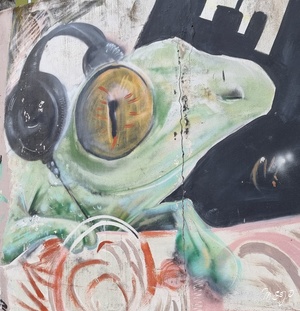
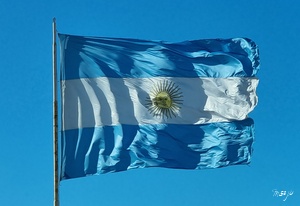
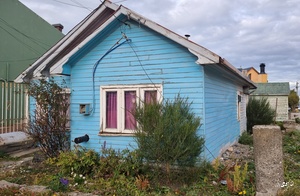
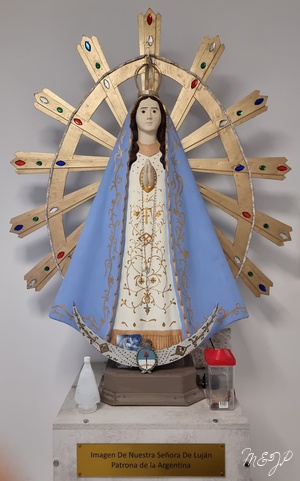
After enjoying a juicy steak at the local Tante Sara restaurant, we went for a pleasant walk around the city, which featured colourful street art and the light (or sky) blue colour (or "celeste") present everywhere, from the Argentinian flag and the Argentinian patron saint Our Lady of Luján (Nuestra Señora de Luján), to many houses and buildings, including the local banks!
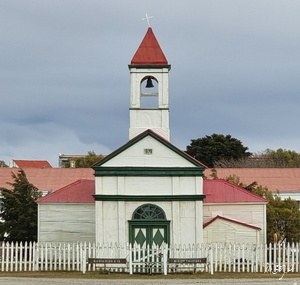
About ten minutes away from the city center, the cute historic chapel of the Salesian Mission Nuestra Senora de la Candelaria, built in 1899, was also worth the stop.
After having stocked up on groceries in the local Carrefour supermarket, which was quite empty and reminded me a little bit of the communist era stores in Eastern Europe, we chose an Atlantic Ocean sandy beach with lovely views as our camping spot for the night. We were quite happy with it until we realised that the wind in Patagonia was a completely different "animal" from anywhere else in the world! It was incredibly strong and made our campervan, weighing more than 3,000 kg (or 6,600 lbs), shake like a feather! It is useless to say that we did not sleep a wink during the night, nor during any of the following (few) nights when we slept in the campervan for that matter! Also, the temperature inside our home on wheels was freezing cold and it took us quite a while to heat the space before being able to go to bed. Unlike a single-structure motorhome that can be heated with the car engine while driving, we had to park the pickup truck first before being able to switch on the gas heating in the camper cabin… When we tried to make a salad for dinner, we realised that the contents of our bottle of olive oil had completely frozen, and the bottle of wine we had bought from the supermarket had literally exploded and left a total mess in the campervan… Therefore, even though quite reluctantly, we decided that we had to alternate the nights in our home on wheels with those in hotels and guesthouses…
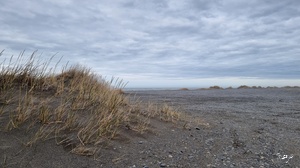
After our first sleepless night on the beach in Argentina, we drove north and crossed, for the first time during the trip, the border with Chile.
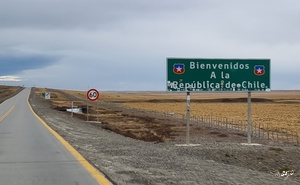
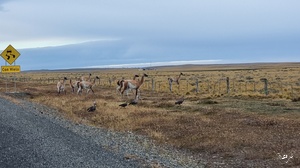
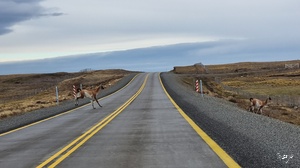
The landscapes remained the same as in Argentina with lots of ranches with sheep, cows and horses along the road, alternating with vast and deserted areas where guanacos were crossing the road from time to time! They were incredibly sweet and elegant, and it was quite enchanting to watch them! However, bear in mind that you should not drive during the night in Patagonia as these huge animals often cross the road unexpectedly in the dark, causing serious accidents (a little bit like the kangaroos in Australia…)!
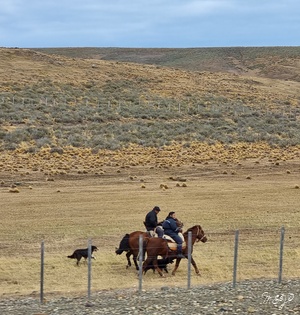
We also saw many groups of gauchos on their horses and followed by their dogs. These greatly admired skilled horsemen, renowned for their experience in traditional livestock farming, looked like coming directly out of a novel!
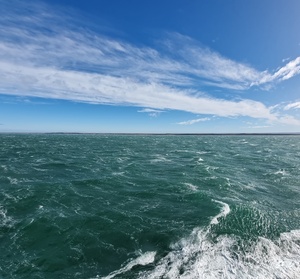
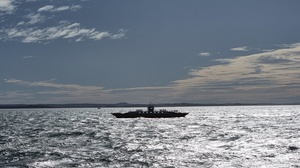
Another epic sight on the way was the Strait of Magellan, separating the Tierra del Fuego archipelago from the South American mainland, that we crossed by ferry. Approximately 570 km (350 mi) long and 2 km (1.2 mi) wide at its narrowest point, it is considered the most important natural passage between the Atlantic and Pacific Oceans and was discovered by the Spanish expedition of the Portuguese navigator Ferdinand Magellan, after whom it is named. The strait is shorter and more sheltered than the open sea route of the Drake Passage around Cape Horn, and, along with the Beagle Channel, was one of the few sea routes between the Atlantic and Pacific Oceans before the construction of the Panama Canal.
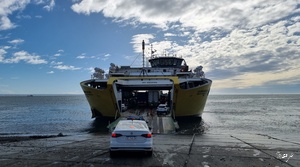
After crossing this unique waterway, we continued driving north and saw the first signs of one of the most mythical roads in the world - The End of the World Route (or Ruta del Fin del Mundo).
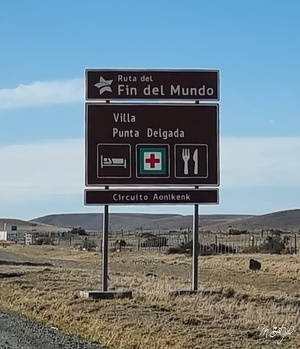
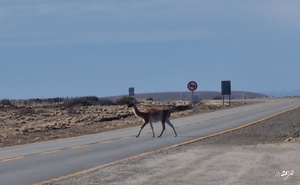
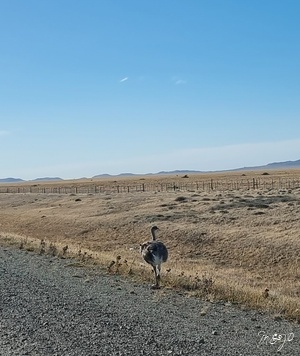
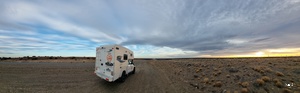
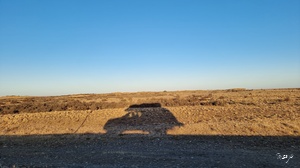
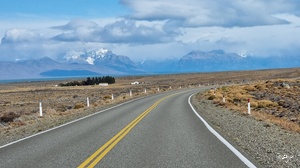
Not too long after that, we crossed for the second time the border back to Argentina - yes, driving around Patagonia is a lot of fun! The road on both sides was perfectly straight and seemed endless… The occasional sights of guanacos and rheas were the only breaks in the loneliness and vastness of this most southernmost and desolated region on Earth. The shadow of our campervan in the golden light of the sunset somehow made us, in quite a poetical way, a tiny part of this magnificent and fairytale land away from any civilization…
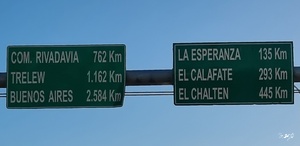
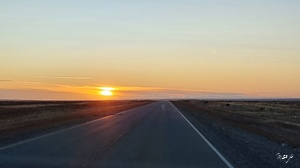
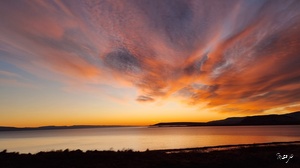
After a night in the guest room of the Esperanza petrol station on the road between Río Grande and our first destination - El Chaltén, we made an early start, surrounded by the alien colours of the sunrise and the moon still present at the horizon. The sky was on fire!
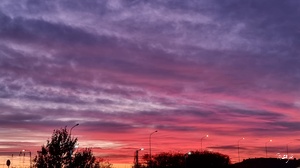
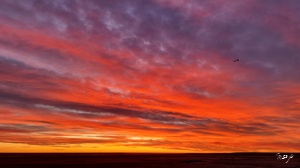
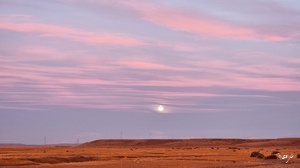
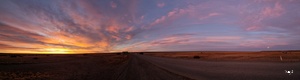
The most accurate word to describe the Patagonian landscapes is probably infinity… Or 360 degrees of nothingness…
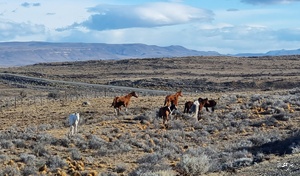
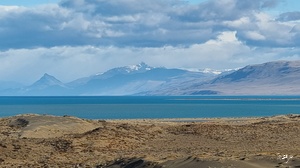
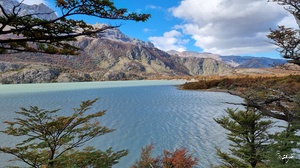
After lots of cute guanacos, beautiful wild horses, gorgeous panoramas and turquoise glacier rivers along the road, we reached the incredibly blue Lago Argentino and Lago Viedma.
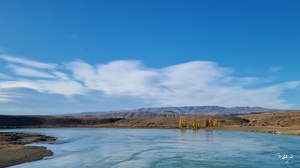
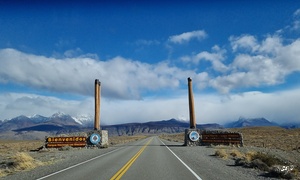
The two lakes, set against the stunning backdrop of the snow-capped peaks of the Andes Mountains, looked almost like a mirage after the deserted areas we had crossed. The excitement reached a new level when we saw the gate with the sign of the Los Glaciares National Park (Parque Nacional Los Glaciares) - the jewel in the crown of Argentina’s national parks.
Before starting our exploration of the numerous trails, we stopped for a delicious lunch at La Tapera restaurant in the relaxed mountain village of El Chaltén (or "Smoking Mountain" in the Tehuelche language), which is considered the trekking capital of Argentina. The locro cazuela - a bacon, sausage, pork, beans, corn and vegetables stew, served in a cazuela (meaning "casserole" or "pot" in Spanish), and the salmon with soy cream and risotto were delicious. However, the icing on the cake was the flan with manjar or dulce de leche (literally "sweet made with milk" or "milk jam") - the incredibly sweet, brown, thick and spreadable substance, made by heating sugar and caramelized milk over several hours. Think of it as the best caramel sauce in the world! It is so popular in Argentina that the country attempted to declare it as an intangible cultural heritage in 2003, but other countries across South America and Central America, where this sweet indulgence is also popular, objected.
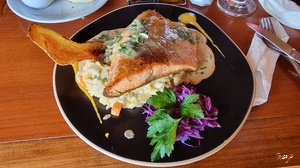
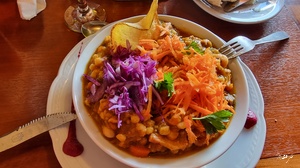
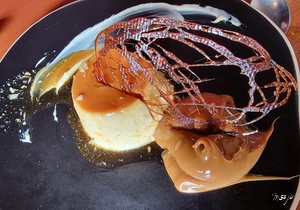
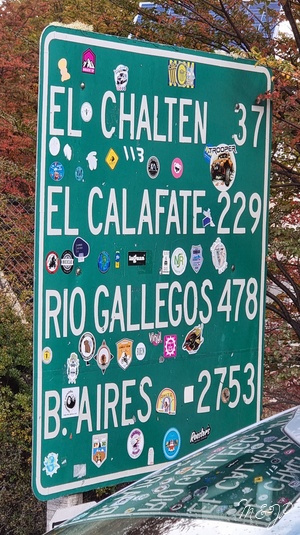
After this delicious lunch, we headed towards our first goal in the northern part of the park - the short but steep hike to the Huemul Glacier and its lagoon (the name "huemul" refers to the south Andean deer, which lives only in the forests of southern Argentina and Chile and is in danger of extinction), starting from the parking lot by Lago del Desierto, 37 km (23 mi) north from El Chaltén.
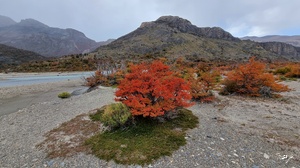
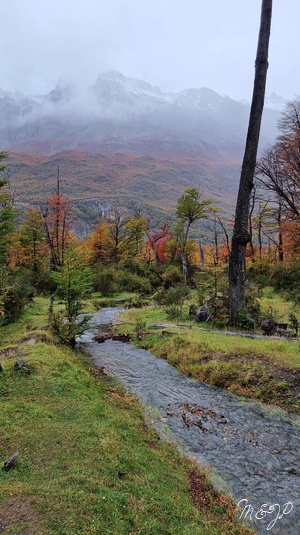
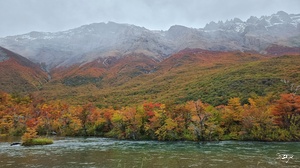
Since the road to get there followed the turquoise river Río de Las Vueltas (or "River of the Turns"), surrounded by spectacular forests in autumn hues, we decided to take our time.
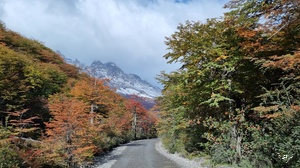
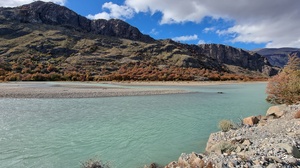
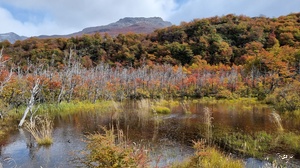
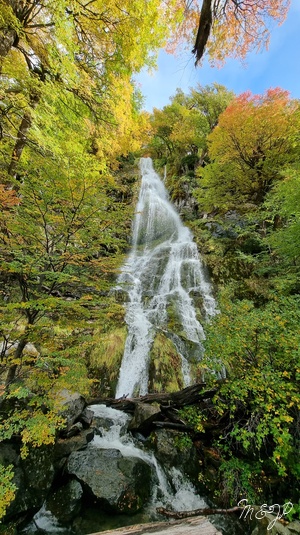
We stopped at many scenic spots, such as the charming Salto del Anillo (or "The Waterfall of the Ring").
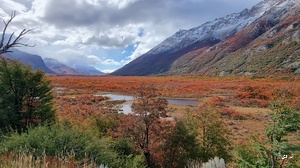
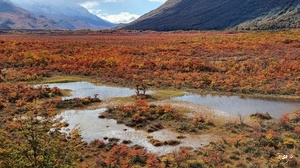
We stayed overnight at Campo Lago del Desierto next to the starting point of the trail and only went for the hike the following morning.
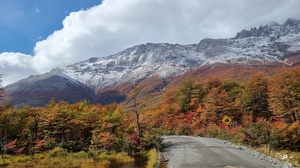
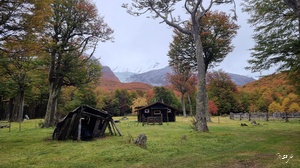
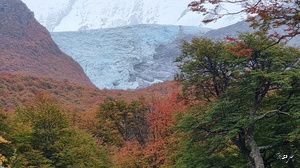
The trail to the Huemul Glacier wound through forests, mountain rivers and charming waterfalls. It was so serene and beautiful.
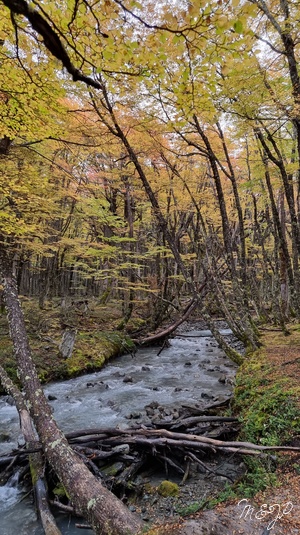
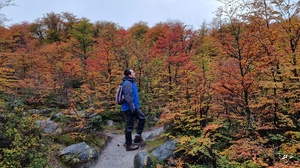
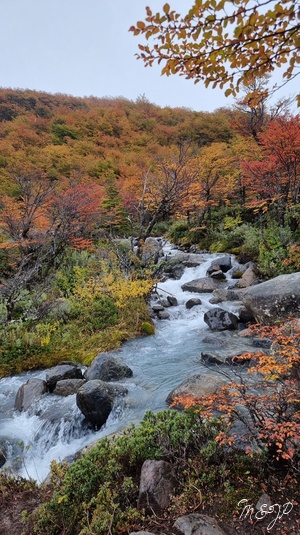
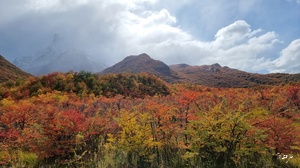
The autumn colours were simply beyond this world, but everything became even more surreal when we saw the glacier itself, literally hanging over its turquoise blue lagoon…
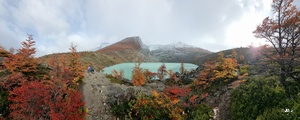
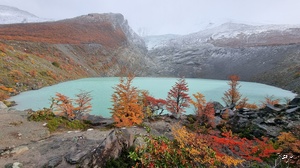
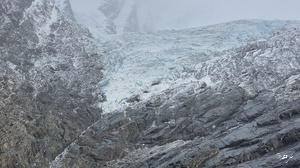
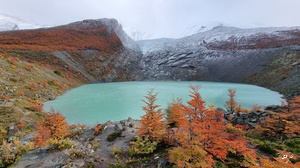
And as if all this was not striking enough, it started snowing, which made the scenery even more spectacular and turned us into euphoric kids, happily running around!
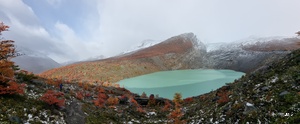
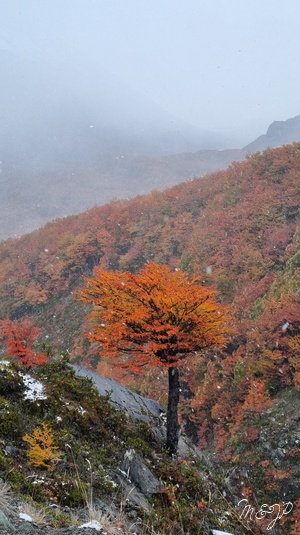
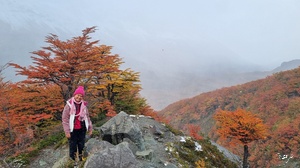
The place was simply stunning and we did not want to leave...
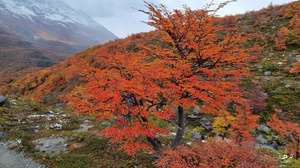
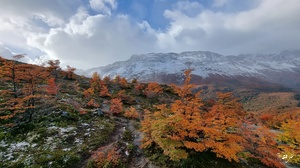
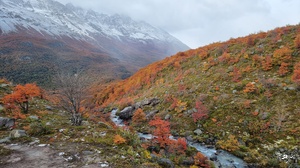
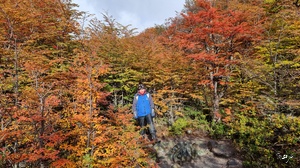
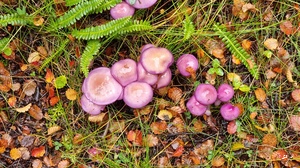
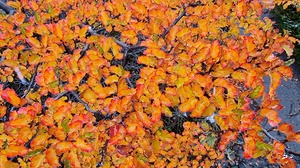
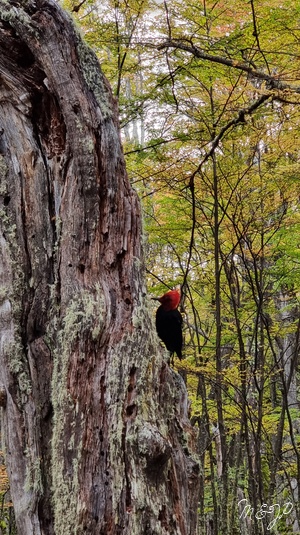
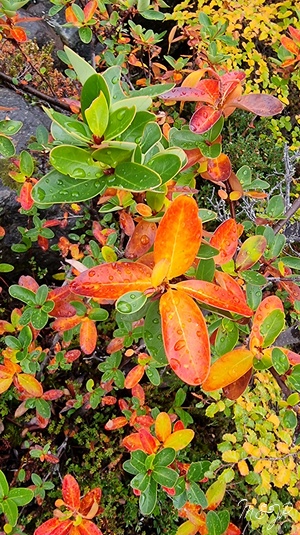
The pink Patagonian mushrooms, the bright leaves and the crimson-headed Magellanic woodpecker (even woodpeckers are named after Magellan in Patagonia!) we saw during the hike increased the strange feeling of having been transferred to another magical universe!
We stopped for a break at Lago del Desierto, which also had some breathtaking views up its sleeve, and then headed back south to El Chaltén.
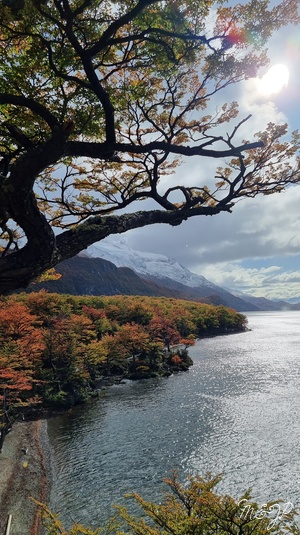
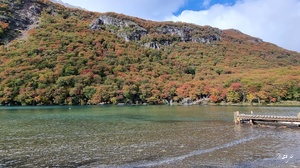
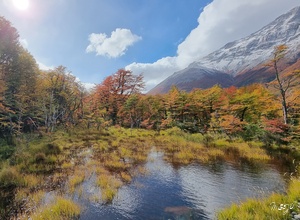
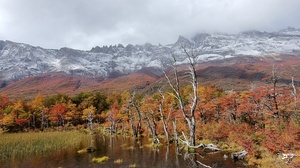
The road surrounded by a sea of autumn colours, sunken forests and snow-capped mountains was so beautiful that we stopped a few times, including for lunch next to the turquoise river Rio Cañadon de los Toros (or "River of the Canyon of the Bulls").
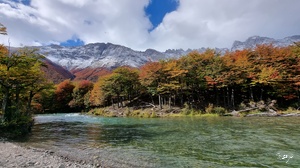
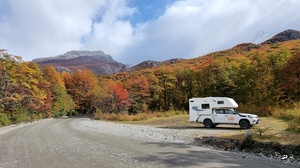
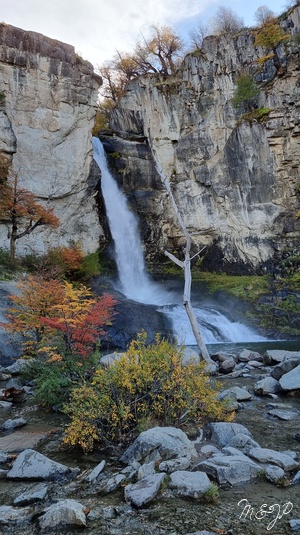
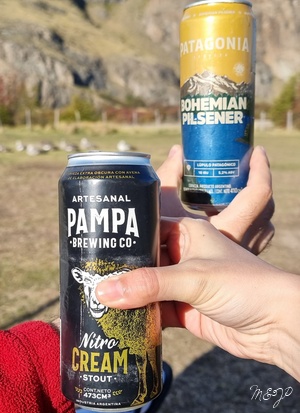
After having checked out Chorrillo del Salto (or "The Creek of the Waterfall”") - another cute waterfall on a pond and surrounded by a forest, just 500 m (1,640 ft) from the parking lot, we stopped for the night at a nice camping ground next to the river Río de Las Vueltas, where our neighbours were a cute family of ducks! We cheered for one of the most beautiful hikes in our lives with an artisanal Patagonian beer! That night was even windier than the previous ones, the campervan was shaking and sleep was impossible, but our hearts were full! We had the feeling that the magic we had seen and experienced so far was going to continue, and even accelerate in the next ten days around Patagonia…
And we were right! The Los Glaciares National Park is a real treat with its snowy-white glaciers, turquoise lagoons, dense forests, vertical mountains and even an immense ice field! It has so many different trails depending on the time you have, your physical condition and, of course, your desire. Most people head to the long and strenuous, but also way too popular trail to Laguna de los Tres, which, according to a couple of hikers we met, looked almost like a highway…
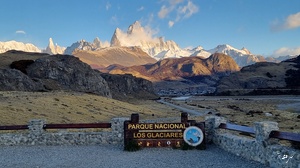
In order to avoid the crowds, we decided to go for the more peaceful, equally scenic and also starting from El Chaltén loop to the Mirador del Fitz Roy and Laguna Capri. We passed twice by the Mirador Río de las Vueltas, a natural balcony with spectacular views of the valley and the mountains around.
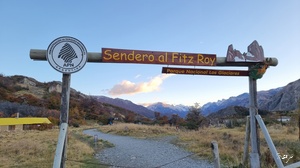
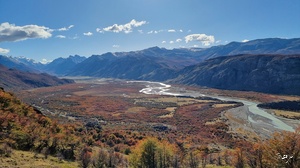
Then we continued through a forest full of ñires (or Antarctic beeches) and lenga beeches. The leaves of these trees, native to southern Chile and Argentina from about 36°S to Tierra del Fuego at 56°S, turn into incredibly bright yellow, orange and reddish colours in the autumn.
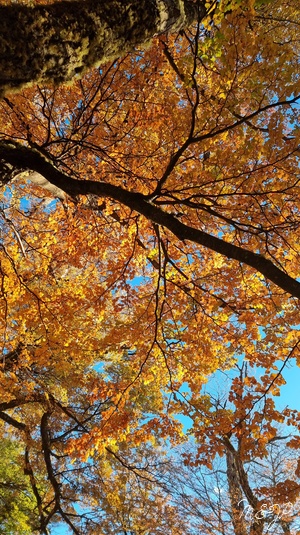
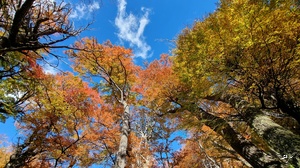
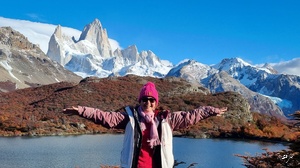
The best part of the trail was the view of the jagged summit of Mount Fitz Roy (Cerro Fitz Roy) - we could see it towering in front of us the whole time! However, the most stunning picture-perfect panorama of the granite giant, rising to 3,405 m (11,171 ft) above the Patagonian steppe, was from the Mirador del Fitz Roy.
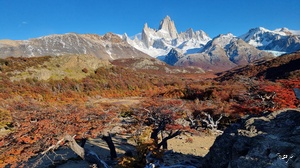
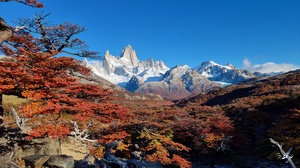
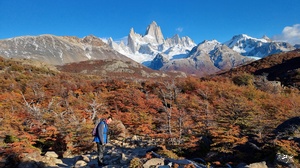
The mount was named by the Argentinian explorer Francisco Moreno after HMS Beagle’s captain Robert FitzRoy. Its sharp silhouette is one of Patagonia’s most recognisable landmarks and has even inspired the logo of the outdoor brand Patagonia. We had read that clouds often formed around the mountain's peak, but luck was on our side that day. Mount Fitz Roy, popping up against the perfectly blue sky without a single cloud and the bright autumn colours, was almost too beautiful to be true! When we reached Laguna Capri, we were rewarded with some gorgeous reflections in the turquoise waters of the lagoon and another perspective of the majestic mountain from its shore, while enjoying our picnic with a view!
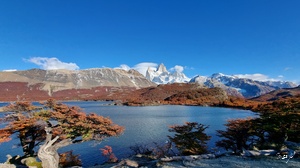
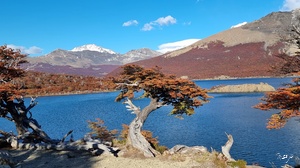
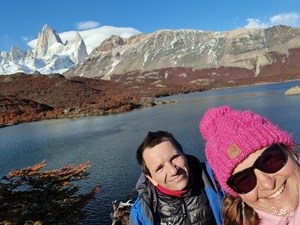
We took way too many pictures of Mount Fitz Roy, but this guy was simply stunning in the autumn. And we absolutely need to come back for more trails and gorgeous views!
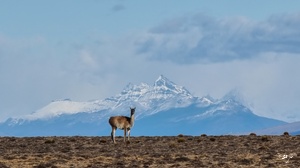
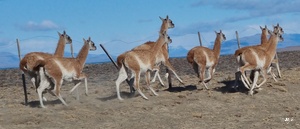
After reluctantly saying goodbye to El Chaltén, we headed to another iconic landmark of the Los Glaciares National Park - the Perito Moreno Glacier (Glaciar Perito Moreno). On the way, we saw tons of friendly guanacos along or crossing the road! They were running pretty fast and won the race against our campervan with flying colours! We also spotted a few of them in the distance, standing against the spectacular backdrop of the snow-capped mountains…
Both Lago Viedma and, further south, Lago Argentino were stunning as well!
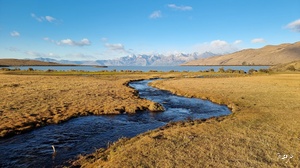
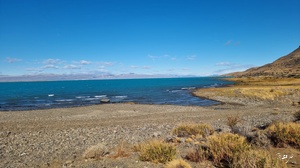
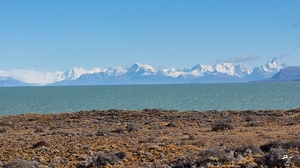
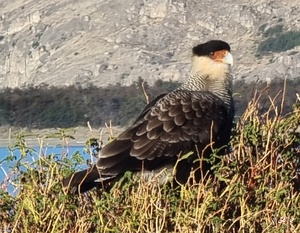
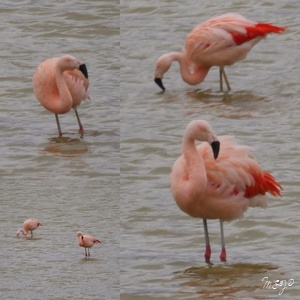
In the area around, we also spotted some majestic crested caracaras and lots of pink flamingos.
In the early afternoon, we reached the town of El Calafate - the gateway to the Perito Moreno Glacier. It lies by the side of Lago Argentino - we had been turning around this lake for the past few days! It is the largest freshwater lake in Argentina, spanning over 1,465 sq km (566 sq mi) and fed by the meltdown from the Perito Moreno, Upsala, Spegazzini and Onelli Glaciers. Its fjords reach into the Andes and the gorgeous milky blue color of its water is caused by tiny rock particles (called rock flour), grinded by the many glaciers of the area.
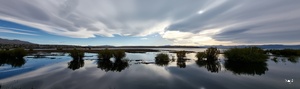
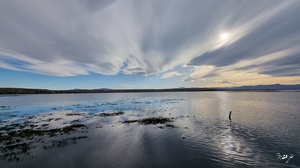
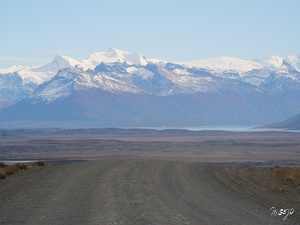
The proximity of the lake makes El Calafate much more than just a gateway to the most famous glacier in South America. The horizon is shaped by snow-capped mountains, home to the Southern Patagonian Ice Field - a giant ice field separating Argentina from Chile, remnant of the last glacial period and the third largest mass of ice in the world behind Antarctica and Greenland. We went for a stroll along the lakeshore and spotted hundreds of pink flamingos, as well as swans and many other birds at Laguna Nimez Nature Reserva.
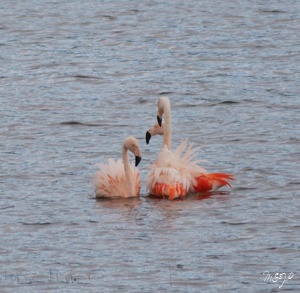
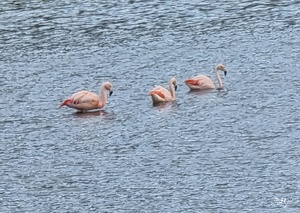
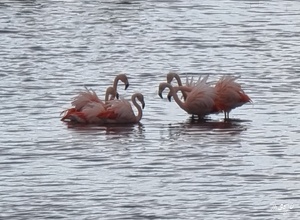
The place was a paradise for birdwatchers, despite the fact that the temperature was close to 0°C (32°F)...
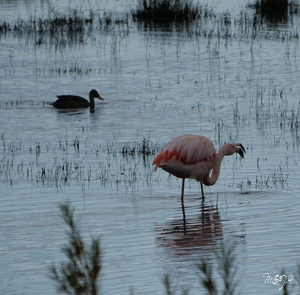
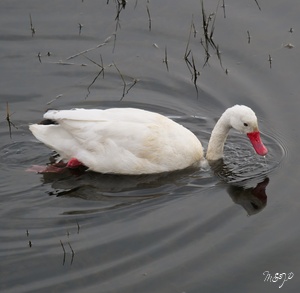
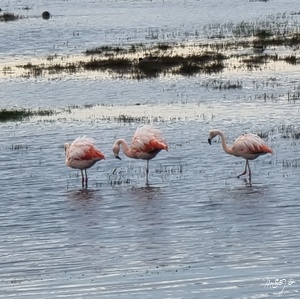
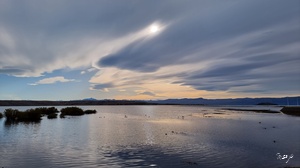
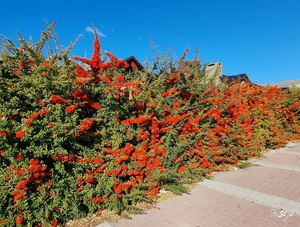
We also wandered around the town itself, which was incredibly cute with picturesque streets and bright red flower-like firethorn berries.
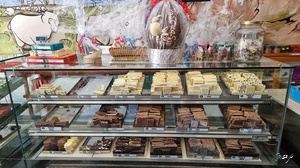
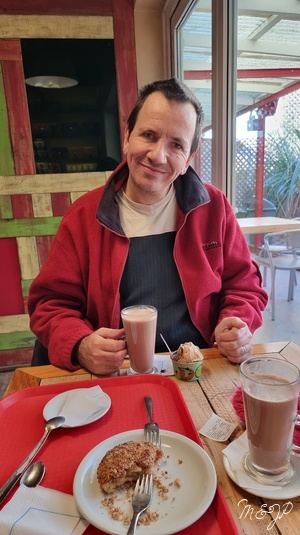
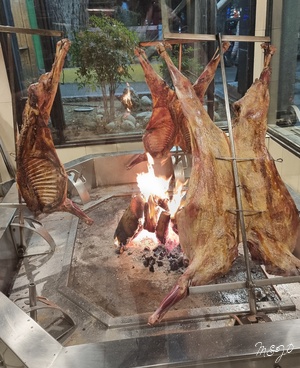
Based on the recommendations of our new Antarctica friends, we stopped at Heladería Acuarela - allegedly the place with the best chocolate and ice-cream in town (Argentina makes some of the world’s best helado or gelato, probably due to its many Italian immigrants!), and later in the evening enjoyed a well-deserved dinner at Mi Viejo restaurant. It was an amazing experience as we witnessed first hand how Argentinians deal with meat - a serious matter! Cordero (whole lamb) was slow-roasting on metal spits (asadores) over an open fire in the front part of the restaurant. The special cooking technique of this Patagonian traditional dish results in incredibly tender and smoky meat with crispy skin. Argentinians have also perfected the technique of roasting beef and even chicken! The waiters were walking around with giant plates of meat with bones, which looked like they had come straight from some ancient times where human beings were still hunting for their meals (think of the roasted boars in the Asterix and Obelix cartoons!)! I was genuinely hungry and got really scared that I was going to starve to death, until I realised that the menu included chicken breast and some nice salads. Who said that Argentinians only ate meat?
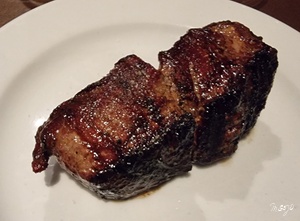
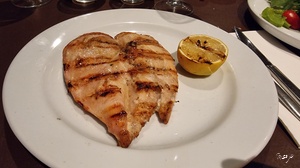
And the desserts were simply a killer! The crème brûlée with red fruit ice-cream and the flan with dulce de leche were delicious even for people like me who don't have a sweet tooth!
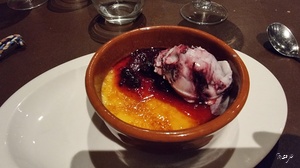
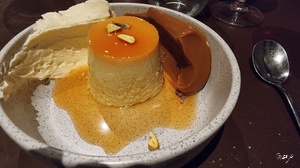
The following morning we woke up with one of the most stunning sunrises ever over Lago Argentino and headed to the Andes, where our main goal and the highlight of the area was waiting for us - the Perito Moreno Glacier. Named after the Argentinian explorer Francisco Moreno (also known as Perito Moreno, perito meaning "specialist" or "expert"), it is located 78 km (48 mi) from El Calafate.
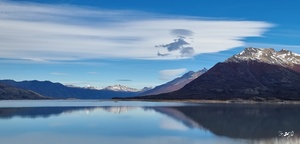
The first sights of the giant in the distance coincided with the first rays of the sun above the ice field.
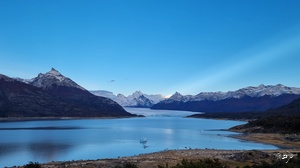
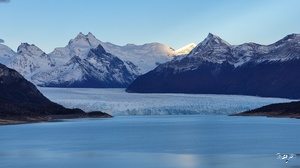
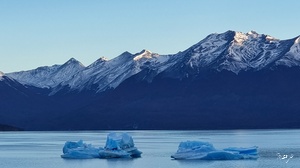
The huge glacier with an area of 250 sq km (155 sq mi) and a height of up to 60 metres (197 ft), which flows into the vast Lago Argentino, is one of the reasons the Los Glaciares National Park has been recognised as a UNESCO World Heritage site since 1981. It is one of the most accessible glaciers on the planet, and also one of the most dynamic ones - it advances up to 2 m (6.5 ft) per day! It is possible to get closer to the glacier by taking a boat trip across the icy lake or trekking on its surface. However, we had learned during a previous trip to Canada that any such activity was harmful to any ice field, accelerating its melting, and decided to stay on the land and admire the gentle giant from the 5 km (3 mi) of wooden boardwalks with viewpoints opposite it.
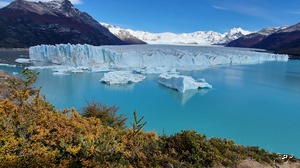
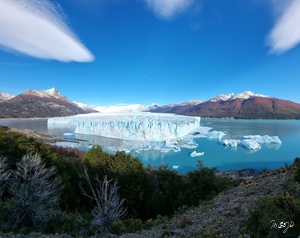
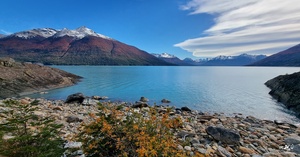
There was so much to see that we stayed there for more than five hours despite the cold, with a short break for lunch in our car with the heating on to warm up a bit before getting out again and walking a little bit more around the glacier.
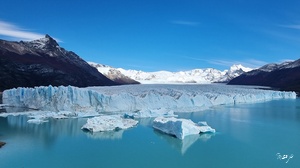
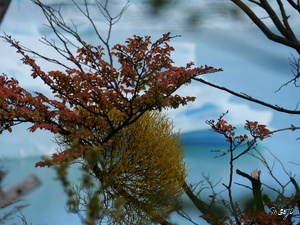
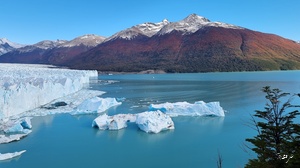
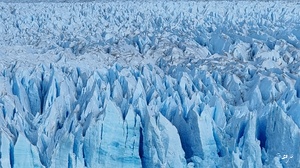
Perito Moreno is huge and changes constantly with the light. The whole landscape looked like a fairytale with the bright autumn colours of the ñires and the gorgeous mistletoe growing on them, the ice which looked like the teeth of an ancient monster, the incredibly blue colour of the water and the icebergs floating around!
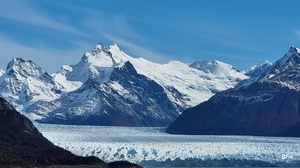
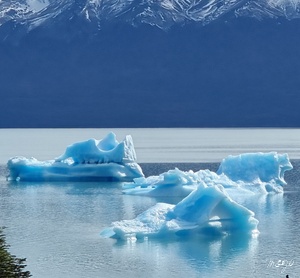
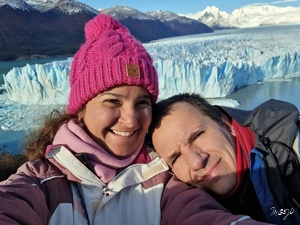
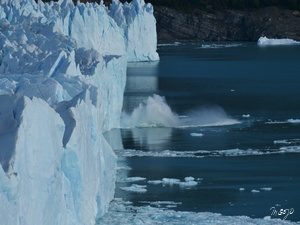
Everyone was waiting for one of the most spectacular (even though sad as it is proof that the glacier is slowly melting) phenomena - a building-sized chunk of ice that from time to time broke off from the face of the ice mass and crashed into the water with a deafening noise… It did not happen that often and we had to be patient and needed some luck! It was a mesmerizing thing to watch…
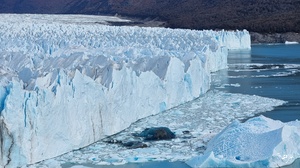
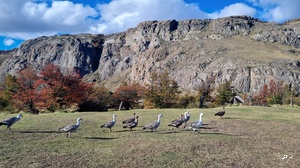
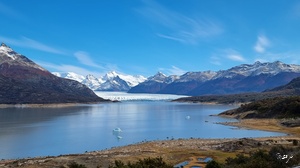
On the way back to El Calafate, we saw the gorgeous reflections of the Andes in the lake, as well as tons of birds such as flamingos, rheas and the elegant black-and-white Andean geese. Unfortunately, we did not see here (or during the rest of the trip for that matter) any puma (aka "mountain lion") - the largest predator in Patagonia, but it was probably for the best! The instructions of not running or turning your back and raising your arms and yelling in case of any encounter with this feline sounded impossible to comply with by a person in their right mind!
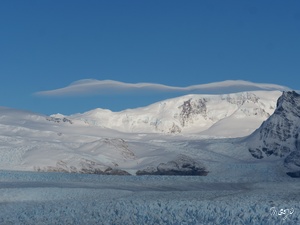
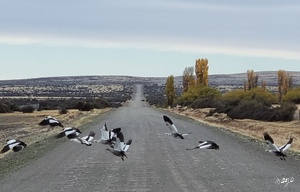
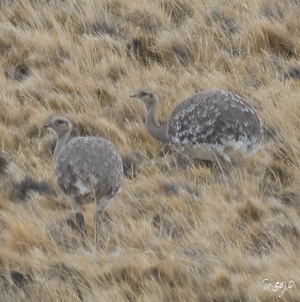
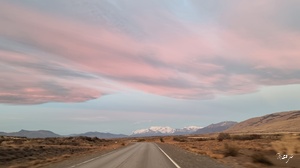
The following day brought another glorious sunrise, more straight lonely roads and loads of guanacos and rheas.
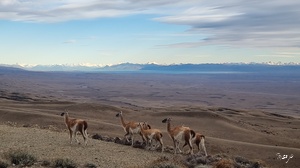
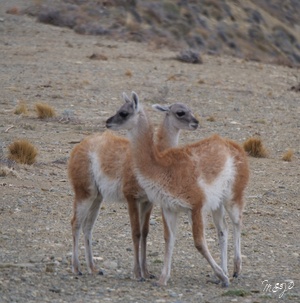
We crossed for the third time the border between Argentina and Chile, in order to reach another of the highlights on our road trip throughout Patagonia, this time in the Chilean part - the Torres del Paine National Park (Parque Nacional Torres del Paine)...

You like what you read?
-
 P for Paradise and Provence (part 2)
Stunning nature - You cannot leave Marseille without hiking to … -
 P for Paradise and Provence (part 1)
France used to be divided into historical regions, which do … -
 The Valley of Roses and Kings (part 2) The Valley of Kings
The Valley of Roses is famous not only for its … -
 The Valley of Roses and Kings (part 1) The Valley of Roses
Out of all the flowers in the world the rose … -
 In the heart of the Silk Road (part 4) Khiva and the Desert Castles
Khiva - It took us 6 hours, almost a whole … -
 In the heart of the Silk Road (part 3) Bukhara
Bukhara - While Tashkent is a modern city with some … -
 In the heart of the Silk Road (part 2) Samarkand
Samarkand - No name is so evocative of the Silk … -
 In the heart of the Silk Road (part 1) Tashkent
The Great Wall of China, Machu Picchu, the Pyramids of … -
 The Land of Giants at the End of the World (part 2)
We crossed for the third time the border between Argentina … -
 The Land of Giants at the End of the World (part 1)
No visitors come back from Antarctica in the same state … -
 A Vitamin Sea Christmas in the Mediterranean
Human beings are full of contradictions! When we used to … -
 Spring Colours in the Kingdom of the West (part 6) Morocco is yellow
Morocco is yellow - Besides the yellow hues of the … -
 Spring Colours in the Kingdom of the West (part 5) Morocco is red
Morocco is red - Besides the red hues of the … -
 Spring Colours in the Kingdom of the West (part 4) Morocco is orange
Morocco is orange - Our first encounter with the legendary … -
 Spring Colours in the Kingdom of the West (part 3) Morocco is green
Morocco is green - The Rif Mountains east of Tangier, …
