
In the heart of the Silk Road (part 2)
Samarkand
Posted by: Maria in May 2026 (5 months, 1 week ago)
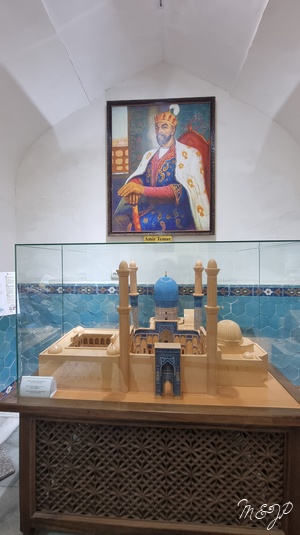
Samarkand - No name is so evocative of the Silk Road as Samarkand (or Marakanda to the Greeks), which has been inscribed in its entirety on the UNESCO World Heritage list since 2001. Uzbekistan’s second largest city today was already one of the largest cities in Central Asia in the past. It prospered tremendously from its location on the Silk Road between China, Persia and Europe, which turned it into a crossroads and melting pot of cultures for centuries. Founded in the 8th century BC, it was taken by Alexander the Great, then by the Iranians, the Turks, the Arabs and the Mongols until Timur made it his capital in 1370. Over the next 35 years he rebuilt most of the city, populating it with great artists, craftsmen and architects from across the empire, and made it Central Asia’s economic epicentre. While Timur’s grandson Ulugbek ruled over it until 1449, Samarkand became an intellectual centre as well. It surrendered to the Russians in 1868 and, following the 1917 revolution, became part of the Uzbek Soviet Socialist Republic (SSR) and served as its capital from 1925 to 1930 before being replaced by Tashkent.
This rich history explains the hotchpotch of architectural styles. However, the landmarks which will strike you the most are those remaining from the era when the city was the seat of Timur’s medieval empire. Because who says Samarkand, says Timur! More than at any other place in Uzbekistan, you will find everywhere around the city all the shades of blue, a signature of the iconic Timurid architecture, earning it the nickname 'The Blue City'. The striking madrasahs, mosques and mausoleums, adorned with impressive domes and intricate tiles and mosaics in turquoise, cobalt, sky blue, light blue, azure and so many other different variations of the blue colour, will work their magic on you. However, the monument that will leave you in complete awe and where you will return again and again during your stay will be the breathtaking Registan Square ('Sandy Place' in Tajik) - a treasure trove for Timurid architectural gems. The colours of the majestic buildings change with the light of the day, and become even more stunning by night!
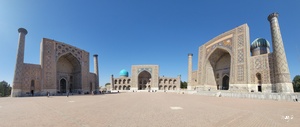
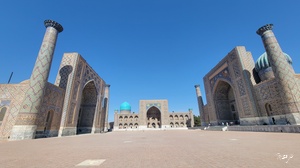
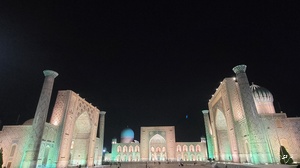
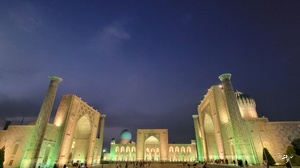
Samarkand's most iconic square, which initially was probably a wall-to-wall bazaar, showcases an ensemble of three of the world’s oldest preserved madrasahs, built between the 15th and the 17th centuries. Frequent earthquakes have left their traces on them but they are still standing, which is proof of the exceptional skills of their builders, including craftsmen brought from cities like Shiraz, Tabriz and Isfahan in Iran. The madrasahs, once educational institutions, feature student cells, mosques and inner courtyards.
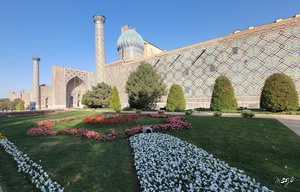
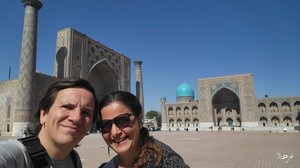
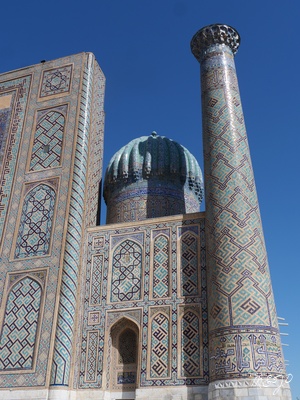
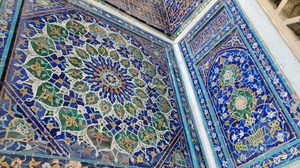
The most ancient madrasah, and the only one from the Timurid period, is the Ulugbek Madrasah on the left when facing the three structures. It was built between 1417 and 1420 by Timur’s grandson, Ulugbek. Besides being a Timurid ruler, the latter was also a prominent astronomer and mathematician, known for his highly accurate star maps, made without using a telescope. Under him Samarkand became one of the world centres of medieval science. In addition to the madrasah, he also built in the city one of the finest observatories in the Islamic world at the time, and the largest in Central Asia, featuring a unique wall quadrant (of which very little remains today because it was destroyed by religious fanatics in 1449, shortly after Ulugbek's death).
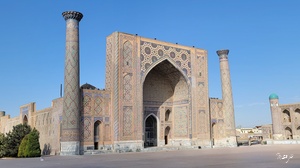
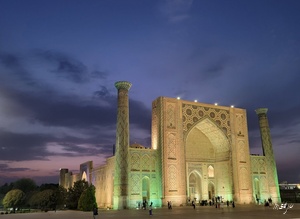
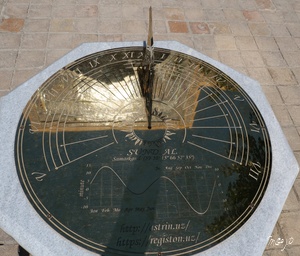
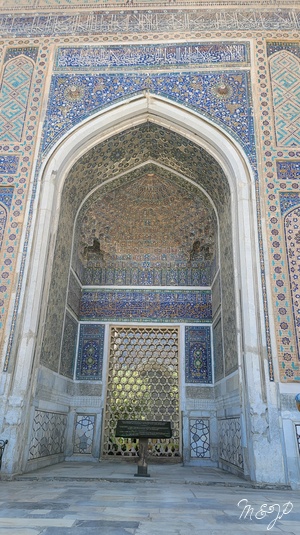
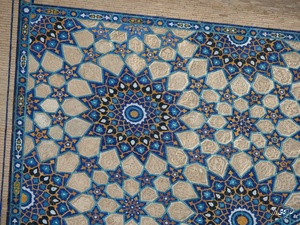
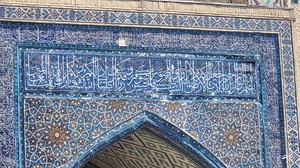
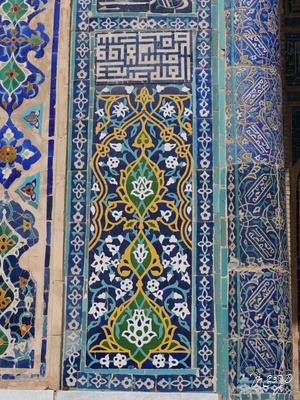
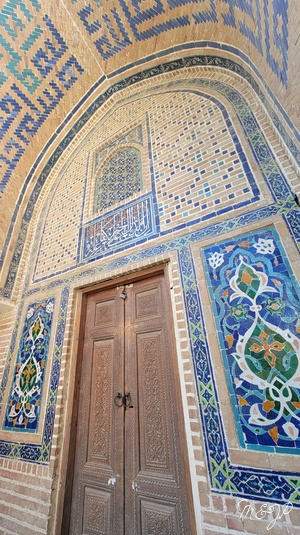
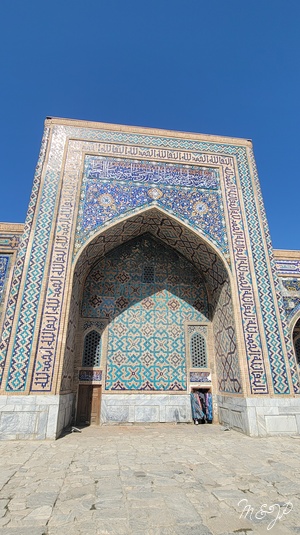
The Ulugbek Madrasah - one of the best universities of the Muslim Orient in the 15th century - is flanked by two 33-m-high minarets. It features an imposing outer iwan (a rectangular vaulted hall, walled on three sides, with one end entirely open) with a stunning 10-m-tall pishtaq - a Persian term for a formal gateway or a portal to the iwan, decorated with a honeycomb ceiling, calligraphy bands, glazed tilework, and geometrical mosaics, which fully respect the Islamic ban on the representation of living beings. A panoply of blue stars demonstrates Ulugbek's passion for astronomy, and the inscription: 'Aspiration to knowledge is the duty of each Muslim man and woman', his love for knowledge in general.
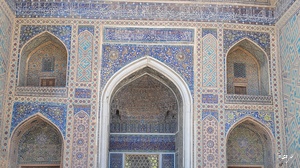
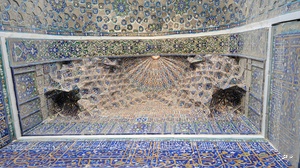
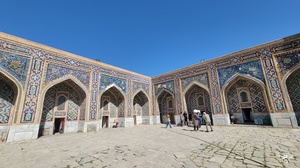
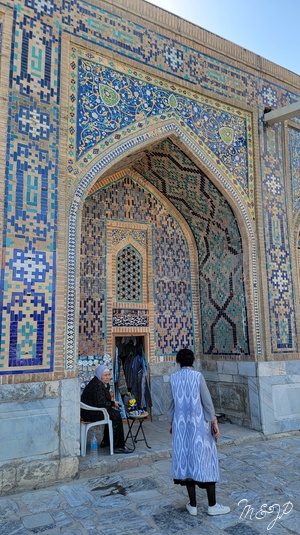
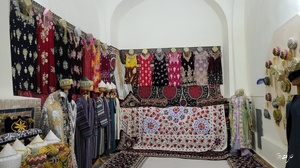
The courtyard inside the madrasah is surrounded by galleries of two floors, with entrances to the fifty hujras (student dormitory cells in which the students lived), now used as souvenir and craftsmen shops.
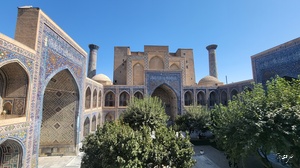
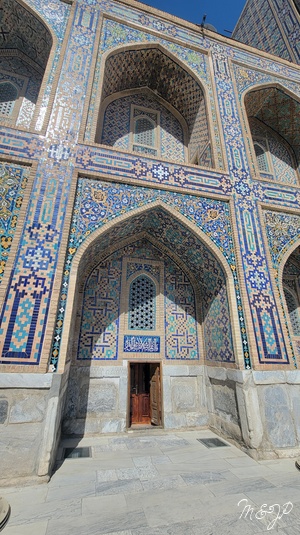
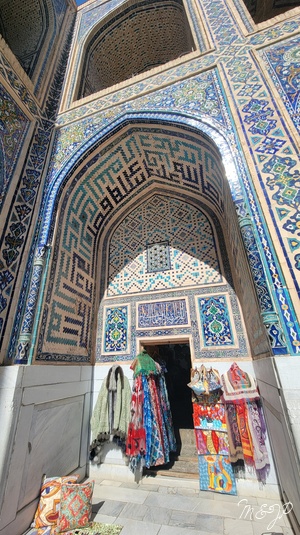
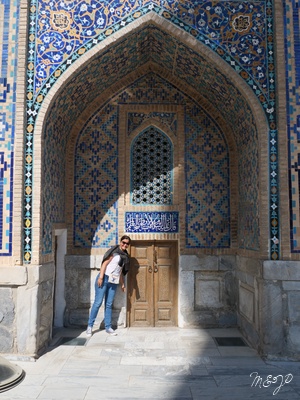
There is an iwan in the centre of each of the courtyard galleries.
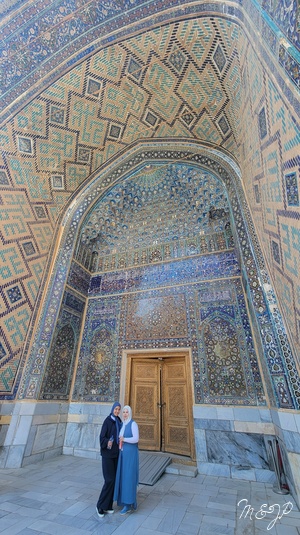
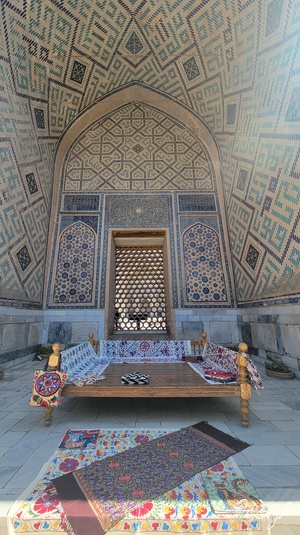
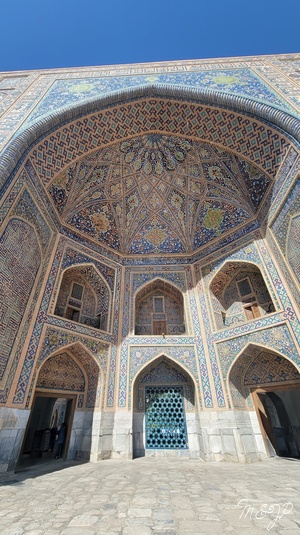
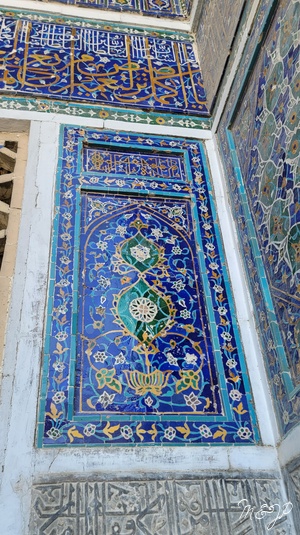
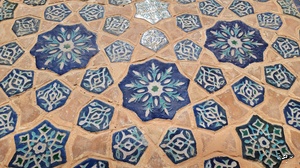
All exterior surfaces are covered with decorative elements, using various techniques such as hazarbaf (glazed tiles alternating with plain bricks), mosaics, and majolica (earthenware covered in glaze with added tin oxide and decorated in colours on a white background).
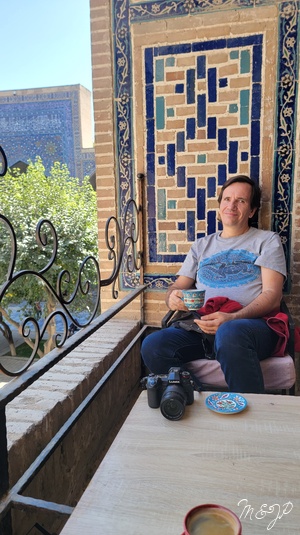
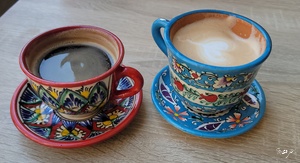
Do not miss to visit the café on the second floor of the madrasah. From there you can admire the incredible beauty of the building while sipping your coffee or tea. The entrance is hidden in one of the souvenir shops!
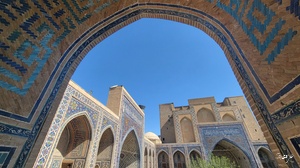
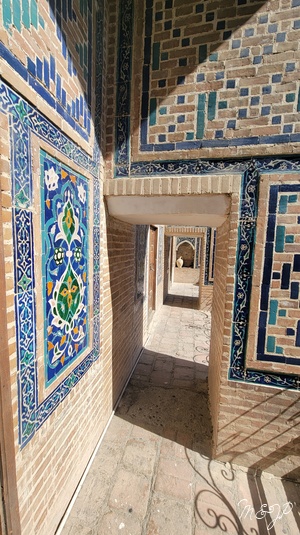
Opposite the Ulugbek Madrasah stands the Sherdar Madrasah ('the Lion-Bearing Madrasah' in Persian). It was built between 1619 and 1636 under the Janid dynasty (an Uzbek dynasty of Turco-Mongol origin), and meant to mirror the Ulugbek Madrasah. The site was originally a khanaqah, an inn for itinerant Sufis (Sufism is a mystic body of religious practices found within Islam and characterized with a focus on Islamic asceticism).
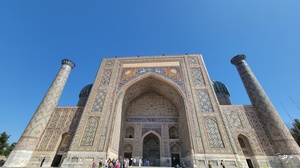
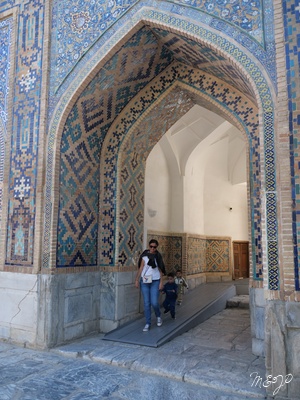
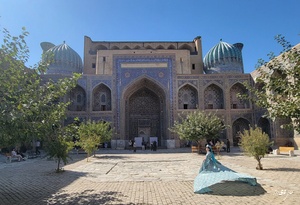
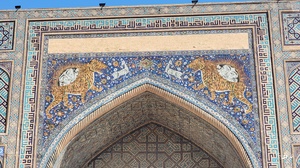
The onion-shaped domes and the intricate minarets next to its outer iwan are jaw-dropping. The lion-tigers mosaics with a rising sun on their back and chasing deer are especially interesting for their depiction of living beings.
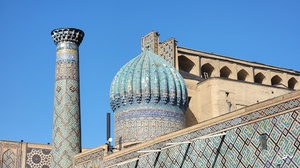
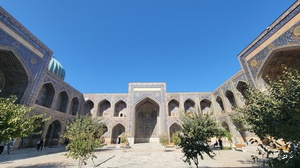
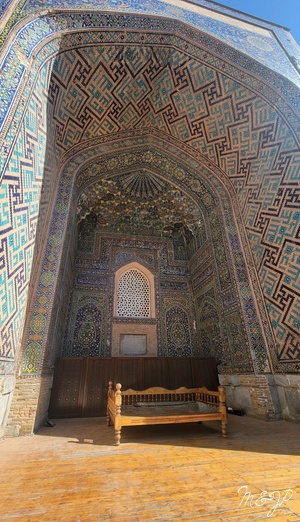
The Sherdar Madrasah features a breathtaking courtyard with honeycomb ceilings, majestic iwans and intricate decorations.
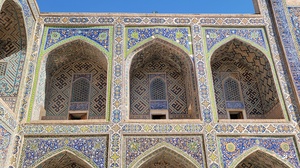
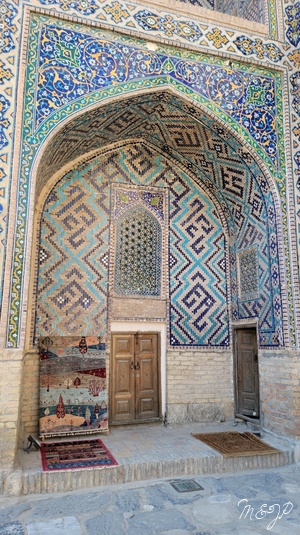
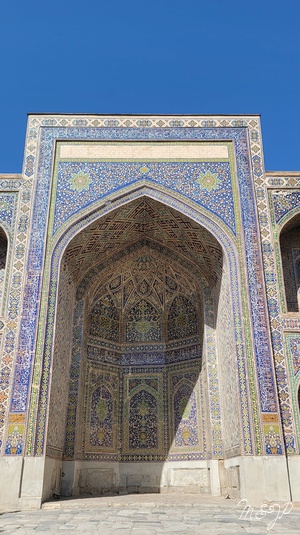
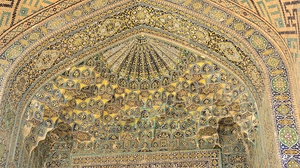
In the middle of the ensemble is the most recent structure - the Tilakari (or ‘Gilded’) Madrasah, built between 1646 and 1660 under the Janid dynasty as well.
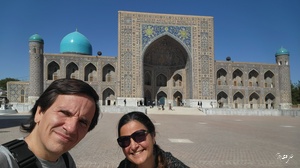
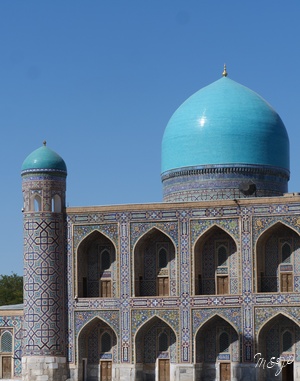
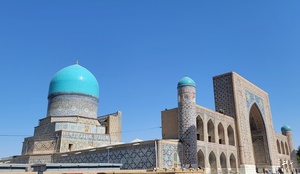
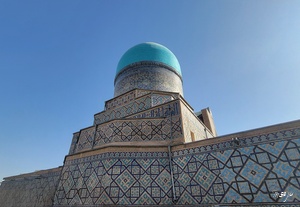
It houses a grand, abundantly gilded masjid (mosque).
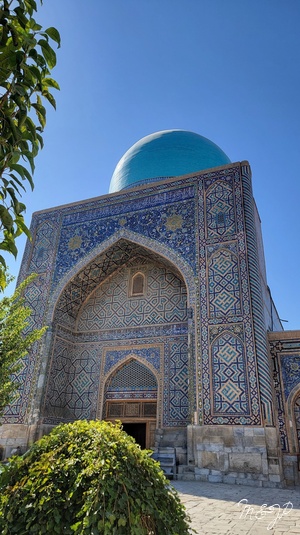
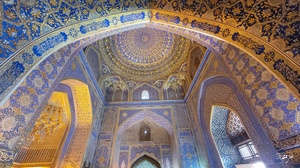
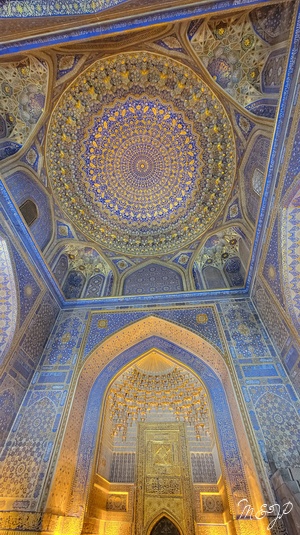
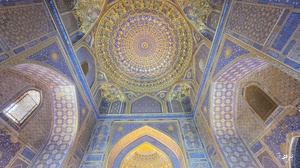
The combination of blue and gold is breathtaking, and the decorations of the dome are spectacular.
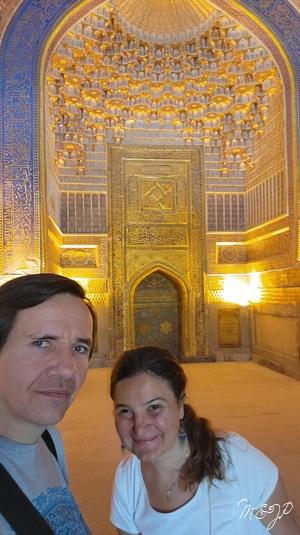
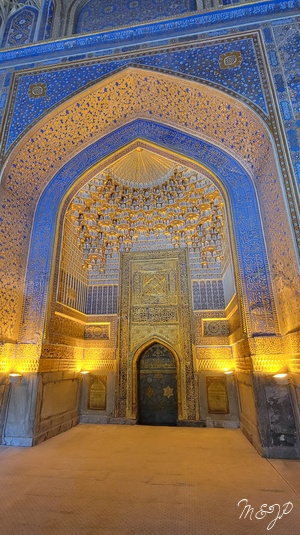
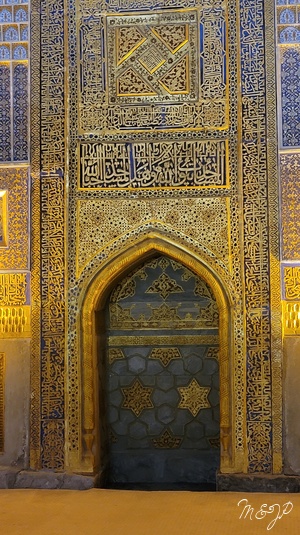
Even though the Tilakari Madrasah is not as ancient as the Ulugbek Madrasah, it is quite a sight with its azure domes, elegant two-storied main facade and a vast courtyard fringed by former dormitory cells, now turned out in souvenir and craftsmen shops.
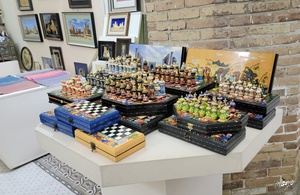
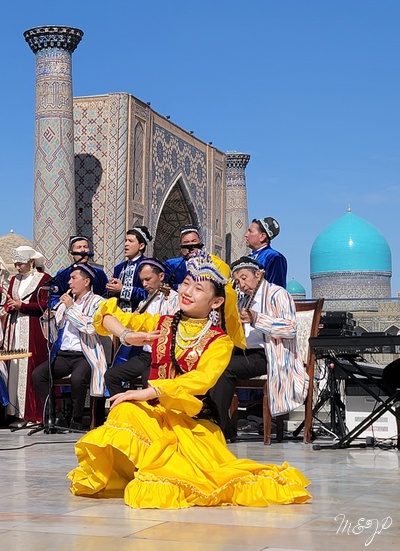
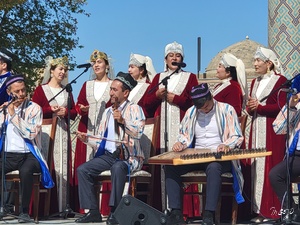
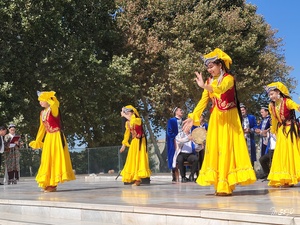
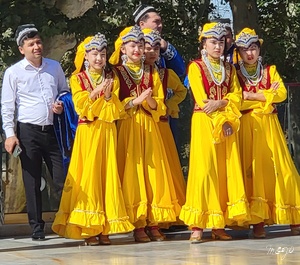
If you are lucky, you might come across a music and dance performance in front of the Registan.
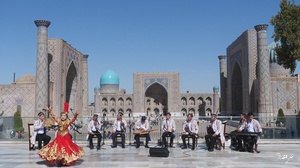
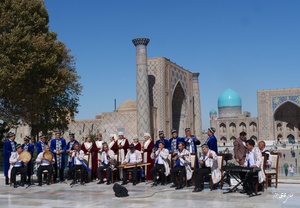
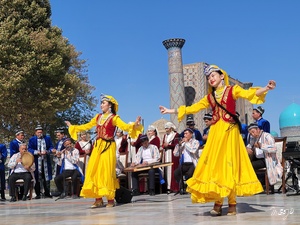
The traditional songs and dances were magical…
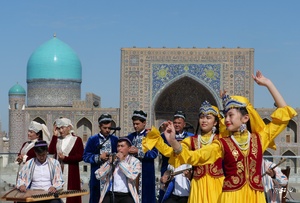
And the dancers with their bright costumes and elegant jewellery were beautiful…
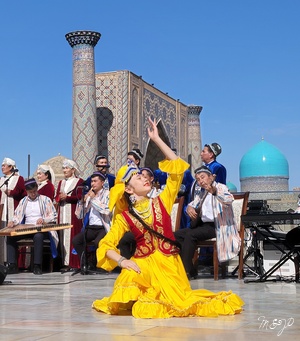
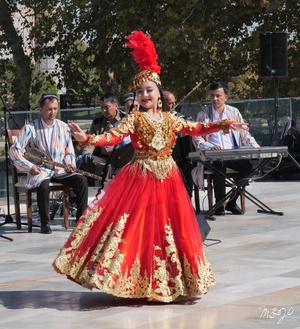
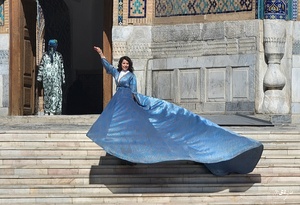
You might also witness the wedding picture sessions everywhere around the square…
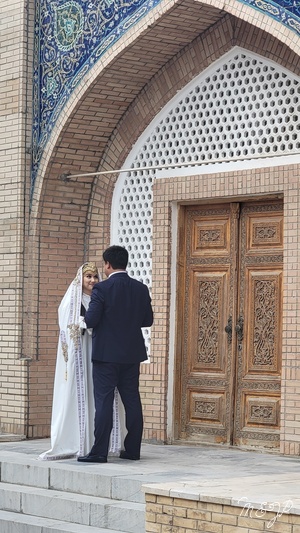
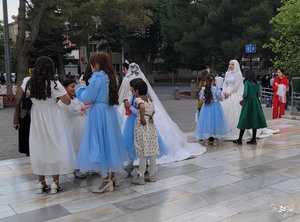
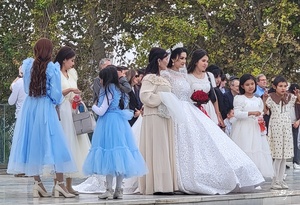
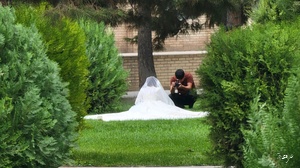
Everyone, not only the newlyweds, want a picture with the Registan as a backdrop!
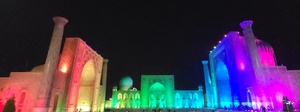
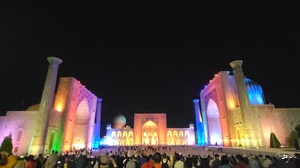
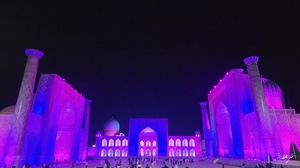
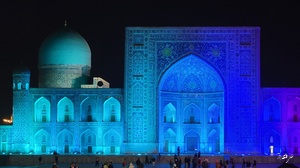
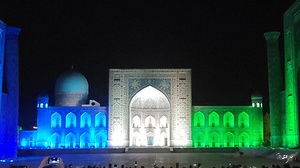
Also, do not miss the two sound and light shows (which are different) at 8.30pm and at 9pm.
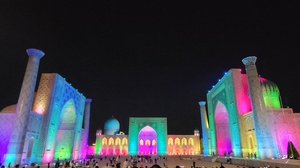
V=src>https://www.youtube.com/embed/a0SxBHToVq4|title>Sound and light show on the Registan in Samarkand, Uzbekistan | OurSmallPlanet.eu=V
The first one focuses on the lights, while the second tells the story of the Silk Road and Samarkand.
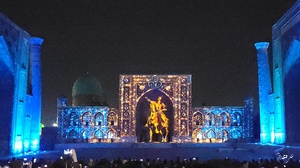
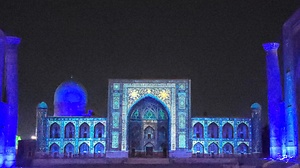
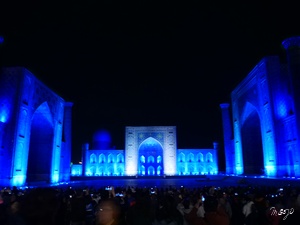
The Registan by night is simply out of this world!
Another monument which is stunning by day, but also by night, is the Gur-e-Amir Mausoleum (the 'Tomb of the King' in Persian) - Timur’s lavish mausoleum, which has influenced later Mughal architecture tombs, including Humayun's Tomb in Delhi and the Taj Mahal in Agra, built by Timur's descendants.
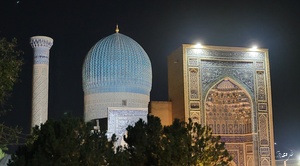
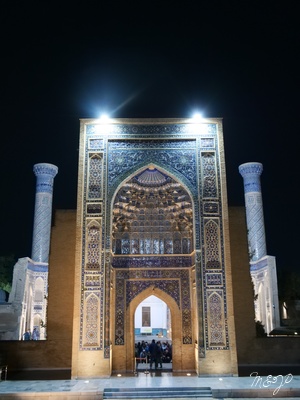
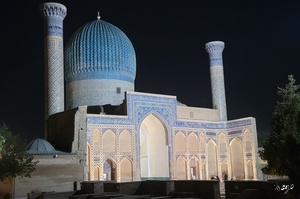
The complex welcomes its visitors with an impressive honeycomb gate, decorated with Arabic calligraphy, and a spectacular azure dome.
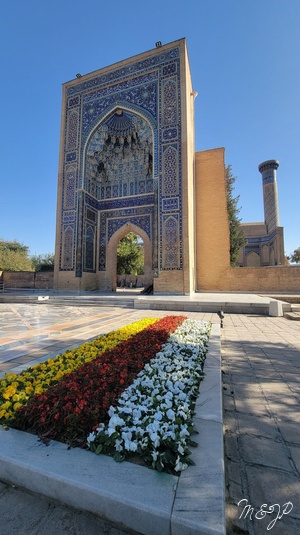
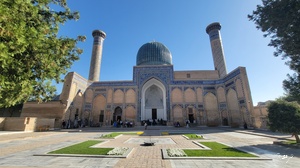
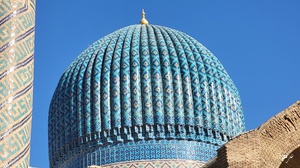
It contains the tombs of Timur, his sons Shah Rukh and Miran Shah and grandsons Ulugbek and Muhammad Sultan, his teacher Sayyid Baraka (Timur was buried at his feet according to the custom of the time), and several other members of the Timurid dynasty. The construction of the mausoleum began in 1403 after the sudden death of Muhammad Sultan, Timur's grandson and heir apparent, for whom it was intended. Timur had built himself a smaller tomb in his native city of Shahrisabz. However, when he died on a military expedition to China in 1405, the passes to Shahrisabz were snowed in, and so he was buried here instead. At that time the mausoleum was still unfinished - its construction was completed later by Ulugbek, Timur’s other grandson, who was also buried in it.
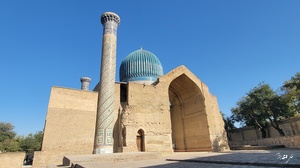
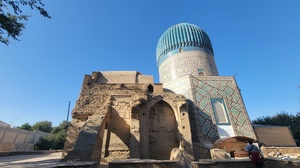
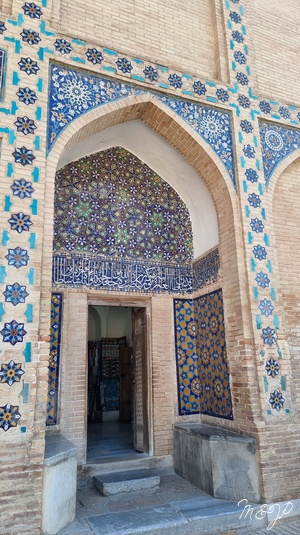
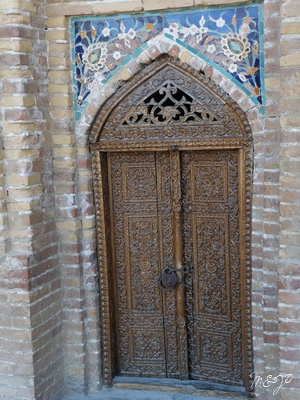
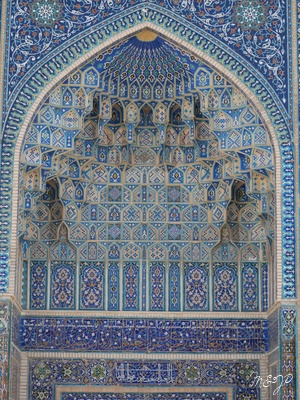
While the exterior is quite simple (well, for Timurid architecture standards…) with geometrical mosaics made from dark blue, light blue and white tiles against a background of terracotta bricks, the interior is lavish. The gilded decorations of the dome are jaw-dropping, and the honeycombs, also known as muqarnas or stalactites (three-dimensional decorations in Islamic architecture in which tiers of niche-like elements are projected over others below), are everywhere in the mausoleum.
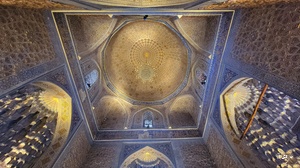
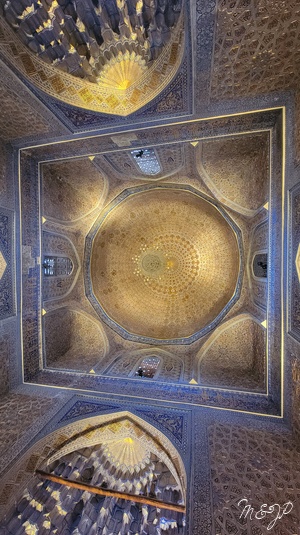
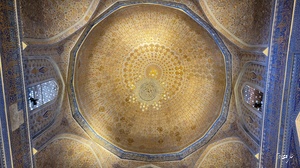
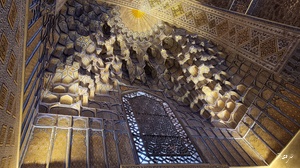
The tiled walls in blue and gold are a marvelous example of mosaic faience, an Iranian technique in which each tile is cut, colored, and fit into place individually, and spell out religious words such as 'Muhammad' and 'Allah' or include floral and vegetal motifs. In Islam gardens are symbols of paradise and the floral pattern can be found in the country’s numerous gardens, but also in various buildings and on the famous local carpets.
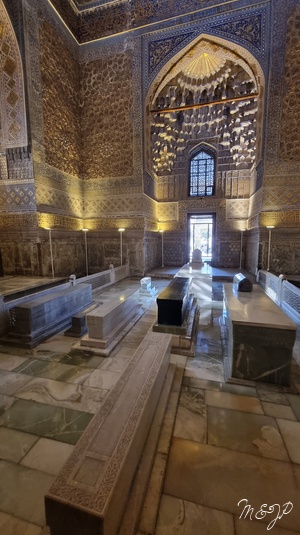
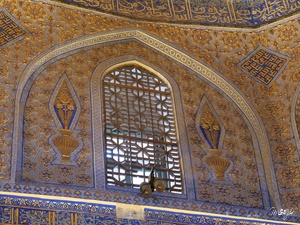
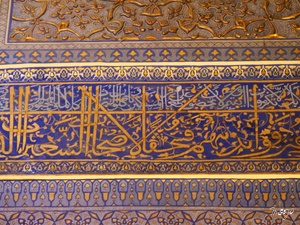
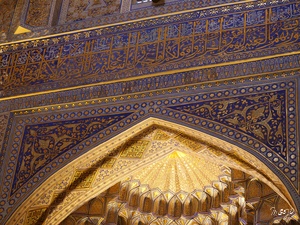
On a quiet street behind the very touristic Gur-e-Amir Mausoleum is located the 15th-century Aksaray Mausoleum, which also served as a burial site for a number of the Timurids. The prominent Soviet archaeologist and historian Mikhail Masson suggested that it was intended for Abdal-Latif Mirza. The latter could not be buried in the Gur-e-Amir Mausoleum because he had given the order to kill his father, Ulugbek, buried there.
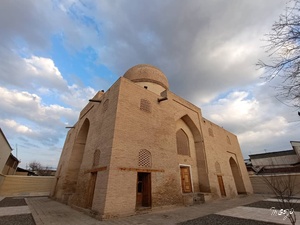
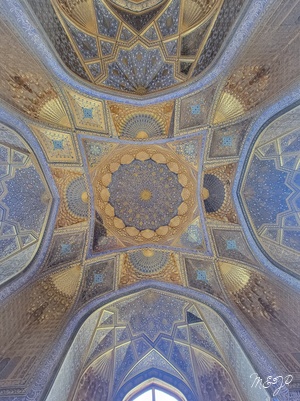
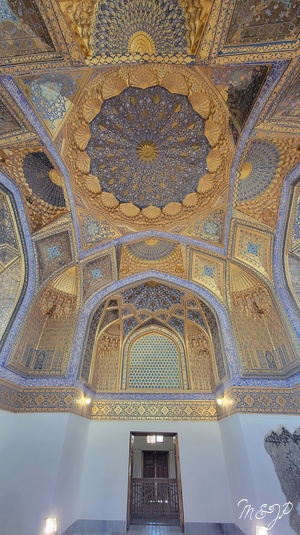
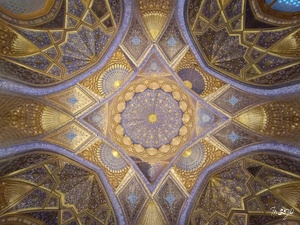
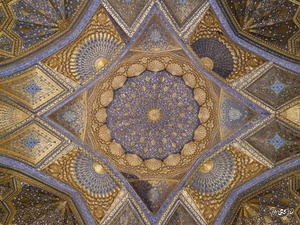
Contrary to the sober exterior, the interior is jaw-dropping with glazed tiles, mosaics and ornamental paintings executed in the kundal technique (multicolored painting with the abundant use of gilding on a relief pattern base).
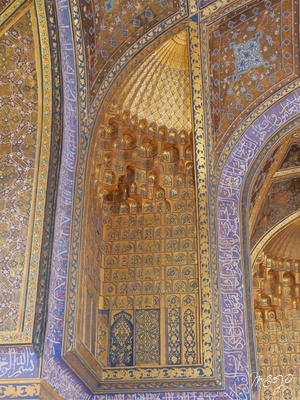
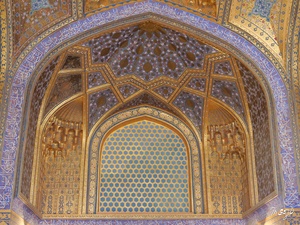
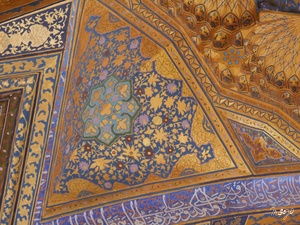
The icing on the cake is the caretaker of the mausoleum - a photo wizard who will help you make the perfect video and take the best pictures of the stunning ceiling. It rests on a high cylindrical drum, the base of which is supported by intersecting arches and pendentives.
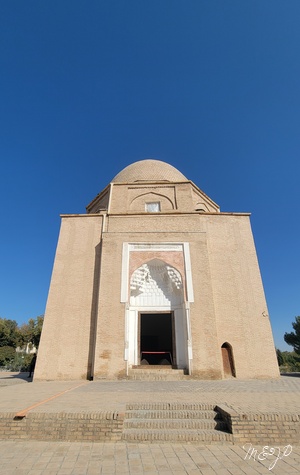
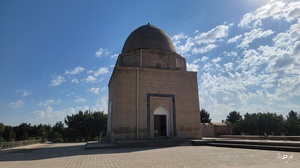
Not too far away from the Aksaray Mausoleum you will bump into the 14th-century small and simple, yet striking, Ruhabad Mausoleum. Built on the orders of Timur, it houses the tomb of Sheikh Burhan al-Din Sagarji, a prominent Islamic theologian and mystic. It is possibly Samarkand’s oldest surviving monument and sharply contrasts with its lavish neighbours. The site is considered sacred and, allegedly, Timur himself would always dismount from his horse when passing by.
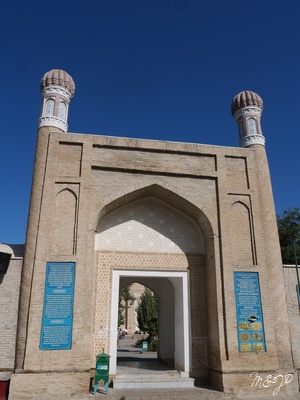
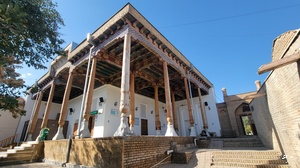
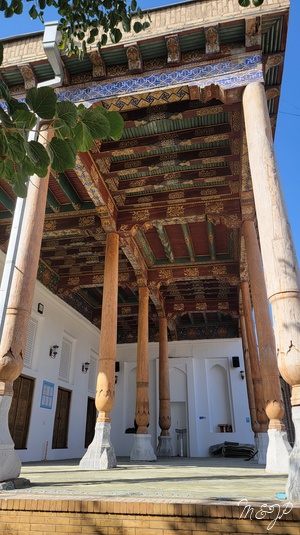
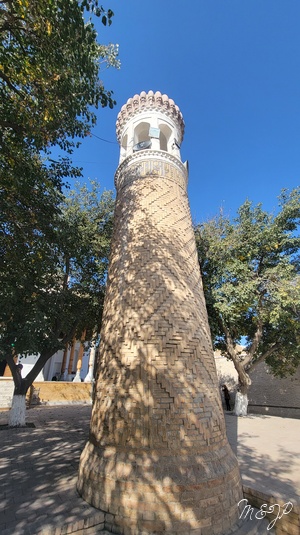
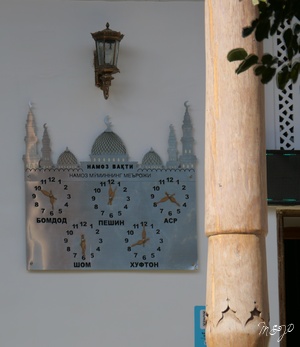
The madrasah-style plaza behind the mausoleum is home to craft workshops, and just next to it is located a functioning mosque with elegant woodcarved columns.
Another iconic monument in Samarkand is the Shah-i-Zinda (the 'the Living King' in Persian), a medieval necropolis adorned in tons of blue hues!
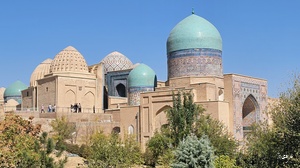
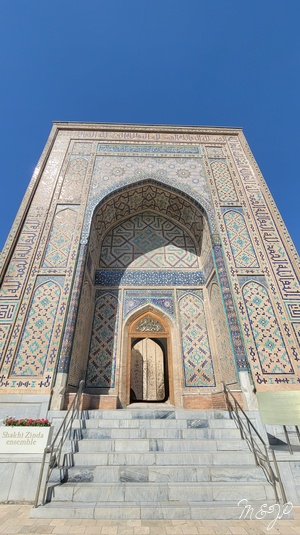
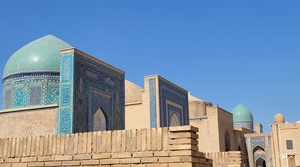
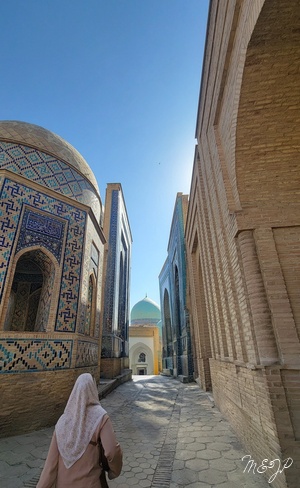
It is named after the legend about Qutham ibn Abbas, a cousin of Muhammad buried at the site, according to which he was decapitated during prayer, picked up his severed head, and walked to the deep well known as the Garden of Paradise where he resides to this day.
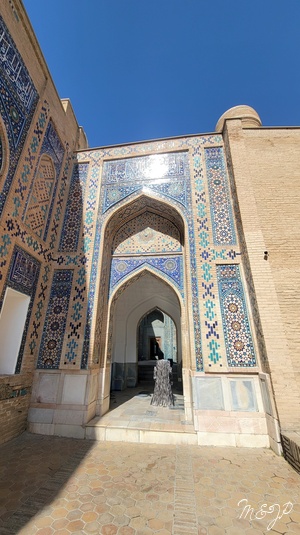
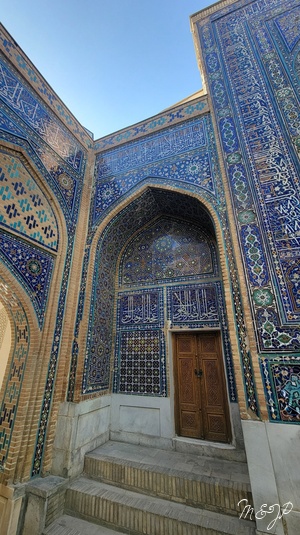
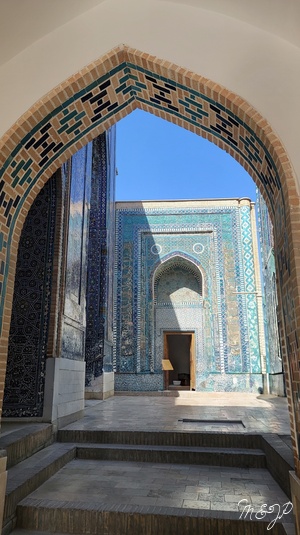
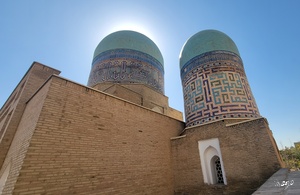
After climbing a flight of stairs, you will be able to admire the dozens of dazzling mosques, shrines and mausoleums of prominent Samarkand citizens (including Timur’s relatives, military and clergy aristocracy), aligned on both sides of a narrow street.
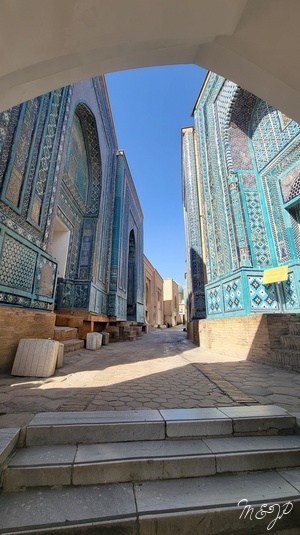
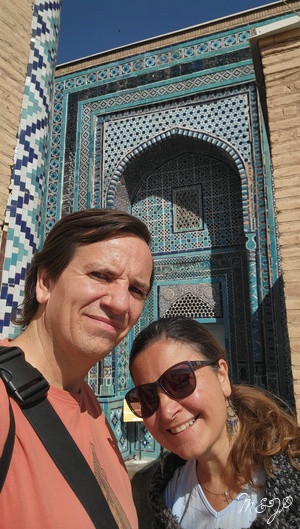
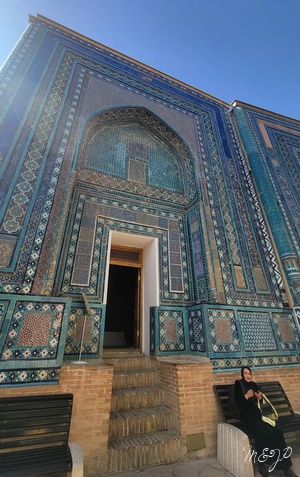
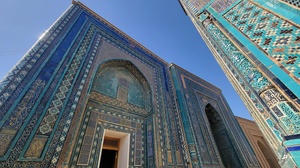
Built between the 11th and the 19th centuries, they are all breathtakingly beautiful.
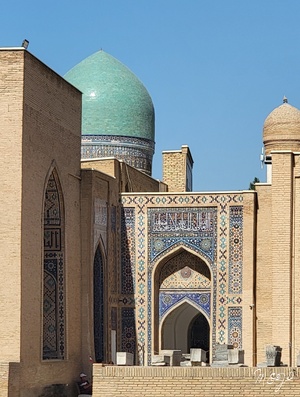
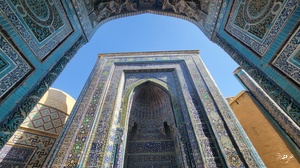
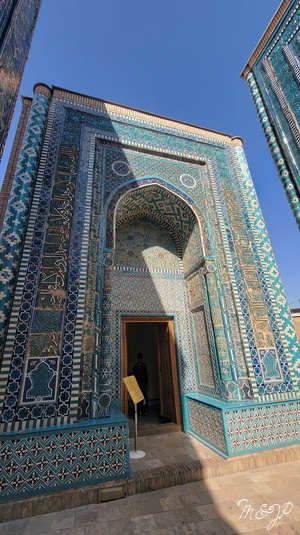
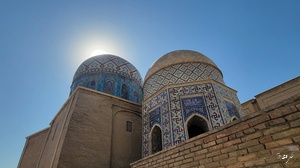
You can look at each tiny little detail for hours…
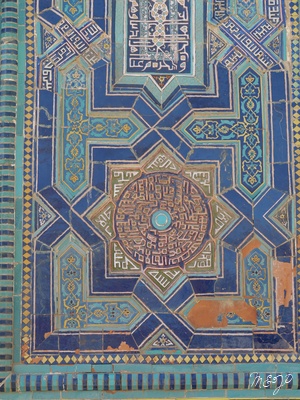
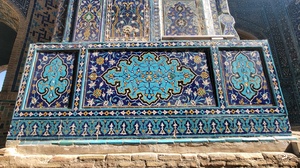
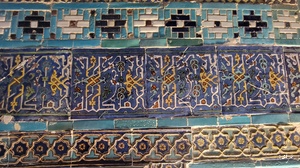
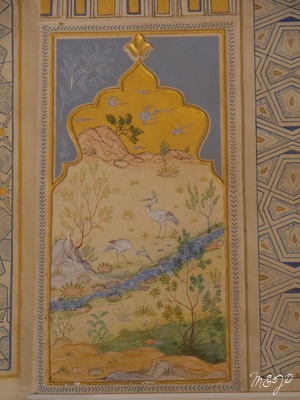
Each mausoleum is different…
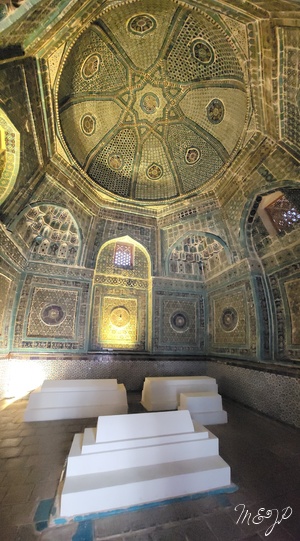
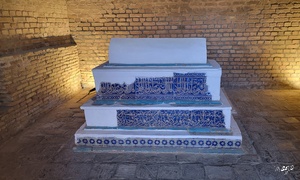
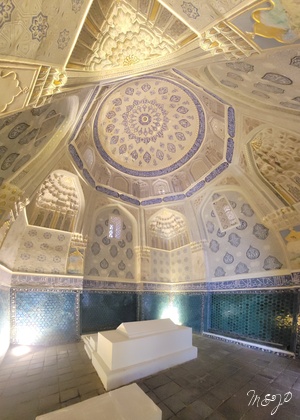
V=src>https://www.youtube.com/embed/UnAmiVOIzzo|title>The interior of a Mausoleum in Shah-i-Zinda in Samarkand, Uzbekistan | OurSmallPlanet.eu=V
However, they all boast intricate mosaic tiles and honeycomb ceilings in stunning colours with lots of golden and blue!
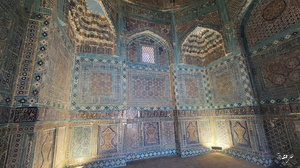
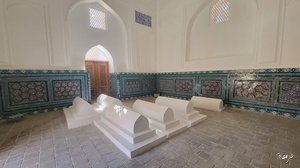
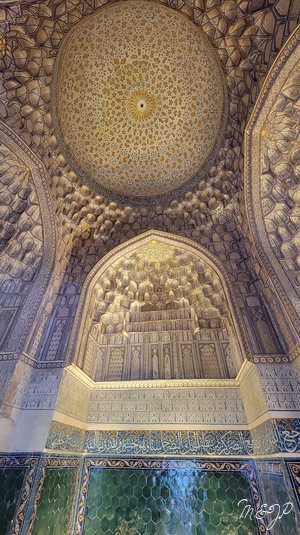
On a hill opposite the Shah-i-Zinda necropolis is perched the 19th-century Hazrat Khizr Mosque, replacing the one destroyed in the 13th century.
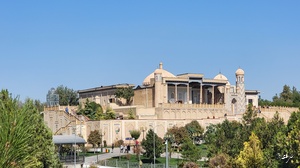
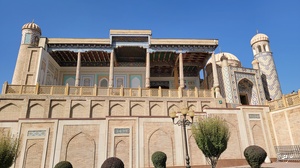
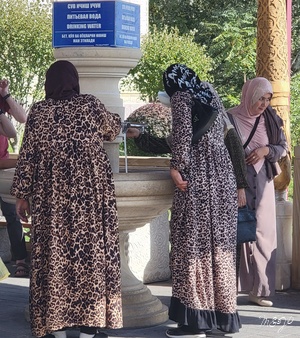
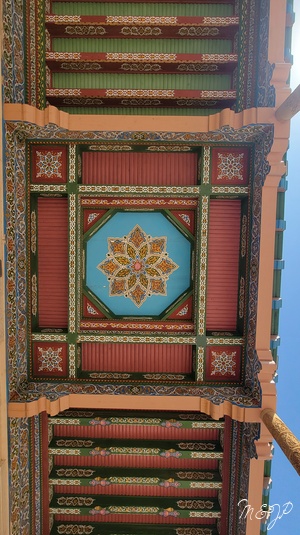
The courtyard is richly decorated with wooden columns and elegant benches.
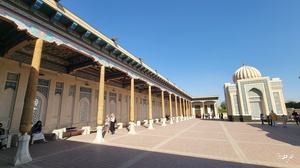
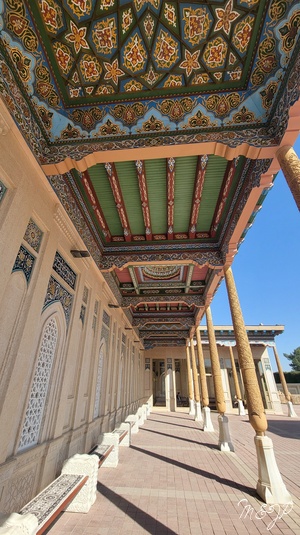
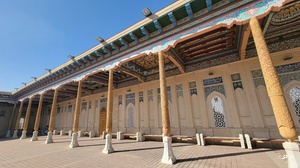
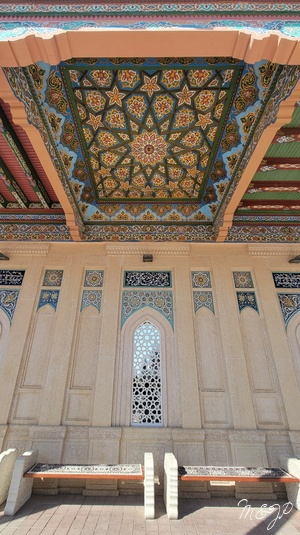
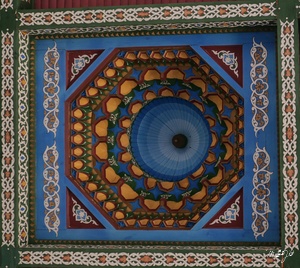
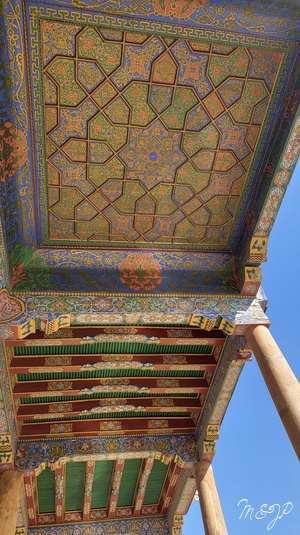
The woodcarved ceilings feature intricate colourful patterns.
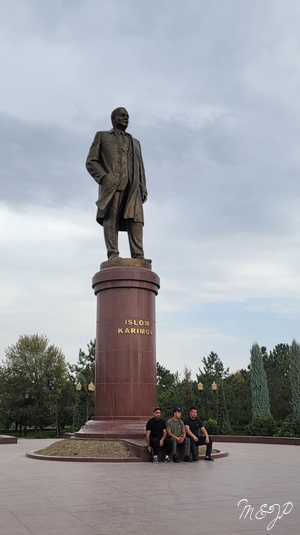
In the middle of the yard stands the tomb and mausoleum of Islam Karimov, the first president of Uzbekistan after the end of the URSS and a Samarkand native. His statue is located a little bit further, in the centre of a square to the east of the Registan.
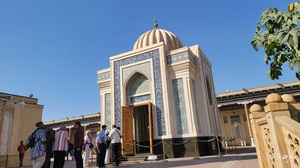
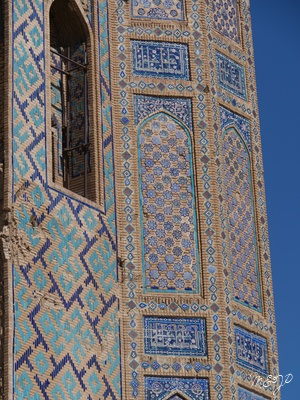
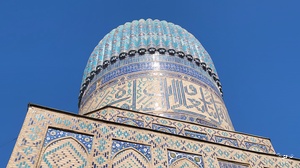
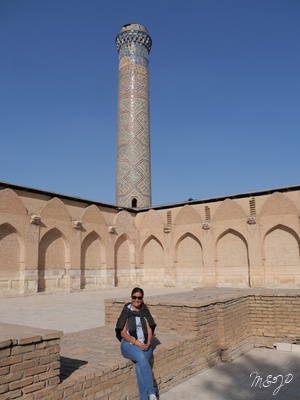
From the Hazrat Khizr Mosque you can spot another of Samarkand’s jewels - the famous Bibi-Khanum Mosque.
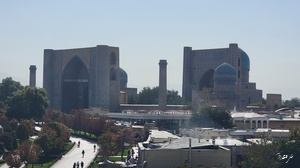
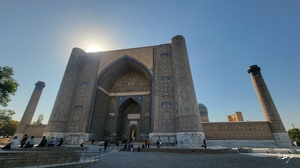
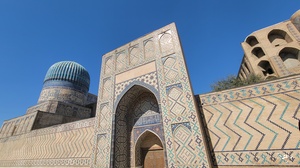
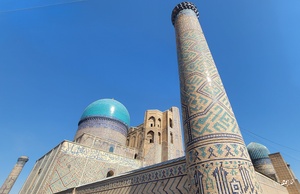
It was initially built in the 15th century in honor of Timur’s beloved wife - Saray Mulk Khanum (nicknamed Bibi Khanum or 'senior princess'), might have been inspired by the design of a major Iranian mosque, and its construction process was allegedly personally overseen by the ruler who had just returned from a campaign in India.
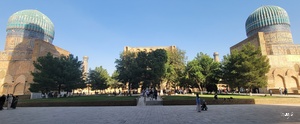
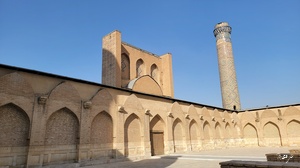
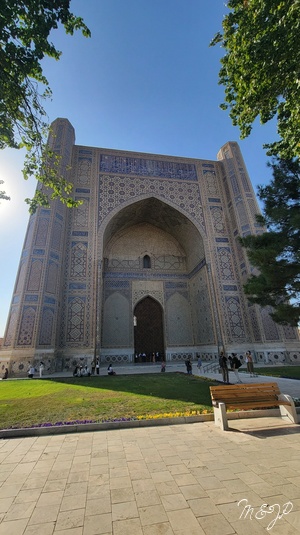
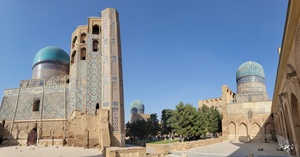
It is said that Timur’s plans pushed the building techniques of the time to their limits and the construction was completed in a record time, which was the cause for several structural issues. Still, back then it was one of the largest and most magnificent mosques in the Islamic world. However, it later fell into ruins due to weather conditions and earthquakes, and was only partially restored during the Soviet era.
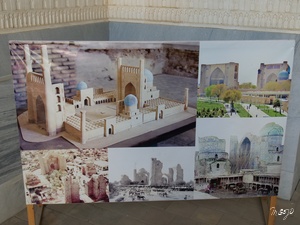
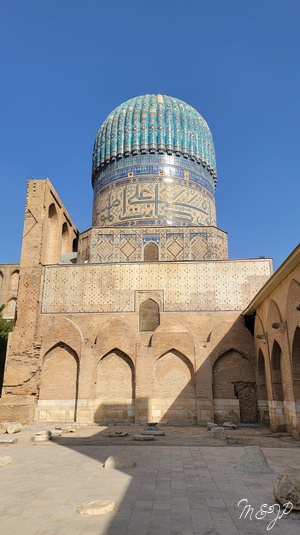
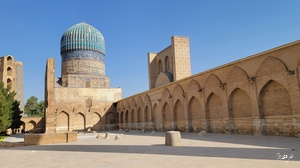
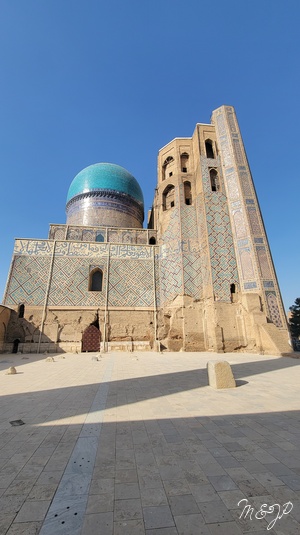
The initial structure had more than 400 marble columns, which were hauled there and set up with the help of elephants that Timur had brought back from Hindustan, and its distinctive domes had been designed by Indian artisans and stonemasons. The standing constructions, including the remaining minarets, are intricately decorated with colourful mosaics, including (you guessed it right) lots of blue. Opposite the mosque is located the Bibi-Khanum Mausoleum.
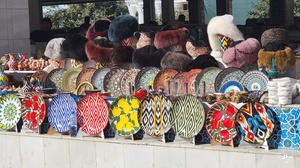
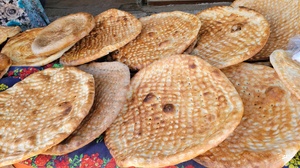
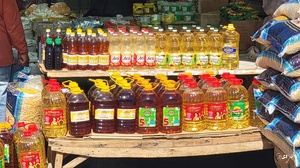
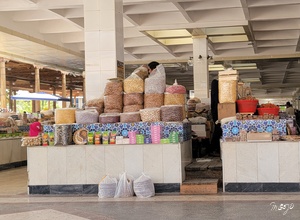
Besides its architectural and cultural wonders, Samarkand is famous for its cuisine. You cannot skip the Siyob Bazaar - the largest bazaar in the city - next to the Bibi-Khanum Mosque ('siyob' means 'black river' in Persian and in Tajik after the river flowing near the bazaar). There, you will find fresh flatbreads, fruits and vegetables, fragrant spices, colourful ceramics and souvenirs, and piles of tempting sweets, including the Samarkand halva decorated with nuts or dried fruits.
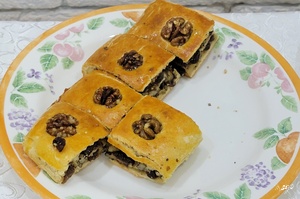
However, our favourite sweet in Uzbekistan which you will have for breakfast in most of the hotels or find in most of the food stores is the Uzbek baklava (or pahlava) with a twist as compared to the Turkish one. It consists of dozens of layers of thin dough, but is filled with crushed nuts and sweet raisins, instead of ground pistachio and syrup made from sugar, water and lemon juice.
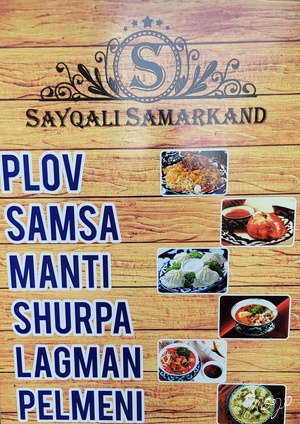
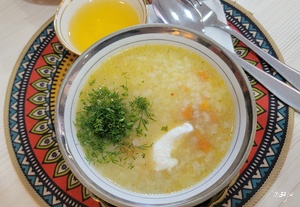
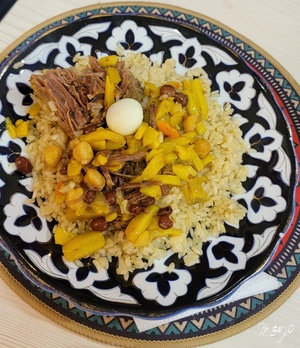
If you are looking for an authentic place for lunch after your visit to the Bibi-Khanum Mosque, the nearby Sayqali Samarkand Chayhana is a small but beautiful café on the main pedestrian street. There, you will find some homemade dishes, such as the famous fragrant plov (the Samarkand version has the specificity of being layered rather than mixed, resulting in cleaner flavors and appearance - rice at the bottom, topped with carrots, and finished with meat on top), as well as the hearty and delicious mastava soup, sometimes called the 'liquid plov', prepared with rice, vegetables and lots of spices, and served with herbs and a small amount of katyk (a fermented milk product from the Turkic countries, similar to yogurt). By now you should have become, like us, local enough to order a teapot of lemon tea to go with your typical Uzbek meal!
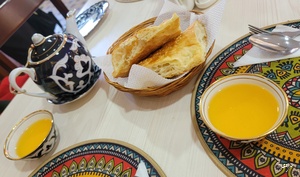
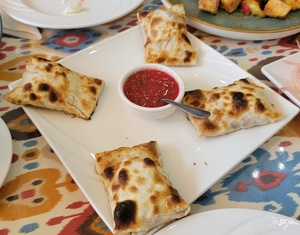
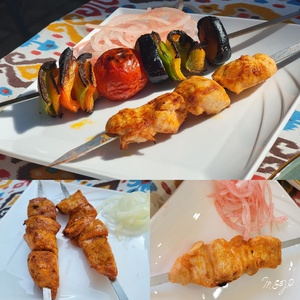
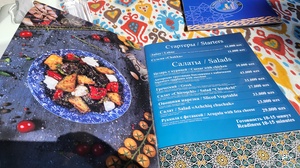
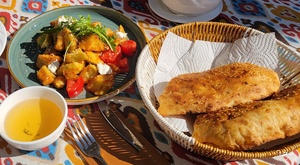
Another restaurant we loved so much that we had lunch there three days in a row was the Afandi Food Chayhana. It was conveniently located near the Registan (like our hotel, which allowed us to explore the city on foot for three full days), had a lovely outdoor seating area, and the food was delicious. We tried the local suzma cheese which had the texture of a cream cheese - you can simply spread it on a piece of fresh flatbread, it is mouth-watering! We also ordered a plate of meat samsas (buns stuffed with meat and sometimes vegetables) - if you are a meat-lover, you will love their filling of big chunks of meat!
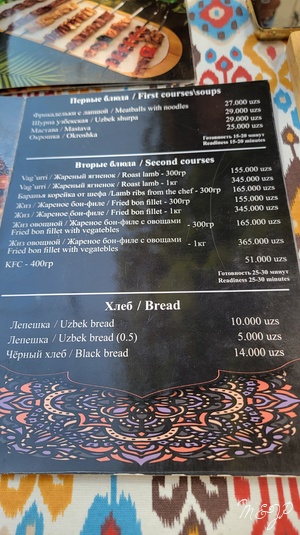
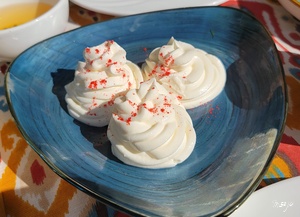
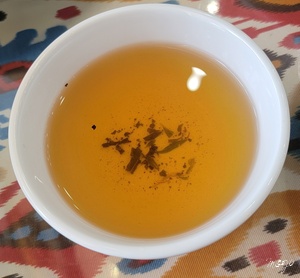
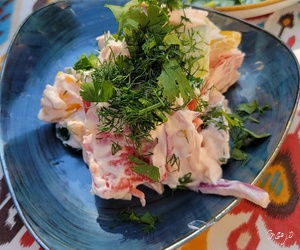
Our favourite dishes though became their fried eggplant salad with the right amount of delicious spices, and the chicken shashliks - a popular dish of skewered and grilled cubes of meat. This is the place where you can also try more Uzbek soups, such as the famous savoury shurpa (made from lamb and vegetables, it is considered a medical dish curing many diseases), as well as more Uzbek salads with tons of fresh herbs. It goes without saying that we also accompanied each meal with a pot of flavoursome tea and half a loaf of fresh local bread!
What we also liked at the Afandi Food Chayhana were the waiters who were incredibly sweet. We could not but notice the refined features of the locals. When we stopped in a local boutique to buy some postcards, we learned from the saleswoman that most of the people in Samarkand were from Tajik descent. The reason is that the borders between the different Central Asian republics determined by the USSR did not necessarily coincide with the populations living there. Some inhabitants of the city speak the Tajik language in addition to Uzbek (Uzbekistan’s official language) and Russian (also widely used across the country, in particular in the public sphere). From Samarkand you can organise a day-trip to Tajikistan, but given everything there was to see in Uzbekistan, we decided that it was not worth it, and were going to have to come back for the rest of the Central Asian countries in order to explore them properly.
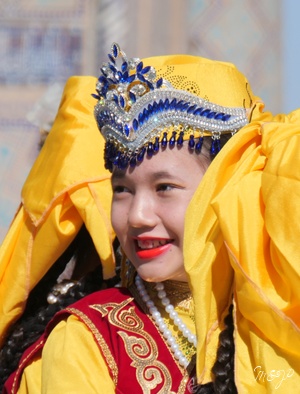
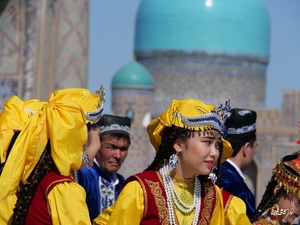
As we were moving west, the features of the local population continued changing. In Bukhara - the next stop of our itinerary - they became a little bit more Turkic, and less Persian or Russian. The train ride between Samarkand and Bukhara lasted only around 2 hours, but our next Silk Road city looked and felt completely different from its Eastern neighbours.

You like what you read?
Explore and learn more about Uzbekistan !!!
-
 P for Paradise and Provence (part 2)
Stunning nature - You cannot leave Marseille without hiking to … -
 P for Paradise and Provence (part 1)
France used to be divided into historical regions, which do … -
 The Valley of Roses and Kings (part 2) The Valley of Kings
The Valley of Roses is famous not only for its … -
 The Valley of Roses and Kings (part 1) The Valley of Roses
Out of all the flowers in the world the rose … -
 In the heart of the Silk Road (part 4) Khiva and the Desert Castles
Khiva - It took us 6 hours, almost a whole … -
 In the heart of the Silk Road (part 3) Bukhara
Bukhara - While Tashkent is a modern city with some … -
 In the heart of the Silk Road (part 2) Samarkand
Samarkand - No name is so evocative of the Silk … -
 In the heart of the Silk Road (part 1) Tashkent
The Great Wall of China, Machu Picchu, the Pyramids of … -
 The Land of Giants at the End of the World (part 2)
We crossed for the third time the border between Argentina … -
 The Land of Giants at the End of the World (part 1)
No visitors come back from Antarctica in the same state … -
 A Vitamin Sea Christmas in the Mediterranean
Human beings are full of contradictions! When we used to … -
 Spring Colours in the Kingdom of the West (part 6) Morocco is yellow
Morocco is yellow - Besides the yellow hues of the … -
 Spring Colours in the Kingdom of the West (part 5) Morocco is red
Morocco is red - Besides the red hues of the … -
 Spring Colours in the Kingdom of the West (part 4) Morocco is orange
Morocco is orange - Our first encounter with the legendary … -
 Spring Colours in the Kingdom of the West (part 3) Morocco is green
Morocco is green - The Rif Mountains east of Tangier, …
