

Namaste in the Land of Gods (part 1)
Posted by: Maria in May 2025 (1 year, 5 months ago)
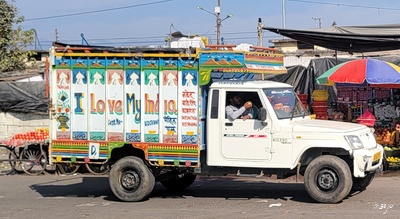
Europeans and Americans alike have always looked East for spirituality, in search of happiness and to escape the hustle and bustle of the modern Western world, governed by individualism, consumerism, selfishness, stress and the constant rat race. Not because Asia is necessarily and intrinsically a more peaceful or happier place…
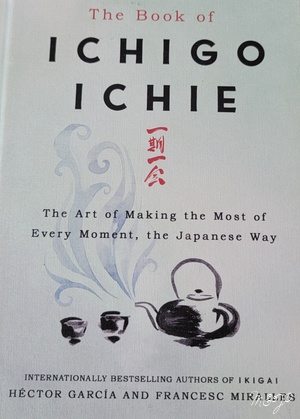
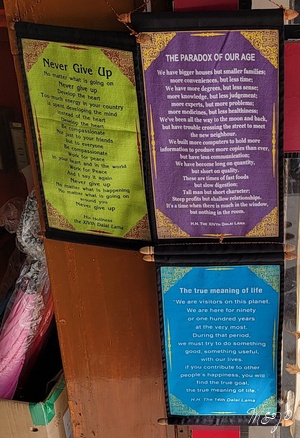
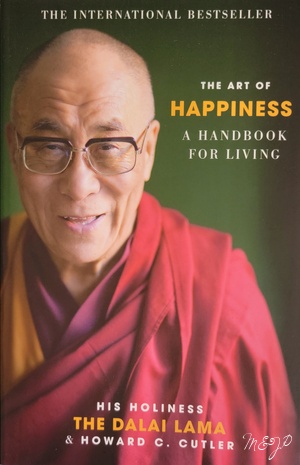
On the contrary, India - the seventh-largest and, with an estimated 1,428,627,663 residents in 2023, the most populous country in the world - is one of the noisiest and craziest places on Earth. Therefore, it might sound like a paradox, but actually makes perfect sense, that out of the four main religions in the world - Christianity, Islam, Hinduism and Buddhism, the last two, together with the ancient practices of yoga and meditation, originated there thousands of years ago. Throughout centuries of self-searching, self-reflection and inward thinking, the Indians have reached the ultimate wisdom and found the way to counterweight the craziness, hurdles and negativity in their daily lives and reach zen attitude, peace, love, compassion and, above all, balance.
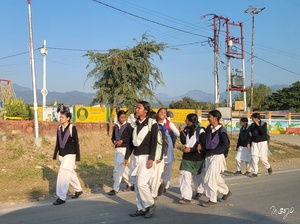
Spending some time on a spiritual retreat in India had been on my bucket list for some time as well. So when my Indian friend, who I had not seen for many years, suggested a visit, I did not hesitate even for a second and immediately said yes. She was the perfect person to open for me the doors to this immense spiritual universe that is India. At almost all of our trips around the world - whether we were visiting temples in Cambodia, Japan or Tibet - she used to emphasise that everything we were seeing had originated from India, and, even though reluctantly, I had to admit that she was 100% right…
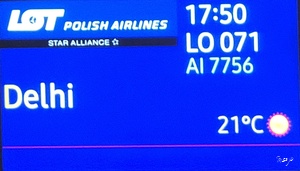
Still, I must confess that as soon as I set foot at the Indira Gandhi International Airport in New Delhi, I had some doubts about the sanity of my decision to fly to India! In the first couple of minutes, I helplessly watched hell unleash in front of my eyes, but then quickly recovered and went with the flow of locals. Surrounded by crowds of people, loud noises of voices and horns, thick haze and total chaos, my first challenge was to find my way through immigration and reach the domestic airport for my next flight to Dehradun - the capital of the Indian state of Uttarakhand. And I am happy to say that I rose to it despite the crazy sprint in the early morning fog!

The region of Uttarakhand, located near the Himalayan foothills and neighbouring Tibet and Nepal, has been known for ages as “The Land of Gods” and the centre of religious and spiritual knowledge in the country. One reason is that with its towering peaks, green hills and forests and meandering rivers, the nature there is so beautiful that it is believed even the Gods could not resist visiting the place.
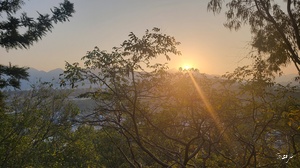
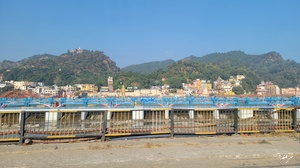
Another reason is that the local culture is inclined very much towards the Gods - Uttarakhand is home to most of the sacred shrines, pilgrimage places and ashrams in India. An ashram is the Indian equivalent of a monastery. However, it is not only home to monks and apprentice monks - regular people like you and me can also stay there from time to time, and perform spiritual and physical exercises, such as various forms of yoga and meditation. Chaurasi Kutia, also known as “The Beatles Ashram”, in the city of Rishikesh in Uttarakhand gained international attention between February and April 1968 when the English rock band The Beatles studied meditation there with Maharishi Mahesh Yogi. It is said to be the setting for the band's most productive period as songwriters, where they composed most of the songs for their self-titled double album, also known as the "White Album". George Harrison even wrote a song about the nearby city of Dehradun!
Finally and above all, the Ganga River - the most sacred river to Hindus - originates from the region of Uttarakhand. Internationally, it is also known as the Ganges River - the anglicised name given to it by the British who were unable to pronounce its name in Hindi. Like most rivers in India who are personified as goddesses, the Ganga is worshipped as the goddess of purification and forgiveness and the mother to humanity.
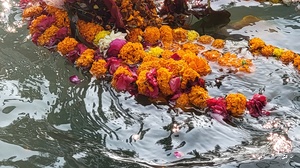
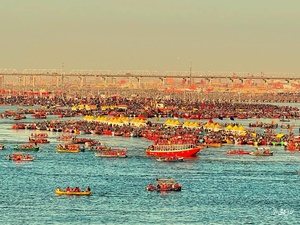
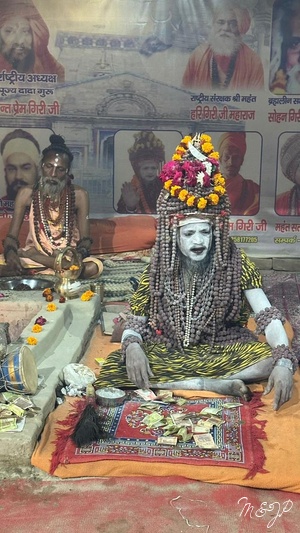
Three towns holy to Hinduism - Haridwar in Uttarakhand and Prayagraj and Varanasi in the neighbouring Uttar Pradesh - attract millions of pilgrims who take a dip in the Ganga to cleanse themselves of sins and help attain salvation, or immerse the ashes of their kin to bring the souls closer to moksha (or nirvana), the freedom from saṃsara (or the cycle of death and rebirth). Every 12 years (the most recently in 2025), the holy river also hosts the Hindu festival of Kumbh Mela - the most sacred of all the pilgrimages - when millions of devotees bathe in the Ganga and participate in various other activities such as religious discussions, devotional singing and mass feeding of the poor. Thousands of sadhus - holy men and women - attend, and the auspiciousness of the festival is in part attributable to this. Kumbh Mela is the largest gathering of people in the world and is so massive that its scale is even visible from space!
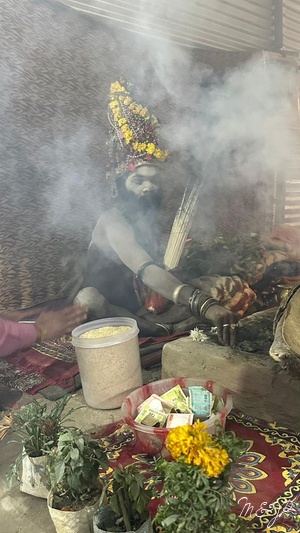
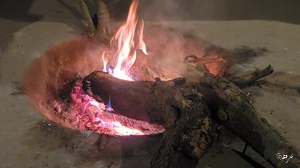
While water is the most popular amongst them, all five elements of earth, water, fire, air, and space can be used to purify our being. For example, fire is used in many spiritual ceremonies including the Ganga aarti, air and earth are the breathing and the grounding used in yoga and meditation, and the luminous emptiness of space - the mother of the other elements - is the basis of higher spiritual experiences.
Before arriving in Dehradun, I honestly did not have any idea that the place where I was going to look for spirituality, peace and happiness was the source and heart of Indian culture, identity and civilization. I did not have any other plan but to see my friend again and embrace whatever experience came my way. Little did I know that for the next ten days I was going to get completely immersed in a world where my body and mind were to be transformed into a temple to heal and nurture with healthy food, meditation and yoga… That my new mantra was going to be "EAT, PRAY and BREATHE"... Unsurprisingly, since health starts with what you eat, the first healing element of my retreat to the East was going to be the delicious Indian food!
EAT
A healthy body means a healthy mind, and a healthy body and a healthy mind mean a happy life! India taught me that we can heal our bodies not with the pills that our Western civilization is used to, but through eating the most natural and least toxic foods. For that, we first need to consciously stop selecting items that satiate our taste buds as they might lead to illnesses! Our body has the ability to heal itself and does not need drugs or surgery, just the proper diet which will treat the roots of the disease and not simply the symptoms. "When diet is wrong, medicine is of no use, when diet is correct, medicine is of no need."
Ayurveda, which in Sanskrit means "knowledge of life and longevity", is a traditional medicine system that originated in India, is used by as much as 80% of the population and whose therapies include herbal medicines, special diets, meditation, yoga, massage and medical oils and cosmetics.
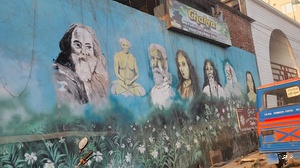
Everything in the universe, including our body, is a play of the five elements and knowledge of them is also the basis of Ayurveda. Each element is responsible for different structures in our body - earth forms solid structures, such as bones, flesh, skin, tissues, and hair; water (did you know that around two-thirds of our body and of our planet is water?) forms saliva, urine, semen, blood, and sweat; fire forms hunger, thirst, and sleep; air is responsible for all movements, and space forms physical attraction, repulsion and fear. Each of the five elements has a certain relationship with the other elements, based on their nature - some of them are enemies like water and fire, while others are friends like earth and water or can cooperate like water and air (just think of sparkling water!).
According to Ayurvedic texts, there are three fundamental doshas, which can be translated in Sanskrit as "those which can cause problems" (literally meaning "faults" or "defects"), and refer to three types of substances that are believed to be present conceptually in a person's body and mind. The balance of the doshas results in health, while the imbalance results in diseases. The doshas are composed from the five elements present in the human body - vata (air & space) refers to all movements in the body and pain is the characteristic feature of deranged vata, pitta (fire & water) represents metabolism and heat, and kapha (water & earth) provides structural integrity to the body. As with the elements, all three of the doshas can be found in everyone and everything, but in different proportions. They determine our body type - each person has his or her own proper balance of doshas. In other words, a diet fit for one person might not work for another one. Certain foods which bring fire and therefore energy and potentially aggressiveness like garlic, onion or meat, are believed to be suitable for people from the Indian warrior caste, but not for those from the priest caste who do not need that much energy to pray and meditate!
If you do not consume the right kind and quantity of food that helps your body in its native ability, and instead consume items that are unnatural and go against your body’s immunity, you are in fact abusing your body nutritionally. The golden rule for every person, whatever your body type is, is that you should consume foods that are as close to their natural state as possible and are free of chemical additives and preservatives - fresh raw vegetables and fruits (organic and seasonal); steamed and cooked vegetables; fresh herbs and spices; whole grains; healthy fats such as olive oil and coconut oil in moderate amounts; legumes and pulses; dairy products including milk, curd and buttermilk; soya and its products including milk, curd, tofu and buttermilk; nuts and seeds and beverages including water, herbal teas, and fresh fruit or vegetable juices. Also, since two-thirds of our body is made of water, the food we consume should provide a similar ratio of water, which is the case when we eat veggies and, to an even larger extent, fruits.
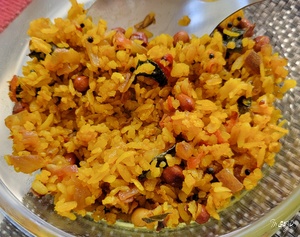
Therefore, my Indian spiritual retreat started with an Ayurvedic breakfast - a glass of smoothie made with fruits and veggies, ginger, turmeric, Indian gooseberries, aloe vera and chia seeds, a cup of coffee with cinnamon which helps to prevent hunger, a ginger and lemon tea, a few slices of papaya fruit and some poha - the healthy quintessentially Indian breakfast made with flattened rice, onions, spices, herbs, lemon juice and peanuts! It sounds a lot but was actually perfect!
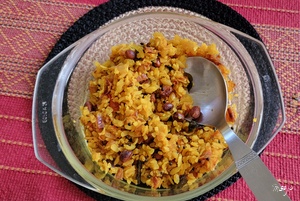
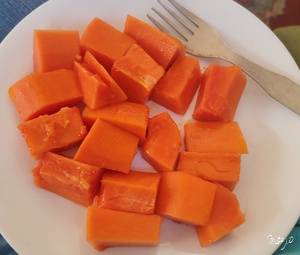
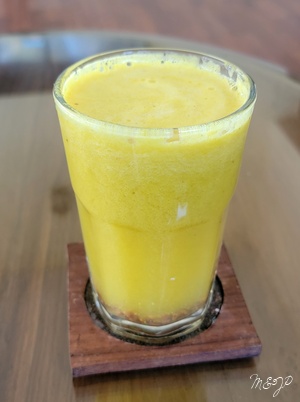
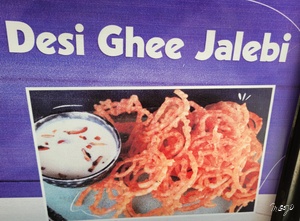
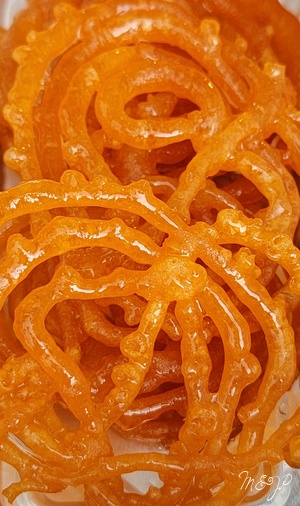
The purpose of adopting a healthy diet is not deprivation. In other words, healthy food can be tasty and eating it can be a fulfilling and pleasant experience! I always thought that it was possible to eat everything to the extent that you did not go into any excess - in particular in terms of quantities - and always stopped eating before you felt full. My 10-day Ayurvedic, almost entirely vegetarian, experience was an incredibly tasty one and I even lost weight without starving myself in any way! If Indians eat healthy food in accordance with Ayurvedic traditions, you might ask what is the reason for the obesity issue in the country - it seems that one in four people in the world with diabetes is from India, making it the most affected country in the world... As with everything else, the problem is always the excess or the imbalance - Indians love their sweets, which are undeniably tasty but also incredibly loaded with fat and sugar. My favourite sweet snack is the bright orange jalebi, made by deep-frying flour batter in pretzel or circular shapes, which is then soaked in sugar syrup. It is a killer but, oh my, do not even dare start counting the calories!
I must admit that since we left Asia more than two years ago, I had been craving for spices and legit Indian food, and my wish was finally granted! My spiritual retreat menu must have been the tastiest detox food ever! Besides the delicious poha, breakfast varied from the crunchy water chestnuts which are highly nutritious, low in calories and with no fat, to the savory semolina with veggies, nuts and dry fruits, and the flavoursome scrambled eggs bhurji with spices.
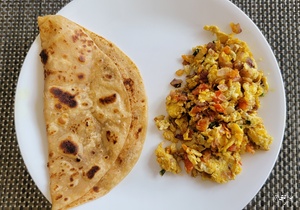
Lunch was the most exciting meal and it always came with a flatbread (chapati, naan, roti, paratha or dosa), millet or rice.
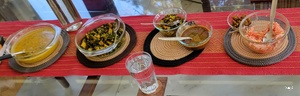
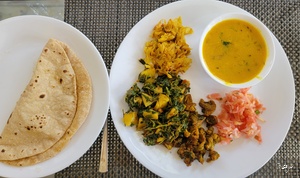
My friend also made me try many new and interesting dishes such as kitchari - a traditional Ayurvedic dish made with boiled rice and toppings of yoghurt, garlic, caramelised onions, mint, chilli and boiling ghee, the famous clarified butter, also used as a traditional medicine and for Hindu religious rituals.
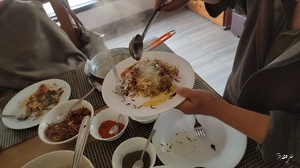
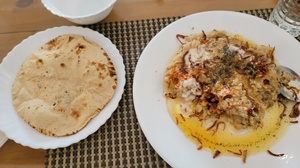
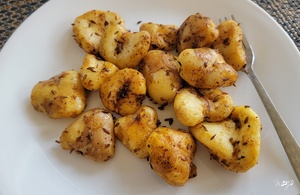
Another dish present at each meal was the dhal made from various types of lentils or red kidney beans. And then there was always an incredible variety of vegetable dishes, such as the famous palak paneer made with spinach and fresh cheese, the sambar - a lentil-based vegetable stew, cooked with pigeon pea and tamarind broth, the aloo methi - a delicious side dish made with potatoes and fenugreek leaves, the gobi or cauliflower curry, the patta gobhi or cabbage curry, the gajar mooli koshimbir - a carrot and radish salad popular in the countryside, the pumpkin raita made with roasted pumpkin and homemade yoghurt and, of course, the chutneys, including the mouth-watering spicy mango chutney and the coconut chutney.
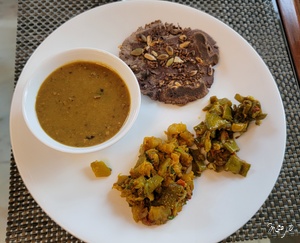
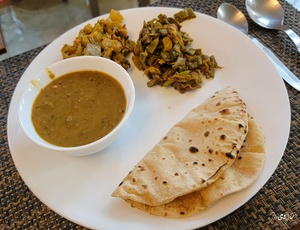
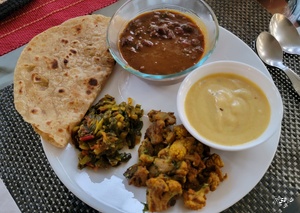
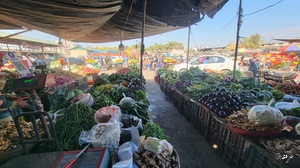
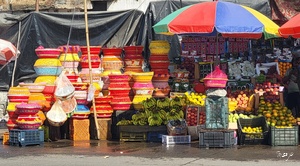
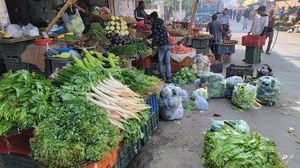
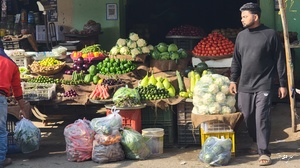
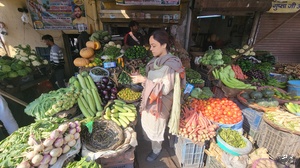
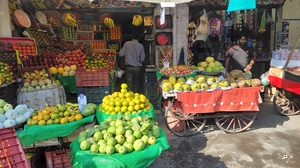
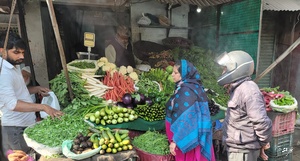
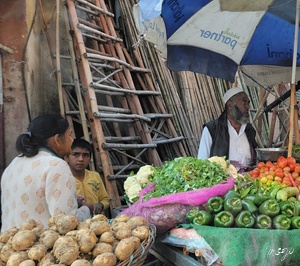
In addition to the indisputable cooking skills of my friend’s cook, this effervescence of colours, flavours and textures was only made possible thanks to the mindblowing variety of fruits and veggies at the local markets… I have never seen anything like it in Europe, the Americas or elsewhere in Asia!
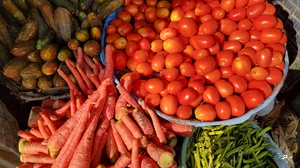
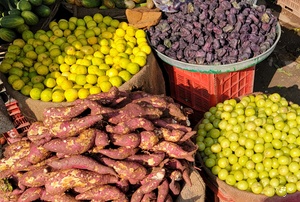
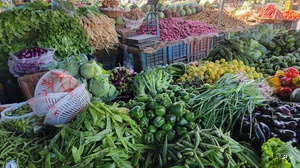
When my friend and I went for groceries, I kept pointing my finger at various fruits and veggies asking for their names, and sometimes found them on my plate for breakfast or lunch!
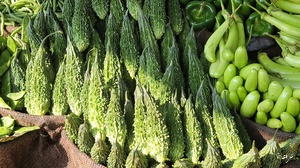
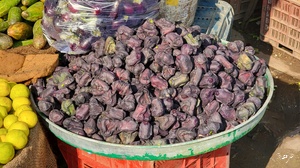
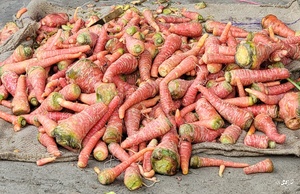
It was a fascinating and never ending culinary discovery!
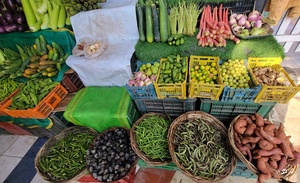
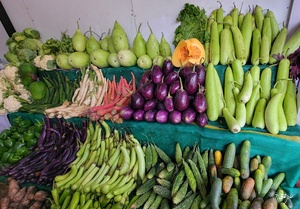
In addition to the symphony of vegetables, there were days when we also had some fish. The Kerala-style marinated fried fish (which brought fond memories from our trip to this dreamy southern region of India) and the fish biryani were melting in the mouth!
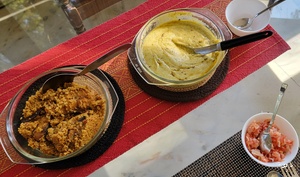
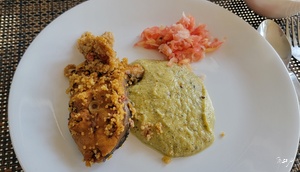
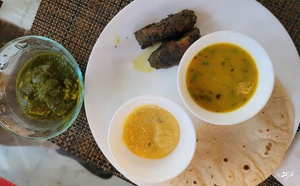
You might have guessed that the common ingredients of all these mouth-watering dishes were, of course, the spices - they made all the difference! And as unbelievable as this might sound, everything was so healthy, low-fat and low-calories simply because all produce were seasonal and organic, each meal was properly balanced with dairy, higher fibre starchy foods, proteins, fruits, veggies and fluids, and ghee was used for cooking instead of the less healthy butter or oil.
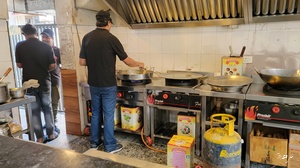
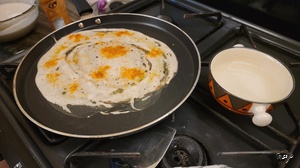
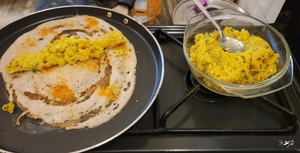
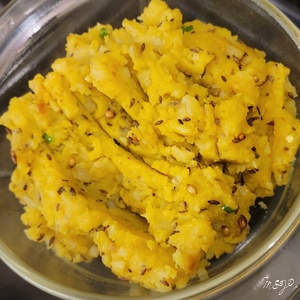
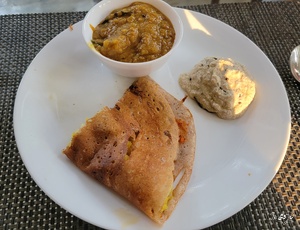
One of the best moments of this deliciousness journey was the private cooking class we had with my friend’s cook who showed us how to make the griddled pancake called dosa, as well as the delicious filling of aloo masala (or potato curry) and the coconut chutney that go with it.
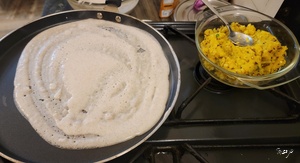
Dinner was always light with a clear mutton broth or a pumpkin soup, accompanied with a cup of the famous moringa tea. The taste will perhaps remind you of the matcha tea in Japan or the maté tea in South America. The moringa tea is prepared from the leaves of the moringa tree and is also known as drumstick or horseradish tea. It has tons of benefits from weight loss, lowering cholesterol levels, and controlling blood pressure, to preventing cancer and treating diabetes.
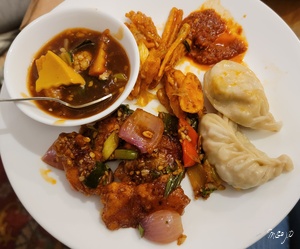
It goes without saying that we also had cheat days as, again, the purpose was not to deprive ourselves. If we had any craving, which happened from time to time, we succumbed to it! One evening we decided to have some Tibetan food which we had enjoyed a lot during our trip to Tibet - the momos with veggies or goat cheese, the stir-fried lotus stems and the chilli fish were beyond delicious!
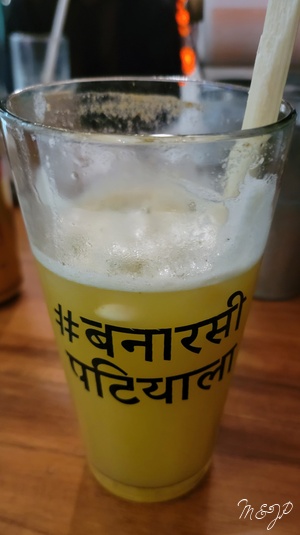
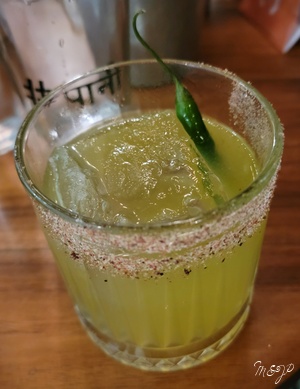
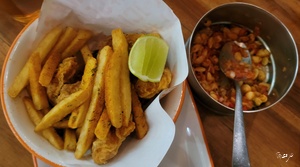
Another evening we went for cocktails and enjoyed the local banarasi patiala with rum, sugarcane juice and chaat masala (a powdered spice mix), as well as some local nibbles such as peanuts coated with tomatoes and chilli and spicy fish and chips bites.
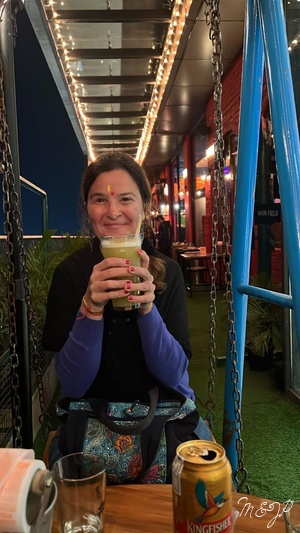
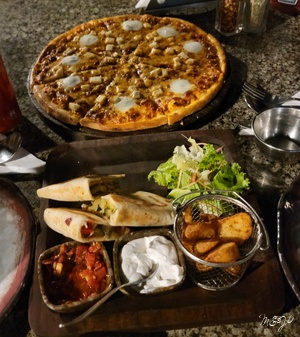
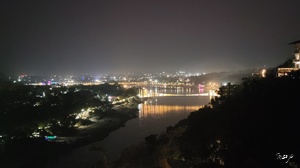
A third evening my friend succumbed to her craving for pizza in a restaurant in Rishikesh. The place used to belong to an Italian lady who had since left India, but before doing so, had trained two locals to make pizzas as delicious as those you can get in Italy! The views from the restaurant were spectacular as well!
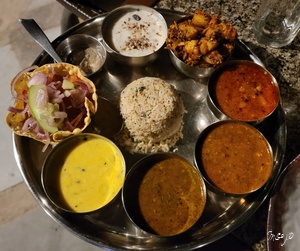
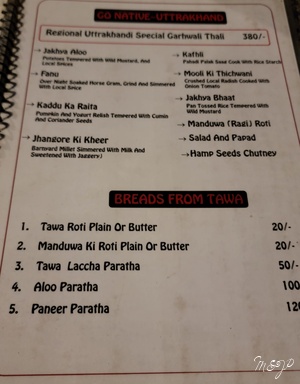
This was also the place where we tried the local thali, a platter with different dishes where a central place is reserved for the cooked cereal, and peripheral ones - for the flavourful accompaniments, served in small bowls. The cereal and its accompaniments are eaten simultaneously rather than in a piecemeal manner. I have always thought of the thali as the Indian cousin of the Spanish tapas in the sense that they both consist of a bunch of small dishes eaten at the same time! The regional Uttarakhand Garhwali Thali we tried in the pizzeria in Rishikesh was delicious and composed of an enticing array of wholesome, nutrient-rich, locally grown, organic, produce. It consisted of so many flavours, textures and aromas unknown to me - tossed rice tempered with wild mustard; manduwa roti - a finger millet flatbread; potatoes tampered with wild mustard and local spices; horse gram; pumpkin and yoghurt relish with cumin and coriander seeds; spinach gravy with rice starch; crushed local radish cooked with onions and tomatoes; salad and hemp seeds chutney and jhangore ki kheer - millet simmered with milk and sweetened with sugarcane for a sweet yet guilt-free ending! With the vibrant colours and beautiful presentation of its dishes, the platter was also, like most Indian dishes, a visual delight!
On top of being delicious, Indian sweets - another cheat food - are beautiful. Just look at the shape and shininess of the jalebi! If you are craving for sweets in Dehradun, the best place to buy some is the “Five Star Premium” sweets store in the city center.
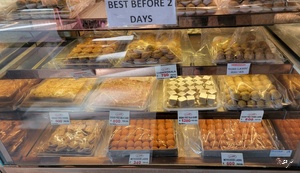
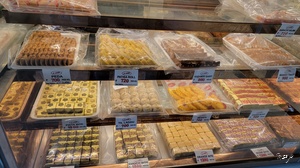
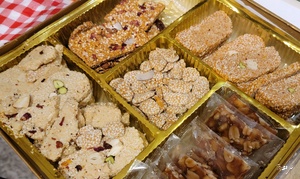
It should not be puzzling by now if I tell you that Indians eat sweets even when they are fasting - take for example the famous gajak sweets, made from sesame seeds or peanuts and jaggery (or cane sugar). Fasting is not an obligation for Hindus, but rather a moral and spiritual act where the aim is to purify the body and mind and acquire divine grace, and it is widely followed in the country. If I have to eat gajak sweets, I will be more than happy to fast every day as well - they are delicious!
Indians also have special treats that help digestion. One day after dinner we had a paan - an after-dinner treat consisting of a betel leaf filled with various fillings such as candied fruit, raisins, cardamom, saffron, and roasted coconut. Besides helping digestion, paan is also a mouth sweetener and freshener, and often acts as a caffeine-like stimulant or aphrodisiac and might be addictive. At the street stall where we stopped, the paan had its own nickname - "shut up" - because you have to swallow it in one piece (and it is a huge piece!), after which your mouth is so full that you cannot utter a single sound, let alone a word!
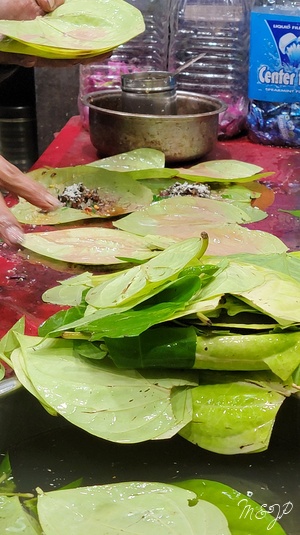
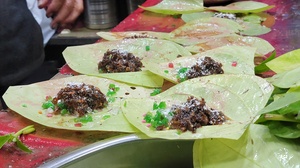
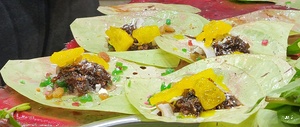
Last but not least, one of the reasons I love Indian food is that it caters for vegetarians, even "fake" ones like me! While a majority of Hindus eat meat, about 30% of them are vegetarians.
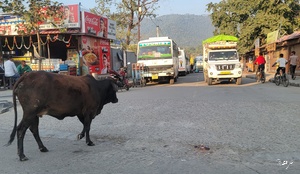
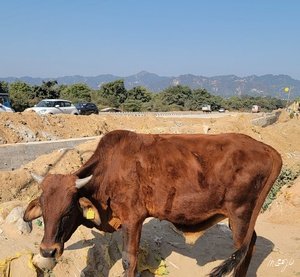
That stems from the fundamental belief in ahimsa, the principle of non-violence. Since all living things are manifestations of God, violence against them is considered contrary to the natural balance of the universe. And then, even Indians who eat meat refrain from consuming beef as cows in Hinduism are seen as symbols of life and motherhood, and are associated with several Hindu gods and goddesses (for example Krishna is often depicted as a cowherd, and Nandi the Bull is Shiva’s sacred mount). Because of this reverence, harming or killing cows is seen as wrong, and you can see them wandering around or ruminating everywhere in the streets of India. This seems to be the perfect example of how food and religion are interconnected in this country!
The second healing element of my retreat to the East was going to be the prayers or, if you would like to remove the religious component, the meditation…
Disclaimer: This article represents the understanding of the author during a trip to India. It does not contain any dietary, health or other recommendations. While most of the information provided is based on verified sources, the author shall not be responsible for any interpretation made from the content of the present article.

You like what you read?
Explore and learn more about India !!!
-
 P for Paradise and Provence (part 2)
Stunning nature - You cannot leave Marseille without hiking to … -
 P for Paradise and Provence (part 1)
France used to be divided into historical regions, which do … -
 The Valley of Roses and Kings (part 2) The Valley of Kings
The Valley of Roses is famous not only for its … -
 The Valley of Roses and Kings (part 1) The Valley of Roses
Out of all the flowers in the world the rose … -
 In the heart of the Silk Road (part 4) Khiva and the Desert Castles
Khiva - It took us 6 hours, almost a whole … -
 In the heart of the Silk Road (part 3) Bukhara
Bukhara - While Tashkent is a modern city with some … -
 In the heart of the Silk Road (part 2) Samarkand
Samarkand - No name is so evocative of the Silk … -
 In the heart of the Silk Road (part 1) Tashkent
The Great Wall of China, Machu Picchu, the Pyramids of … -
 The Land of Giants at the End of the World (part 2)
We crossed for the third time the border between Argentina … -
 The Land of Giants at the End of the World (part 1)
No visitors come back from Antarctica in the same state … -
 A Vitamin Sea Christmas in the Mediterranean
Human beings are full of contradictions! When we used to … -
 Spring Colours in the Kingdom of the West (part 6) Morocco is yellow
Morocco is yellow - Besides the yellow hues of the … -
 Spring Colours in the Kingdom of the West (part 5) Morocco is red
Morocco is red - Besides the red hues of the … -
 Spring Colours in the Kingdom of the West (part 4) Morocco is orange
Morocco is orange - Our first encounter with the legendary … -
 Spring Colours in the Kingdom of the West (part 3) Morocco is green
Morocco is green - The Rif Mountains east of Tangier, …
