
In the heart of the Silk Road (part 1)
Tashkent
Posted by: Maria in May 2026 (4 months, 3 weeks ago)
The Great Wall of China, Machu Picchu, the Pyramids of Giza, the Taj Mahal, the Victoria Falls, Stonehenge, the Grand Canyon, Petra, Chichen Itza, Angkor Wat… There are some places on Our Small Planet which are the dream of any traveller looking for adventures, history and breathtaking sights, but even more iconic are some of the roads, waterways and railways bringing him or her to these natural or humanmade wonders - the Mekong and the Nile Rivers, the Trans-Siberian and the Orient Express, the Panama and the Suez Canals and, probably the most exciting of them all, the Silk Road! This most famous and extensive network of trade routes in history had been connecting and carrying goods and people between the great eastern and western civilisations for over 1,500 years! It had started with China’s early needs for horses to battle the nomads on its northern border that were traded in exchange for silk, and had later extended to gold, silver, ivory, jade, wool, Mediterranean coloured glass, pomegranates, peaches, wine, acrobats, ostriches, porcelaine, bamboo, tea, spices, incense, medicinal herbs, perfumes and so many other valuable exotic goods greatly desired by people along the road!
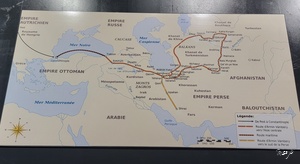
Contrary to its name, the Silk Road was not one but many trade roads with various ramifications that had changed during the years due to wars, robbers or natural disasters. Kings, traders, pilgrims, refugees, artisans and diplomats all travelled the various routes between China, India, Persia, the Levant, Constantinople and Russia! Thеse centuries-long encounters and exchanges between the East and the West explain the various influences of ideas, languages, religions, arts and even technologies, such as paper production and irrigation, on the people along the Silk Road, and in particular on those in its heartland - nowadays Uzbekistan in Central Asia. Its cities and people had grown incredibly wealthy thanks to the markets, accommodations, warehouses and finance they used to provide to the traders!
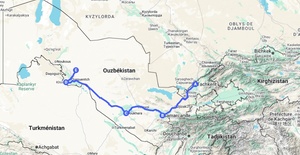
The best way to discover the country is by simply following the ancient route to visit each of the caravan cities of Tashkent, Samarkand, Bukhara and Khiva, not like in the past with caravans and Bactrian camels (two-humped camels native to the steppes of Central Asia, different from the one-humped dromedary camels, or Arabian camels, found mostly in the Middle East and the Sahara Desert), but with modern high-speed trains instead! Do not even consider renting a car - with an area of 447,400 sq km, Uzbekistan is not the best country for a road trip as the distances are huge! In addition to the trains, you might want to book a car for a day-trip to Uzbekistan’s desert castles and install on your phone the Yandex app (the equivalent of Uber or Lyft) to book taxis to pick you up from the train stations (the main train station in Bukhara is further away from the city than the airport). Also, choose wisely the timing of your visit - it might be very hot in summer and very cold in winter with temperatures sometimes reaching almost 50°C or -35°C. The best months to visit are April to May and September to October, but try to avoid the May holidays and the Chinese Golden week at the beginning of October.
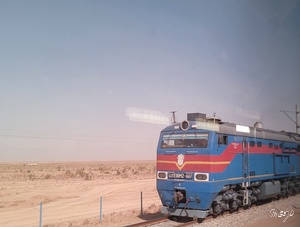
Like its other Central Asian neighbours (Kazakhstan, Kyrgyzstan, Tajikistan and Turkmenistan), created after the fall of the Soviet Union in 1991 and named after their dominant ethnic population with the suffix ‘stan’ meaning ‘land’, Uzbekistan - one of only two double landlocked countries in the world together with Liechtenstein (surrounded only by countries that are themselves landlocked) - is at the crossroads between Russia (or the ex USSR), Asia and the Muslim world. It is a place where the East meets the West and a fascinating mix of religions, architectures, ethnicities, languages and cuisines.
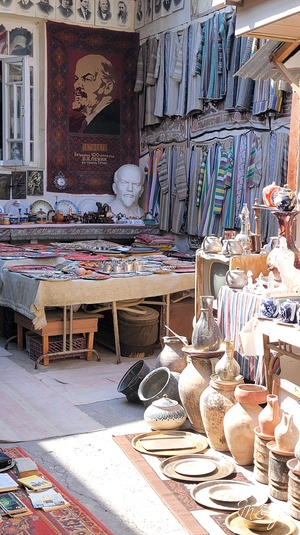
You can hear the bells of a Russian orthodox church and the calls for prayer of a mosque (even though you have to be close to one as there is no broadcasting contrary to other Mustlim countries), see some women with hijabs and others wearing clothes which might remind you of the fashion style from the communist era, buy your groceries from an Arab style open-air bazaar and a bottle of Russian vodka from a liquor store, come across ancient madrasahs (traditional Islamic universities) and modern international schools, spot old Soviet, cars such as Lada, Moskvitch or Volga, and lots of locally manufactured white Chevrolets (the white colour is the most demanded and expensive one as it is the most adapted for the heat and the dust), dine in modern fancy Western-style restaurants and local canteens with cheap and delicious Asian-style noodles, dumplings and bread loaves, accompanied with teapots of green, black or lemon chai (or tea), and get crazy while trying to understand all the signs in Russian, English or Uzbek, written in Cyrillic, Latin or Arabic scripts.
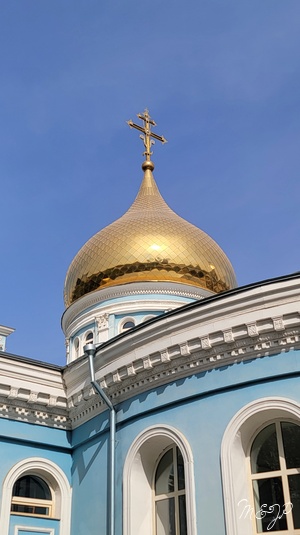
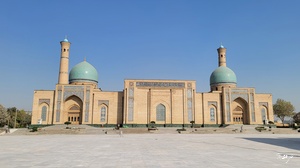
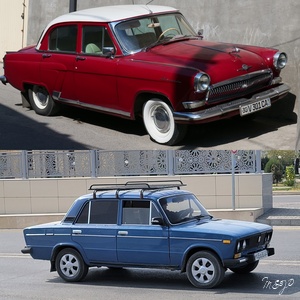
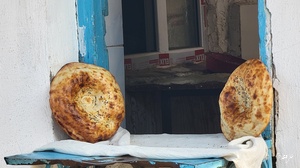
The inscriptions in the monuments are often written in Arabic, but everywhere else in the country you will come across signs in Uzbek written either in the Cyrillic alphabet imposed by the Soviets in 1940, or in the Latin alphabet adopted after the independence.
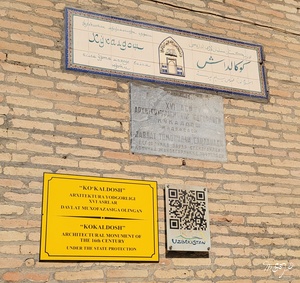
As unbelievable as it might sound, this incredible hotchpotch hides some common patterns. All the Silk Road cities had been the cradle of culture for more than two millennia and boast stunning architecture, infused with the fascinating history of the trade routes and those who travelled them.
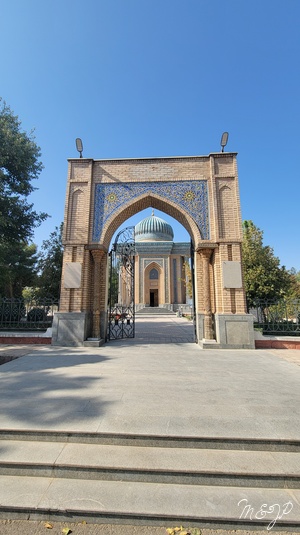
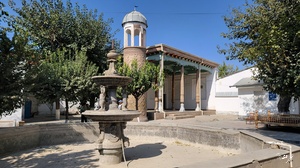
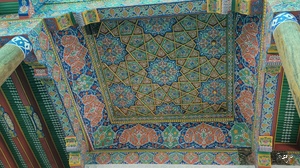
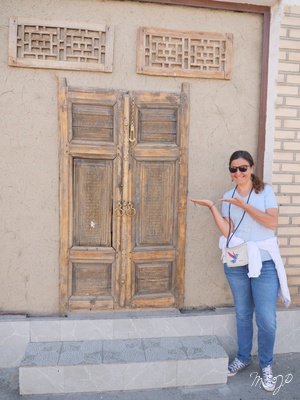
Everywhere you travel, you will come across the five 'M' for markets, mosques, madrasahs, mausoleums and minarets, featuring glazed tiles, mosaics and woodcarvings, as well as the famous intricate honeycomb ceilings and the blue melon-shaped domes (the shape is believed to have been designed to echo the yurts, the traditional Mongol tents)!
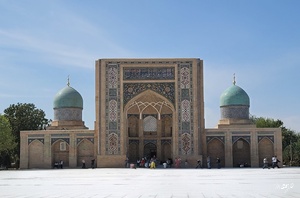
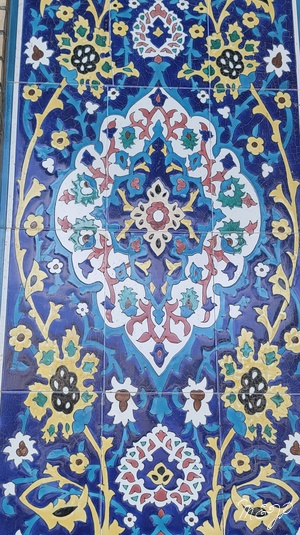
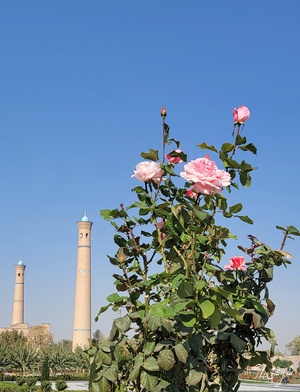
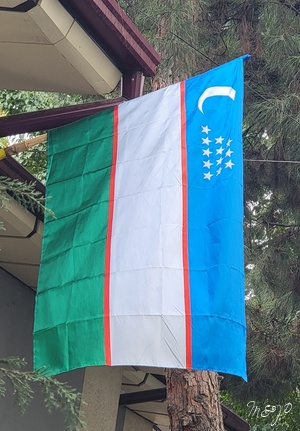
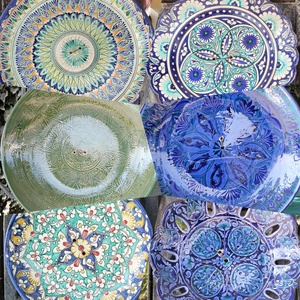
The blue colour is everywhere in the country, including on the national blue, white and green flag. Reflecting the endless sky, it symbolizes heaven, divinity, and paradise in Islamic tradition. Some shades of blue used in mausoleums are colours of mourning. It is also considered the colour that could ward off 'the evil eye' and represented water, a particularly rare resource in Central Asia.
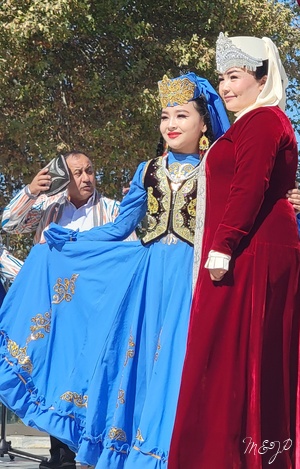
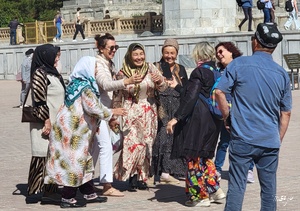
Another constant you cannot miss are the kind and incredibly beautiful locals, whether they have the blond hair and blue eyes of the northern Caucasians, the delicate faces and almond-shaped eyes of the Persian people or the wide cheekbones and determined look of the descendants of Genghis Khan - the fierce founder of the Mongol Empire. Out of its 38.3 million people (Uzbekistan is Central Asia's most populous country), almost 85% are Uzbeks - a Turkic ethnic group belonging to the same family as the Turkish people, the Kazakhs, the Kyrgyz people, the Turkmens, the Karakalpaks, the Tatars, the Azerbaijanis and the Uyghurs, and speaking Uzbek - a Turkic language. The name ‘Uzbeks’ only refers to people from the Uzbek ethnic group who also live outside of Uzbekistan, in particular in Afghanistan, Tajikistan, Kyrgyzstan, Kazakhstan, Turkmenistan, Russia, and China. The rest of Uzbekistan’s nationals, called Uzbekistani, include Tajiks (a Persianate ethnic group living mainly in Afghanistan, Tajikistan and Uzbekistan and speaking a variant of the Persian language), Kazakhs, Karakalpaks, Tatars, Armenians, Jews, as well as small groups of Koreans forcibly relocated to the region from the Soviet Far East in 1937–1938. The interesting part is that the further you go west, riding the train from the modern capital Tashkent to the ancient fortresses of the Kyzylkum desert, the more you immerse yourself in the East!
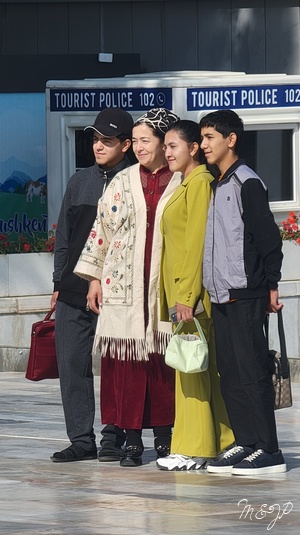
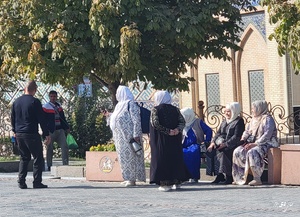
Tashkent - If you think that Tashkent (translating as 'City of Stones' from the Turkic word ‘tash’ and the Persian word ‘kent’), the largest city in the country and the most populous one in Central Asia, built in Soviet style with broad not quite pedestrian-friendly avenues, is not worth your time, think twice. Besides the drawbacks of a newly built modern city and its huge distances which will require hopping on the local subway or taking a taxi, it features a delightful variety of hidden treasures, including serene parks, a quiet traditional Uzbek old town with mudbrick houses and a colourful bazaar, incredible museums and probably the most delicious and cheapest food in the country! Even though today it is not as charming as its neighbours to the west, it also used to be a major caravan crossroads at the time the Arabs took it in 751, and later on had seen the Mongols of Genghis Khan, many Central Asian dynasties and the Russians. The four full days we stayed in Uzbekistan’s capital were full of surprises!
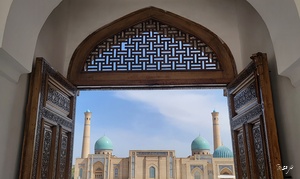
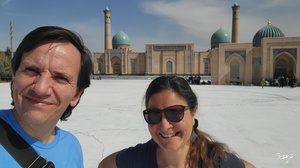
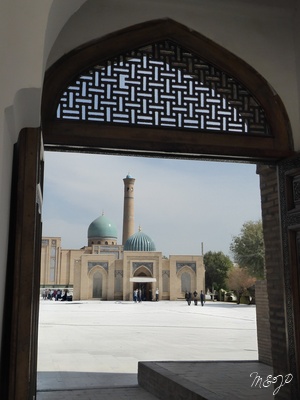
We saw for the first time the iconic turquoise blue domes in the spiritual and religious heart of Uzbekistan’s capital - the Hazrati Imam (or Khast Imam) complex, comprising several architectural monuments dating from the 16th to the 20th centuries.
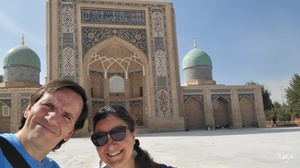
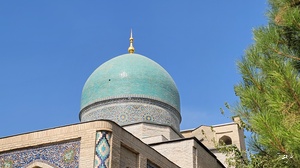
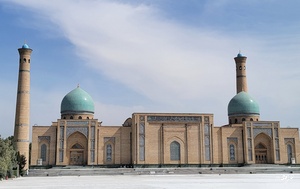
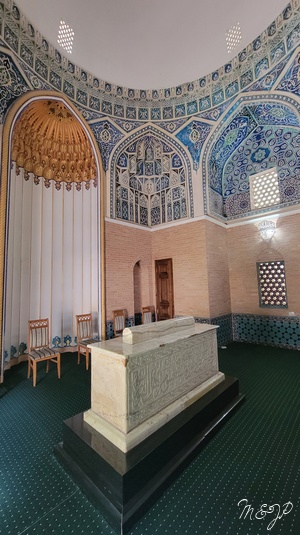
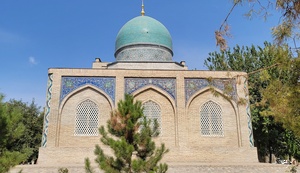
The ensemble was built near the grave and the beautifully adorned 16th-century mausoleum of Abu Bakr al-Kaffal al-Shashi, aka Hazrati Imam (the 'Great Imam'), who lived in the 10th century and was the first imam of Tashkent, but also a poet, scholar, scientist, craftsman and artist. The period from the 8th to the 13th centuries, called the First Eastern Renaissance, was a time when education was considered a religious obligation for men and was revered above all else, which was the path Hazrati Imam followed as well. In the medieval madrasahs young men could study theology, but also astronomy, mathematics, jurisprudence, Arabic linguistics and so many more religious and secular subjects.
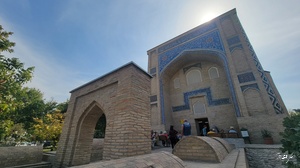
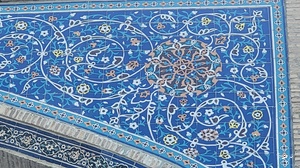
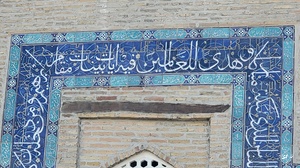
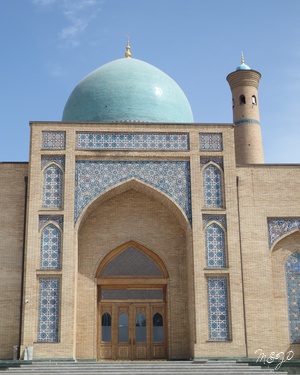
Not too far from the mausoleum is located the 16th-century Barak-Khan Madrasah, built under Navruz Ahmad Khan - the ruler of Tashkent, who had great luck and was therefore called by his subjects Barak Khan, which translates as the 'Lucky Ruler'.
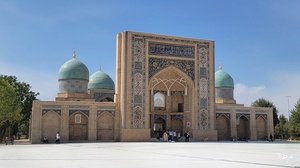
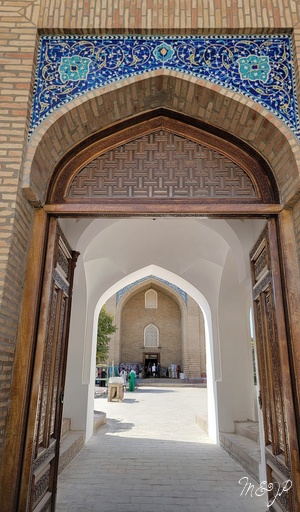
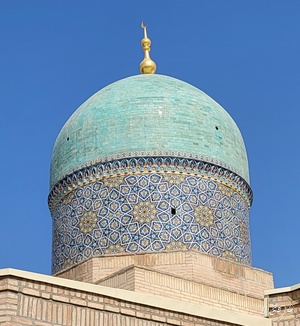
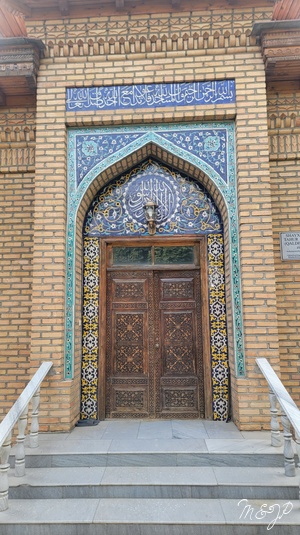
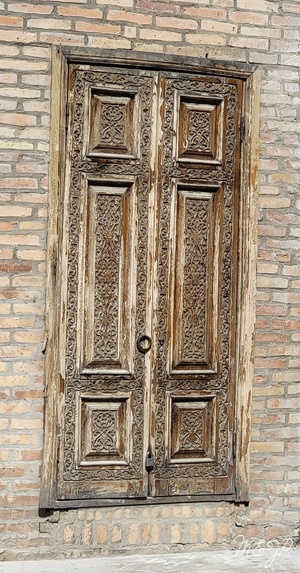
The main entrance of the madrasah is decorated with unique ceramic mosaics and glazed tiles, while the building, which comprises 35 hujras (or student cells), now turned into souvenir shops, with intricate woodcarved doors, is crowned with gorgeous turquoise blue domes.
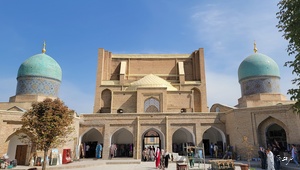
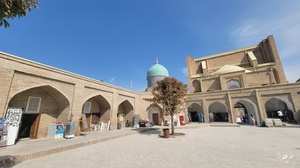
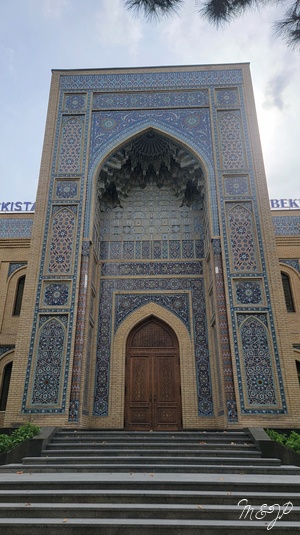
Opposite the Barak-Khan Madrasah, on the other side of the Hazrati Imam square, is the Leviathan Hazrati Imam Friday Mosque, flanked by two majestic 54-m-tall minarets. The architecture of the largest place of worship in Tashkent, built in 2007 in a record-breaking 4 months, was kept in the style of the 16th century.
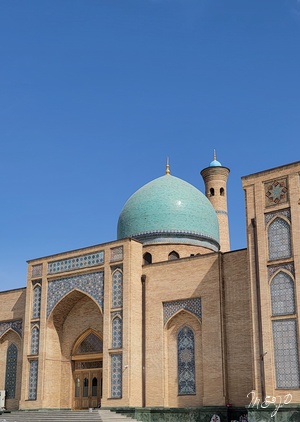
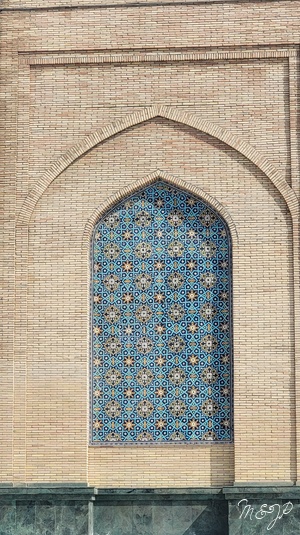
The woodcarvings, tiles and mosaics are splendid!
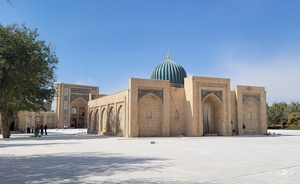
In the middle of the square stands the tiny and cute Muyi Muborak Madrasah, whose ribbed dome, façade design, and decorative elements reflect the traditional Central Asian Islamic architecture featuring the use of baked bricks, glazed tilework (especially blue and turquoise) and symmetrical arch motifs. Until recently the building, also known as the Hazrati Imam Library Museum, housed the 7th-century Osman Quran, inscribed on UNESCO’s Memory of the World Register. Written on deer skin in early Arabic script, it is said to be the world’s oldest. Allegedly, the caliph at that time was killed while reading the sacred text, and marks believed to be his blood remain on its pages. The Quran was transferred in December 2025 to the nearby newly opened Islamic Civilisation Centre.
The latter, created as a national centre for presenting Uzbekistan’s religious, historical and cultural heritage, was achieved at the end of 2025 and opened to visitors in March 2026. It is the most ambitious recent architectural and cultural project in Central Asia - the construction continued for almost eight years, involved around 4,000 specialists and cost around US$150-160 million. Even though Uzbekistan is a secular state, most of its population are Sunni Muslims. Islam had reached the region in the 8th century and impacted for more than a millennium the architectural monuments, and the works of scholars, artists and craftsmen in the country. Besides the Osman Quran, the centre’s collection includes ancient archaeological finds, rare manuscripts, art masterpieces and sacred relics, many regarded as invaluable.
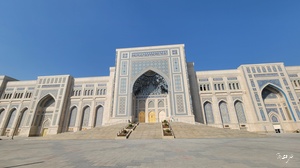
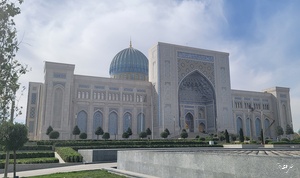
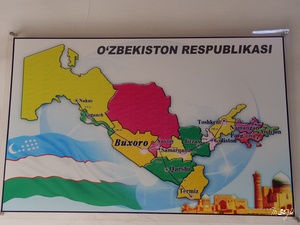
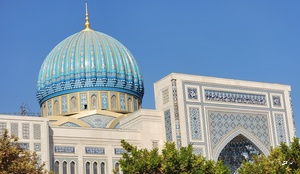
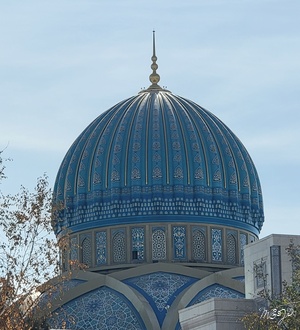
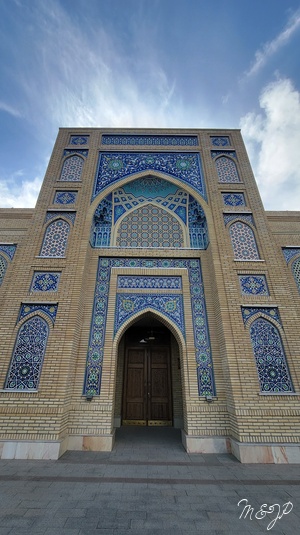
The building itself is impressive with its 60-m-high ribbed blue dome and four themed portals, each rising to approximately 34 m and taking inspiration respectively from Samarkand, Bukhara, Khiva and Tashkent, forming together an architectural map of the country.
After the visit to the huge Hazrati Imam complex, we were starving and luckily stumbled upon the nearby Karasaray Lagman Restaurant. Our first encounter with the food of Uzbekistan was another, this time culinary, wonder! The place looked more like a huge canteen where the locals were having lunch during their work break, rather than a fancy restaurant. We had to use our basic Russian to follow the instructions of one of the aunties wearing headscarves tied at the back of their heads. Immediately after we sat at our table, another auntie came with a notepad and, after greeting us warmly, seemed to be waiting for our immediate order… Once she understood that we were not locals and did not really know the menu by heart (not all tables had menus and, anyway, all of them were in Uzbek, written in Cyrillic, so not really helpful…), she started explaining and showing us pictures of the dishes on her phone with a lot of patience and kindness!
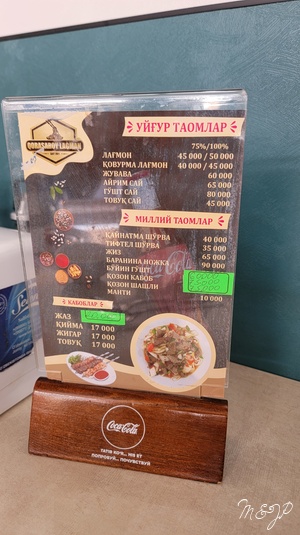
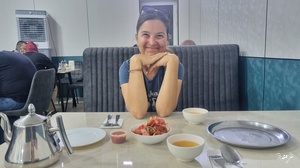
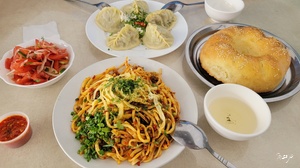
We ordered the spicy fried noodles with ground meat and vegetables, called lagman (or 'hand-pulled noodles' in Mandarin) and a portion of steamed meat dumplings, called manti (or 'steamed bread' in Mandarin). Both dishes had been brought by the Uyghur settlers from China and made us feel like we were back in Asia! Seeing the teapots on the other tables and completely immersing ourselves into the 'back to Asia' state of mind, we also ordered some lemon tea, which was more than delicious! After having spotted the huge loaves of beautiful handmade bread around, we ordered one as well - a huge mistake as it was too much for two people, but we learnt our lesson and for our next meals ordered only half a loaf! When the food arrived, the portions were quite generous, but the dishes, combining spices, veggies and meat, were so perfectly executed that we could not stop eating! When we paid the bill at the exit, we were in shock - it was ridiculously cheap! Both the authenticity, the deliciousness and the good value for money made us go there for lunch a second time during our stay in Tashkent!
In the afternoon we visited the Chorsu Bazaar (meaning 'crossroads' in Persian), located not too far away from the Hazrati Imam complex.
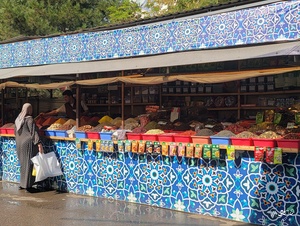
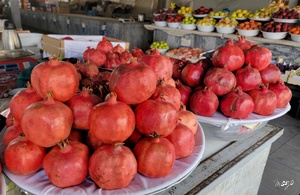
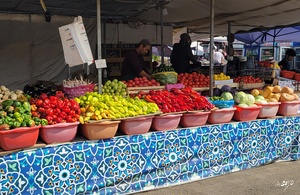
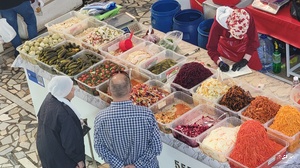
This traditional market in the centre of the old town offers all daily necessities and much more.
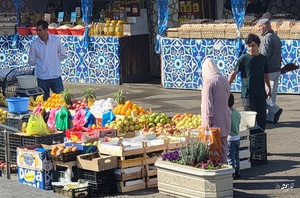
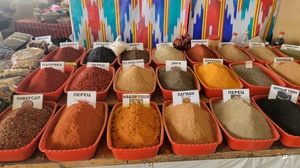
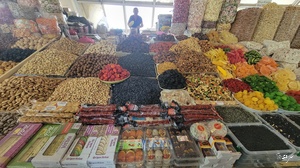
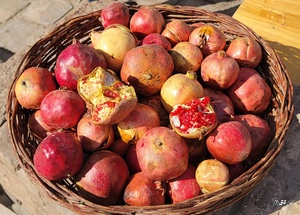
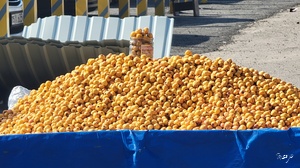
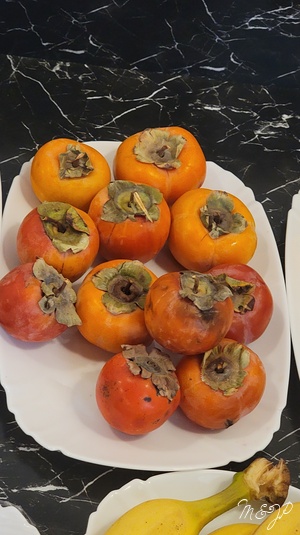
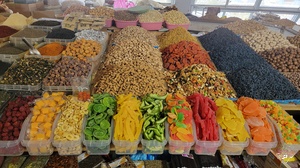
Autumn is one of the most beautiful times to visit the markets in the country as they are stacked with melons, watermelons, persimmons, pomegranates and dozens of other succulent seasonal fruits!
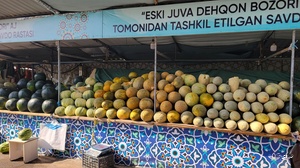
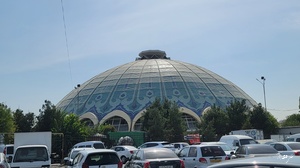
In the Chorsu Bazaar you can wander around the open-air stalls and trolleys, and then venture in the impressive and richly adorned blue-domed building, designed in 1980 as a late example of Soviet Modernism style.
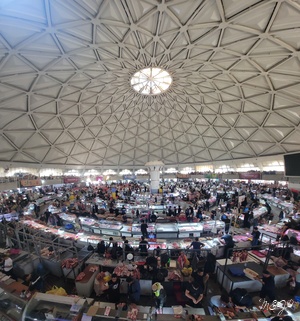
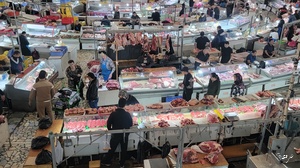
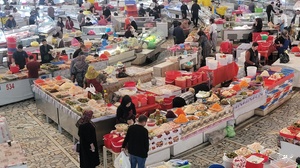
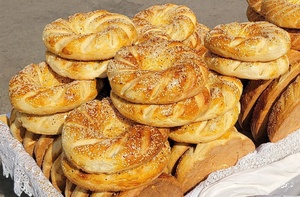
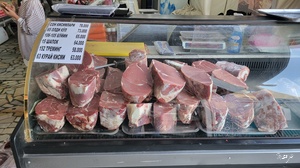
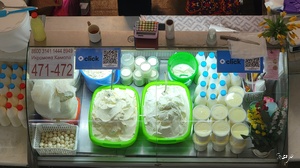
You will find everything, from fresh fruits and vegetables, fragrant spices, amber-hued dried apricots, nuts, fresh non (or lepeshka) bread loaves, pickles, cheese and sweets to huge chunks of different types of meat, including the popular kazy (horse meat sausage)...
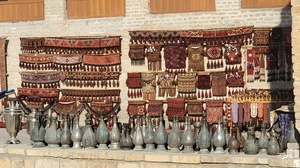
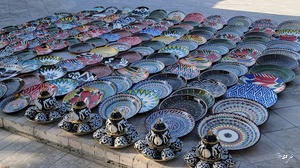
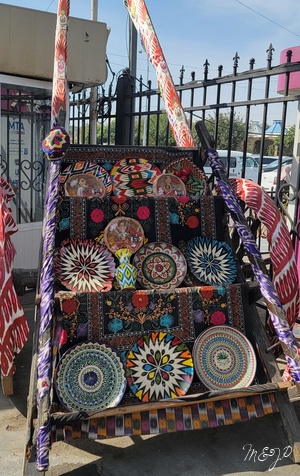
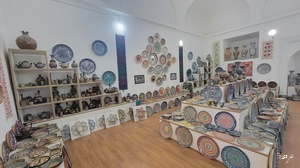
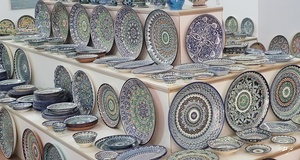
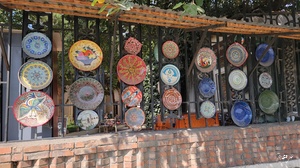
The area around the bazaar is full of discoveries as well. On one side you can wander around the old town with narrow streets, mudbrick houses and old mosques, and stop to look at, or even buy, some of the stunning traditional ceramics in all shades of blue at Said’s Ceramics, or the woodcarved baby cribs next door.
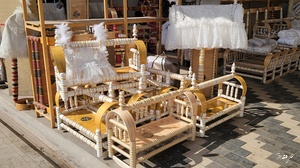
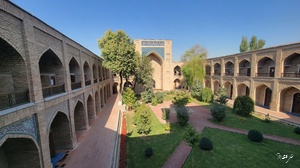
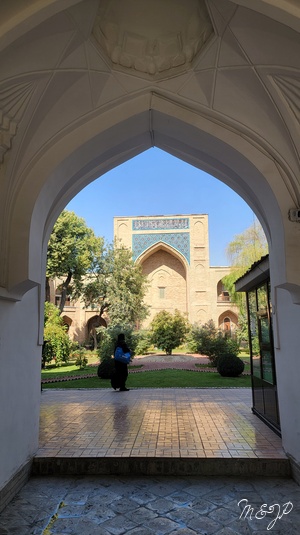
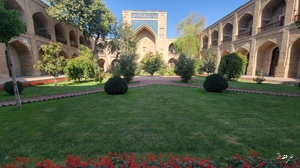
On the other side of the market stands the 16th-century Kukeldash Madrasah - the largest of the seventeen madrasahs in Tashkent. It was originally intended as a religious educational institution, but later used as a caravanserai (an inn for travelling merchants and their caravans), as a haven for the khans during civil riots and enemy invasions, for public executions (women suspected of adultery would be thrown from the high entrance portal onto the cobblestone street below) and for atheistic museum exhibitions under Soviet rule.
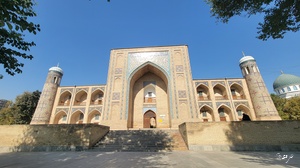
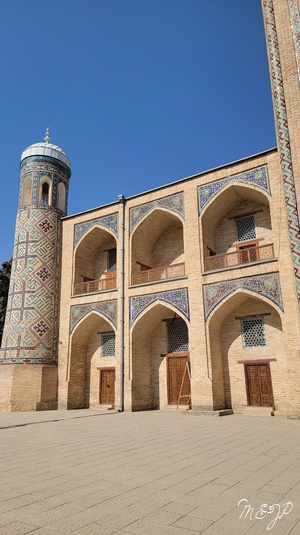
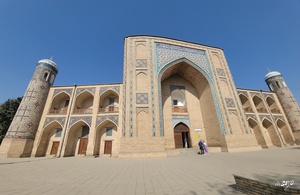
After Uzbekistan gained independence, the madrasah and its garden were restored, and today functions once again as a religious institute where each year more than 100 students are accepted on a competitive basis for a 4-year program.
The following day we started our visit from the emblematic Amir Timur Square, in the middle of which stands a bronze statue of a man with imperial regalia on a reared horse and his motto 'Strength is in justice' in four languages. You cannot and, I promise, will not leave the country without learning at least a bit about Timur (Tamerlane) - the famous conqueror who in the 14th century founded the Timurid Empire, stretching from the Mediterranean Sea to India and comprising modern-day Iran, Iraq, Afghanistan, much of Central Asia, the South Caucasus, and parts of contemporary Pakistan, North India, and Turkey. He belonged to a Turco-Mongol tribe - Mongols who had eventually assimilated into the Turkic populations that they had conquered and ruled over, gradually adopting Islam, as well as Turkic languages. Having married Saray Mulk Khanum, a direct descendant of Genghis Khan, and therefore regarding himself as his heir, Timur had the ambition of restoring his Mongol Empire. The Timurid dynasty lost most of Persia to other Turkic tribes in the 15th century, but continued to rule smaller states, known as Timurid emirates, in Central Asia and part of India, which later fell under the control of the Uzbek dynasty of the Shibanids - the patrilineal descendants of one of Genghis Khan’s grandsons. In the 16th century Babur, the Timurid prince of Ferghana (modern Uzbekistan), who was Timur’s great-great-great-grandson and a descendant of Genghis Khan through his mother, invaded Kabulistan (modern Afghanistan) and established a small kingdom there. Twenty years later he used it as a staging ground to invade the Delhi Sultanate and established the famous Mughal Empire, which ruled most of the Indian subcontinent between the 16th and the 19th centuries and left us UNESCO World Heritage Sites such as the Agra Fort, the Red Fort, Humayun's Tomb and, of course, the Taj Mahal. The world-known ivory-white marble mausoleum in Agra, India, was commissioned in 1631 by the fifth Mughal emperor, Shah Jahan, to house the tomb of his beloved wife, Mumtaz Mahal, and also houses his own tomb. If you look carefully, you cannot miss the resemblances between the architectures of Uzbekistan and Northern India, which, once you have learned the history, make perfect sense! Everything is connected!
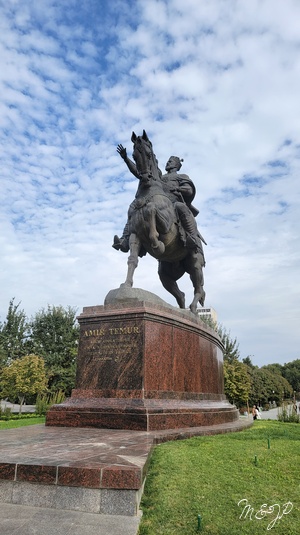
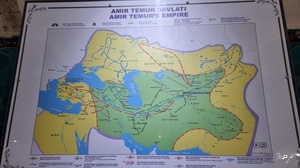
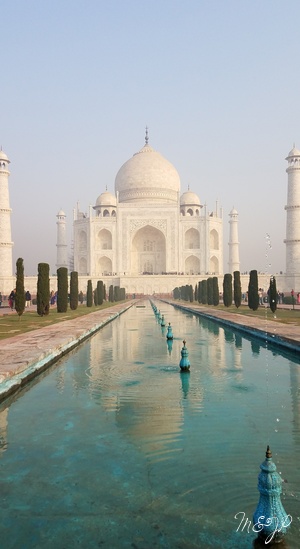
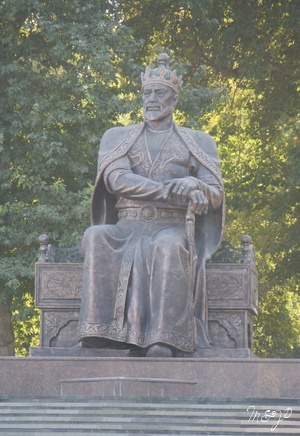
In addition to the one on Amir Timur Square, you will also find giant statues of Timur in the capital of his empire, Samarkand, and his home town, Shahrisabz!
In order to learn more about the local culture, we continued our visit around Tashkent with one of its world-class museums. Depending on your interests, you can choose amongst the State Museum of History, the State Art Museum, the Amir Timur Museum, the Art Gallery, the Railway Museum and so many more… We picked the State Museum of Applied Arts in order to have a first glimpse of what we were going to see during our trip along the Silk Road.
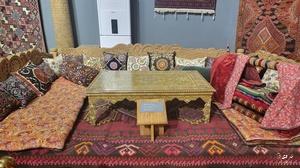
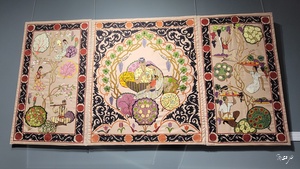
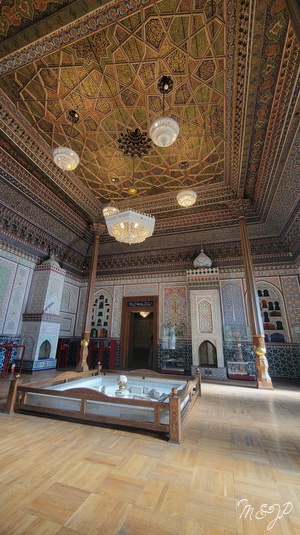
The richly decorated 'Polovtsev House', in which the museum is located, was built in the late 19th century, and is an example of Oriental architectural and decorative art.
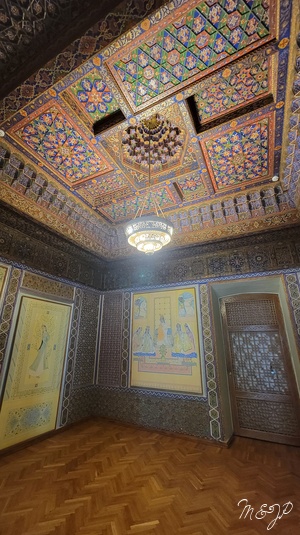
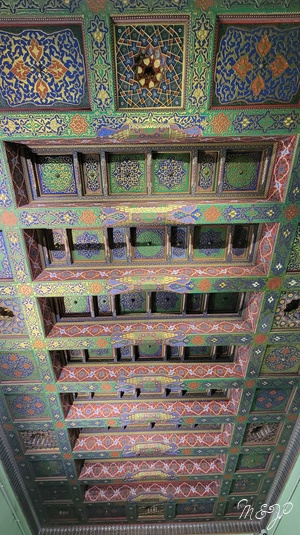
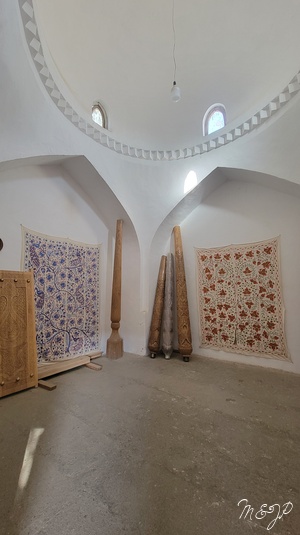
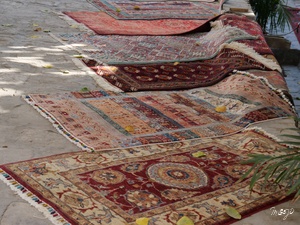
The collection of Uzbek carpets, ceramics, textiles and other handicrafts was impressive.
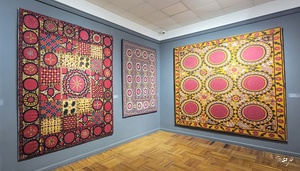
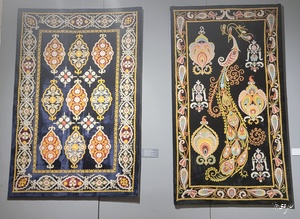
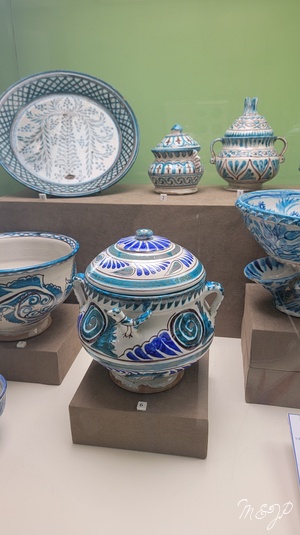
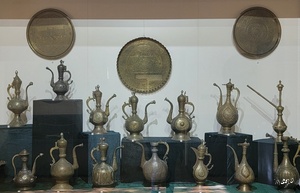
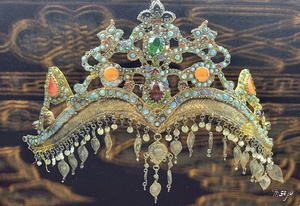
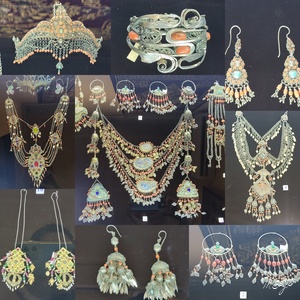
There was also a large variety of exquisite pieces of jewellery, which reminded us of the Berber ones we had seen in Morocco.
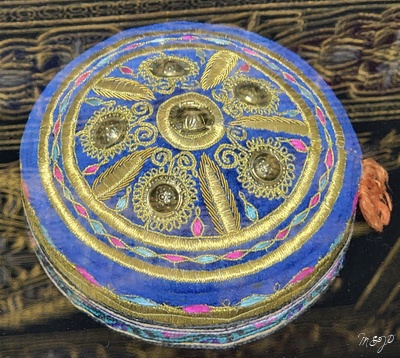
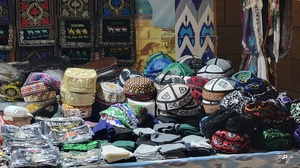
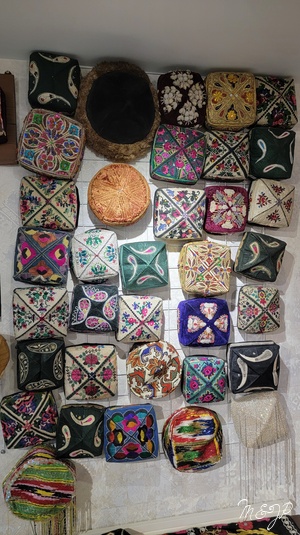
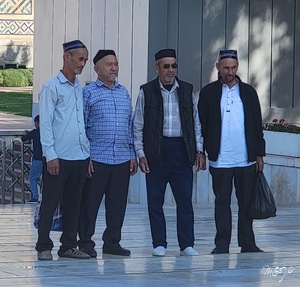
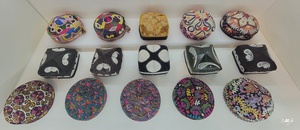
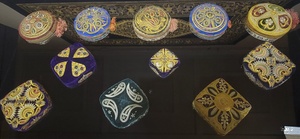
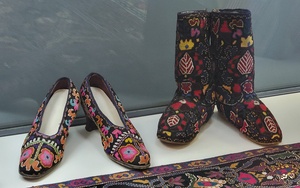
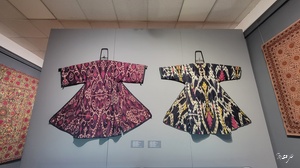
We saw for the first time the famous doppis - typical square or round skullcaps that some men still wear in the country. Even though they might come in different colours, the most common ones are the traditional black doppis with white embroideries. The embroidered shoes and the dresses in traditional geometric motifs were interesting and beautiful as well.
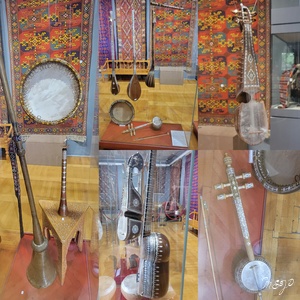
We stayed for a while in the unique musical instruments section. If you scan with your phone the QR code next to each instrument, you can hear its amazing sound.
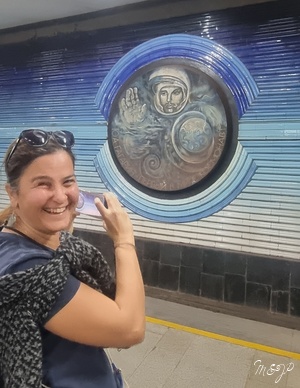
Out of all museums, there is one which you cannot miss - the Tashkent Metro. The first underground transport system in Central Asia looks less like a typical city subway and more like a museum or a grand ballroom. The construction of the Tashkent Metro began two years after the devastating earthquake of 1966 and the first line opened in 1977 to mark the 60th anniversary of the USSR. Besides being the fastest and cheapest way to cover the huge distances of Uzbekistan’s capital, it is worth taking it to see some of its beautiful stations, which might remind you of those of Moscow or Saint Petersburg’s subways - each has its own unique architectural features and lighting. Probably one of the most famous stations is the space-programme-themed Kosmonavtlar where you will find images of Amir Timur’s astronomer grandson, Ulugbek, as well as Yuri Gagarin and Valentina Tereshkova, the first man and woman in space. The Tashkent Metro feels quite safe as there are security checks at each subway entrance and, while it used to be illegal to take any pictures inside, the ban has been lifted since 2018.
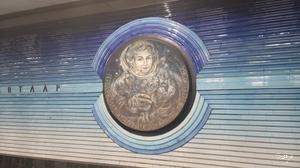
Besides the subway, you cannot miss Tashkent’s parks, gardens and fountains while walking around the capital.
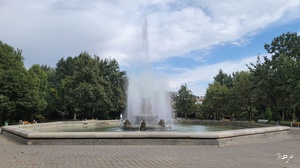
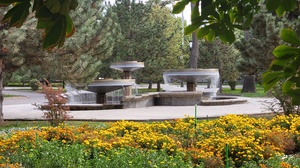
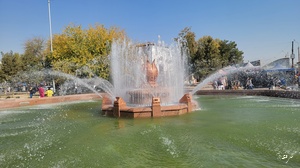
One of the most popular ones is Ankhor Park, nestled in the heart of the city. Inside it you will find the Glory and Memory Alley with galleries decorated with wooden carved columns, where the names of the 40,000 Uzbek soldiers who lost their lives during World War II are written in Memory Books. The alley ends with the Crying Mother Monument. Fronted by an eternal flame, it was constructed in 1999 to honour the sacrifice of the soldiers.
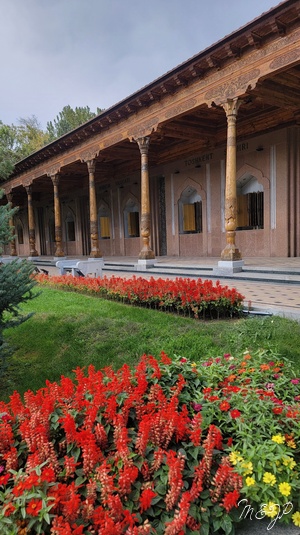
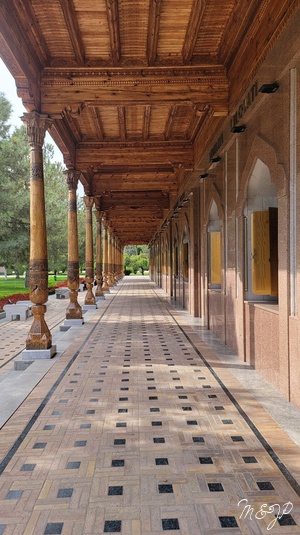
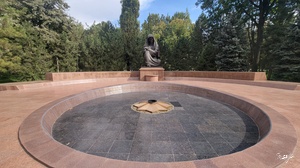
Next to Ankhor Park is Tashkent Independence Square (formerly Lenin Square during the Soviet times). It features the most beautiful fountains in the city and sixteen marble columns joined by a bridge, supporting the sculptures of storks - a symbol of peace.
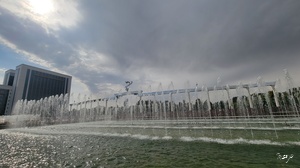
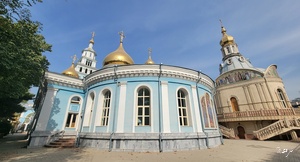
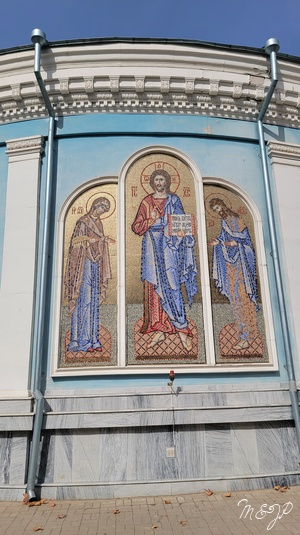
An hour-walk away from the square is another of Tashkent’s landmarks - the gorgeous Russian Orthodox Cathedral of the Assumption of the Virgin, built in 1871 and enlarged in the 1990s, with a bell tower rebuilt in 2010. Once you have entered the cathedral and seen the babushkas (elderly women) with floral scarves, you might feel like you were in Russia!
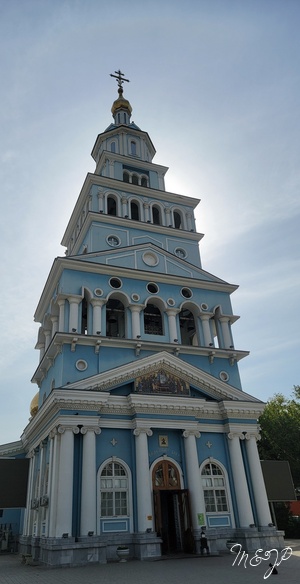
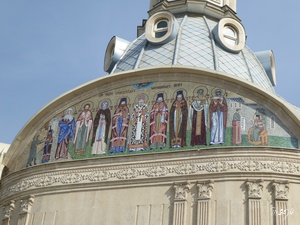
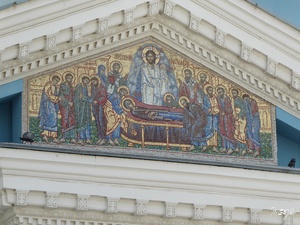
The striking contrast between the mosques and madrasahs in the Old Town and this typical Christian building might surprise you, but are actually part of the strange and fascinating mix you will come across everywhere in Uzbekistan’s capital. And like the rest of the country, the building boasts the famous blue colour!
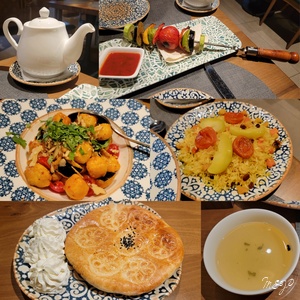
We could not miss trying more of Uzbekistan’s cuisine in another, this time fancier, place near the cathedral - the Afsona Shevchenko Restaurant, where we learned that the Tashkent tea we ordered was a blend of black and green teas with plenty of sugar, lemon, and sometimes mint. Tea is more than just a drink in the country, which might be explained with its Soviet but also Silk Road past. Similar to Asia and Morocco, it accompanies each meal and is served between meals and to greet guests. When ordering tea in a restaurant or a café, you will always be asked 'чёрный или зелёный' ('black or green'), or the Tashkent tea in Tashkent of course. The answer to this question will depend on your personal preferences, but also the season and location. In summer, green tea is preferred as it refreshes and cools, while black tea is mostly consumed in winter. Some places will offer a huge variety of special teas with unique flavours.
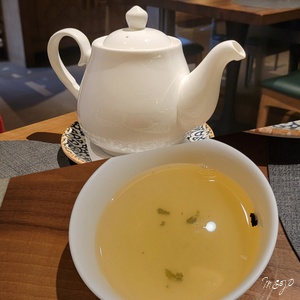
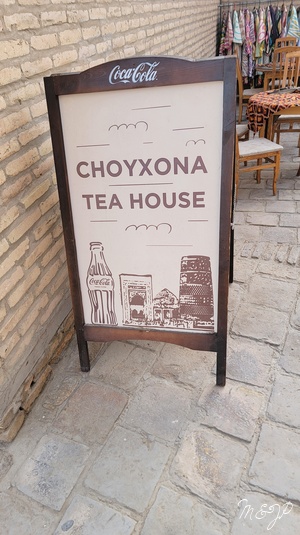
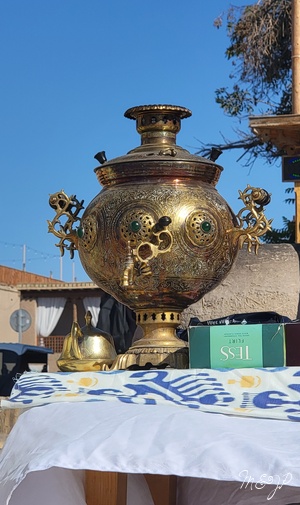
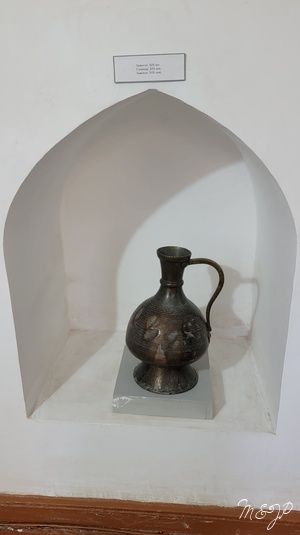
The best places to have some tea, while enjoying some dried fruits, sweets, or a homemade meal, are the famous chayhanas or choyxonas (tea houses or cafés), which have been present for centuries in every mahalla (neighbourhood in Arabic), generally near bazaars, bathhouses and caravanserais. Tea is served in a piala, a small ceramic tea bowl similar to the East Asian chawan. Together with the teapot, bowls are served one more than the number of guests. The additional bowl is used for 'kaitar' (from the verb 'kaitmok' meaning 'return') - the procedure, repeated three times, of pouring tea into a bowl and then again into the teapot for better brewing. Only one-third of the bowl should be filled so the tea cools down and the guest does not burn himself or herself, and is handed with the left hand as it is served from the heart. Even though most of the time they use a regular teapot, the Uzbekistani have their own version of a samovar to heat water, called choydish. It is different from the Russian one, looks more like a jug and can take different shapes.
In addition to the Tashkent tea, in the Afsona Shevchenko Restaurant we also tried for the first time the crispy eggplants, tomatoes and walnuts salad and, of course, the famous and ubiquitous plov (or pilaf) - a delicious combination of rice, veggies, spices, dried fruits and meat (traditionally lamb but can be replaced with beef, goat, chicken or other types of meat). There is even a vegetarian fruit version which is delicious as well since the crucial components of each plov are actually the perfectly cooked rice and the fragrant spices! This traditional dish is prepared for weddings, anniversaries, births, deaths or simply family gatherings. It is perfect for a balanced diet as it contains everything our bodies need and is easily digestible. There are different types of plov in each region of Uzbekistan and for each occasion (the wedding plov is considered the most luxurious, the festive one is a little less grand, and the simple plov is served as an ordinary day meal), and the methods of preparation vary depending on each cook. It might remind you of the variations of the Moroccan tajines, with the rice replacing the couscous! Initially, plov appeared in the kitchen of the shepherds and nomads of Central Asia, who were engaged in cattle breeding and were trading meat for rice, and later became the main meal of Amir Timur’s army (and some say one of the secrets of his victorious campaigns). There are even proverbs relating to plov, such as 'A poor man eats plov, a rich man eats only plov', as plov used to be a very festive and expensive dish at one point of time (the daily food of the local farmers was often limited to vegetables, legumes and sour milk), and 'If one has to die, let it be from plov', the dish being the king of the cuisine in Uzbekistan.
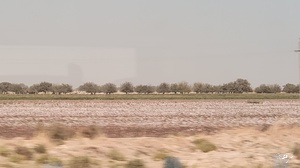
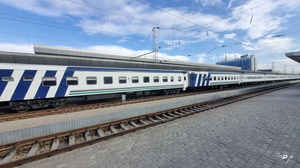
After so many discoveries in its capital, the time had come for us to hop on the train and head to the other Silk Road cities in the country. And it was an experience in itself! The train station was huge and the signs were not really self-explanatory, but the staff was really nice and there were not that many trains leaving the city after all. Uzbekistan’s trains reminded me of the old Russian ones we had ridden with my mom from Sofia to Moscow when I was a kid. The staff was offering free tea onboard and the train stations hid the communist-style canteens from my childhood. The views of the endless cotton fields from the train were beautiful, even though quite monotonous. Much of Uzbekistan's population was engaged in cotton farming in collective farms when the country was part of the Soviet Union, and nowadays continues to be heavily rural and dependent on farming for its livelihood.
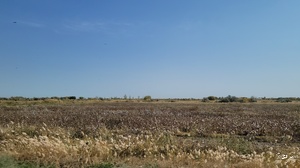
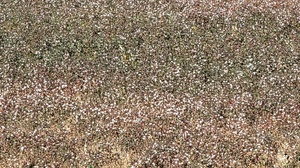
It took us only 3 hours from Tashkent to reach the second city on our Silk Road adventure - the mythical Samarkand…

You like what you read?
Explore and learn more about Uzbekistan !!!
-
 The Valley of Roses and Kings (part 2) The Valley of Kings
The Valley of Roses is famous not only for its … -
 The Valley of Roses and Kings (part 1) The Valley of Roses
Out of all the flowers in the world the rose … -
 In the heart of the Silk Road (part 4) Khiva and the Desert Castles
Khiva - It took us 6 hours, almost a whole … -
 In the heart of the Silk Road (part 3) Bukhara
Bukhara - While Tashkent is a modern city with some … -
 In the heart of the Silk Road (part 2) Samarkand
Samarkand - No name is so evocative of the Silk … -
 In the heart of the Silk Road (part 1) Tashkent
The Great Wall of China, Machu Picchu, the Pyramids of … -
 The Land of Giants at the End of the World (part 2)
We crossed for the third time the border between Argentina … -
 The Land of Giants at the End of the World (part 1)
No visitors come back from Antarctica in the same state … -
 A Vitamin Sea Christmas in the Mediterranean
Human beings are full of contradictions! When we used to … -
 Spring Colours in the Kingdom of the West (part 6) Morocco is yellow
Morocco is yellow - Besides the yellow hues of the … -
 Spring Colours in the Kingdom of the West (part 5) Morocco is red
Morocco is red - Besides the red hues of the … -
 Spring Colours in the Kingdom of the West (part 4) Morocco is orange
Morocco is orange - Our first encounter with the legendary … -
 Spring Colours in the Kingdom of the West (part 3) Morocco is green
Morocco is green - The Rif Mountains east of Tangier, … -
 Spring Colours in the Kingdom of the West (part 2) Morocco is blue
Morocco is blue - The road along the Atlantic Coast … -
 Spring Colours in the Kingdom of the West (part 1) Morocco is white
If I had to use only a couple of words …
