

The Valley of Roses and Kings (part 1)
The Valley of Roses
Posted by: Maria in June 2026 (4 months, 3 weeks ago)
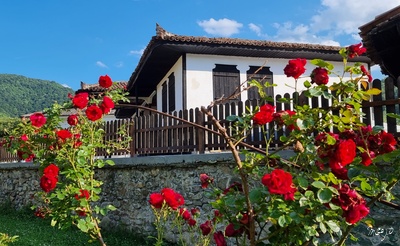
Out of all the flowers in the world the rose is undeniably one of the most popular, admired and symbolic ones. You can find it in gardens and parks, but also in all aspects of human life everywhere around the world. In literature, it is present in the title of Umberto Eco’s novel The Name of the Rose and Oscar Wilde’s The Nightingale and the Rose, in the story of Antoine de Saint-Exupéry’s Little Prince who has a unique relationship with his rose, and is the most mentioned flower throughout Shakespeare’s work, including the famous line “A rose by any other name would smell as sweet” from the play Romeo and Juliet, referring to the fact that the names of things do not affect what they really are. In history, the rose is in the name of the famous 15th-century Wars of the Roses, in which the House of Lancaster represented by a red rose, and the House of York represented by a white rose competed for the English throne. In music, the flower is present in the name of the American hard rock band Guns N' Roses.
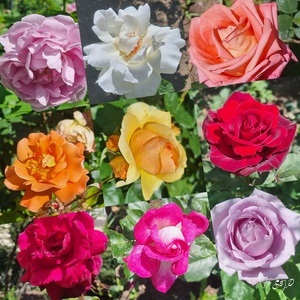
In mythology, Aphrodite is known as the goddess of love and roses. In art and traditions, the rose was depicted in paintings in Egyptian tombs and rose oil was used in mummification as it was believed that it helped preserve the body and ease the soul’s journey to the afterlife. In medicine, extensive powers were attributed to the flower from the rose water curing headaches and the rose oil healing wounds and preventing plagues, to the rose tea clarifying confused thoughts and the rose wine promoting longevity and beauty. Chinese medicine even considered roses to have properties balancing qi (the circulating life force whose existence and properties are the basis of Chinese philosophy and medicine) and harmonizing emotions.
In religions, the rosary takes its name from “rosarium”, meaning rose garden, as white roses symbolised Mary’s purity and red ones - Christ’s blood shed for humanity, while the rose window in Gothic cathedrals represented the divine light and Mary herself. Rose water syrup is also the main ingredient of several Middle Eastern and Indian desserts such as knafeh, baklava and gulab jamun. In cosmetics, the rose is the main ingredient of many perfumes. The famous queen of Egypt, Cleopatra, was regularly bathing in rose water, which was one of her beauty secrets. And the list goes on…
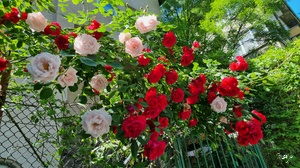
The rose is also the national flower of a few countries, including England and the Maldives, but has its own country as well.
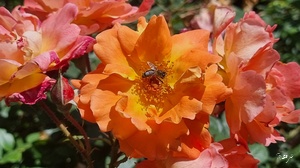
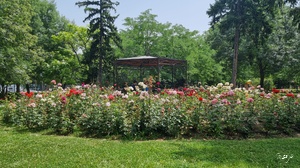
It is not for nothing that Bulgaria is also known as the Land of the Roses or the Rose Garden. Together with the famous Bulgarian yoghurt prepared with the bacteria lactobacillus bulgaricus, only found there and one of the best kept secrets of health and longevity, these stunning and fragrant flowers are the unofficial symbols of the country around the world. When we traveled to Cambodia, we met a local girl who told us she had studied about the Bulgarian rose at school, while in a spa resort in Indonesia we came across a massage with Bulgarian rose oil!
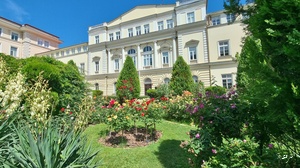
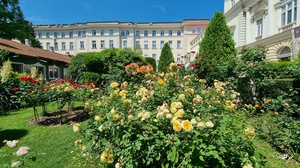
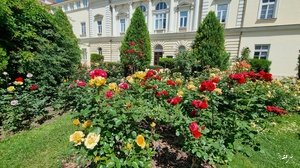
The roses are everywhere in Bulgaria - in the official tourism logo of the country, in the hair of the dancers of the traditional horo, in the songs, the most popular of which is probably A Bulgarian Rose (Edna Balgarska Roza) performed by Pasha Hristova, in the poems, stories and novels, such as Ivan Vazov’s The Valley of Roses and Tundzha, Elin Pelin’s Black Roses, Aleko Konstantinov’s Bay Ganyo and Hristo Smirnenski’s A rose thorn in the heart, in the cuisine with the rose jam, rose syrup, rose tea, rose liquor and gulova or rose rakia (the traditional and very strong local brandy) and rose-flavoured lokum (the Bulgarian equivalent of the Turkish delight), in Bulgarian souvenirs, candles, folk costumes, rose wreaths and artistic products, in roman mosaics and Christian iconography, in traditional Bulgarian Revival period architecture, furniture and rose-patterned carpets and rugs, in the streets, gardens and parks of all Bulgarian towns and villages such as Sofia’s University Botanical Garden, and, last but not least, in the rose fields of the Valley of Roses where are produced the world-famous Bulgarian rose oil and rose water!
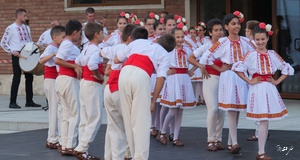
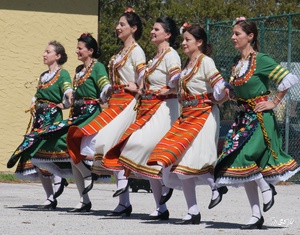
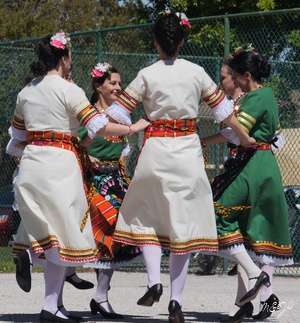
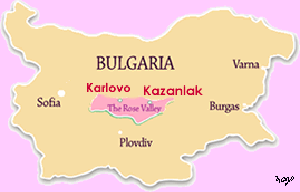
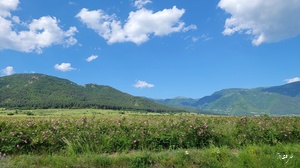
The 100-kilometer-long valley is situated halfway between the capital Sofia and the Black Sea, in the heart of the country between the cities of Karlovo and Kazanlak, and is surrounded by the two mountain ranges of Stara Planina (The Old Mountain) and Sredna Gora (The Middle Forest). Geologically, it consists of two river valleys, those of the Stryama River to the west and the Tundzha River to the east. There, the oil-bearing rose has found all the favorable conditions to thrive - places with an altitude of 370-625 m, fertile light sandy soils that do not retain water, and perfect climate with mild winters, allowing the formation of flower buds in February, and long and temperate springs with light rains and high humidity, especially in May and June, with abundant morning dew, ensuring a prolonged flowering period and preventing the evaporation of the essential oil, thus increasing the yield during distillation.
Archaeological evidence suggests that roses were cultivated as early as 5,000 years ago. While there are over 200 species and more than 18,000 varieties of roses in the world, rose oil can only be obtained from four types: Rosa Damascena (aka the Damask rose in reference to the Syrian city of Damascus, which used to be part of the Persian empire, where it most likely originated, but also the Iranian Rose or the Bulgarian rose), Rosa Alba (aka the White rose), Rosa Centifolia (aka the Provence rose or the May rose) and Rosa Gallicа (aka the Gallic rose or the French rose). The birthplace of cultivated oil-bearing roses is probably Persia (modern Iran). Various sources testify to the veneration of the rose in Persia through various rituals - guests were sprinkled with rose water to welcome them, roses decorated the shields of Persian warriors, the Persians paid an annual tribute to Baghdad in the form of rose water, and in the golden years of Baghdad the builders of mosques put this same rose water in the mortar and the walls exuded an incredible aroma under the sun's rays.
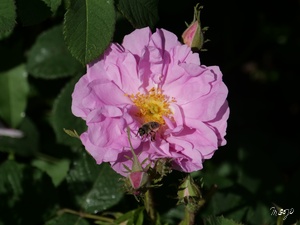
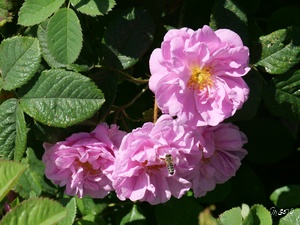
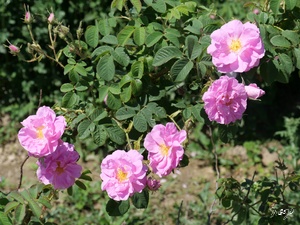
While the rose is the queen of flowers, Rosa Damascena with its intoxicating aroma is known as the queen of roses. It contains the highest percentage of essential oils and is therefore the most valuable. The flower of Rosa Damascena looks very different from the decorative rose - it has a delicate pink colour and many blossoms. It was most likely brought to the territory of Bulgaria - one of the few places in the world that are blessed with perfect conditions for growing oil-bearing roses - by traders via the Silk Road only in the 17th century. Through the years what is now known as the Kazanlak rose or the Bulgarian rose has developed into its own species by increasing its oil yield as well as its quality, using the specific natural and geographical conditions. Bulgarian rose oil was exported by ships from Constantinople and Marseille to London and New York as early as the 18th century. The first rose trading house was founded in 1820 in Kazanlak, by the 19th century Bulgaria became the largest rose oil producer in the world, by the end of World War II there were 88 rose distilleries in the country, and today it is the largest producer (around 75%) of rose oil world wide. Bulgarian rose oil was awarded gold medals at exhibitions in Vienna (1873), Paris (1875), Philadelphia (1876), Chicago (1893), Antwerp (1894), Grasse (1902), Liege (1905), Milan (1906), London (1907), etc. In September 2014 the European Commission approved Bulgarian rose oil as a new Protected Geographical Indication (PGI). According to experts, Bulgarian rose oil with its rich and lasting scent is unsurpassed. Like coffee, which is of the best quality and best aroma when grown in certain regions, it is from the roses grown in Bulgaria that one of the best rose oils in the world is produced. Possessing the unique ability to harmonize even the most contradictory scents, it constitutes, according to specialists, one of the most subtle components of haute parfumerie.
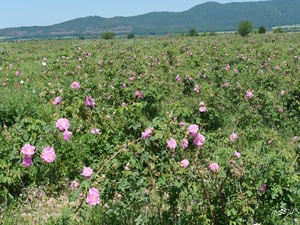
For some Bulgarians, the quality of Bulgarian rose oil - just like that of Bulgarian yogurt with its inimitable taste - is a "national" secret and a mystery as inexplicable and impenetrable as that of the sounds of the song "Izlel ye Delyo Haydutin" sung by Valya Balkanska carried into space on board the Voyager 1 and Voyager 2, and The Mystery of the Bulgarian voices (a Bulgarian musical ensemble, awarded the Grammy Award for Best Traditional Folk Album in 1989). In reality, the development of rose oil and rose water in Bulgaria is due to the perfect conditions for growing oil-bearing roses, but also to enterprising Bulgarians who in the 19th century created an original technology for the production of rose oil - the distillation installations of several gyulpans or kazans (hence the name of Kazanlak), or huge copper cauldrons. It is interesting to note that it was the region's long tradition of wine making and brandy distillation which had contributed to several important technological innovations allowing higher yields and better quality. According to the traditional distillation method, the rose petals are immersed into a significant amount of water that is heated by fire and the produced steam picks up the oil molecules from the flowers. When the steam hits the mushroom-like top, it starts cooling down and takes the oil with it along a side pipe to a wooden barrel where it cools down completely and condenses. Finally, the water-oil-mixture is collected and separated into rose water and rose oil (the rose water is actually the by-product of the rose oil distillation process). Rose flowers contain 0.02%-0.04% essential oil, in rare cases reaching even 0.09%. Rose oil is a transparent liquid with a yellow, yellow-green colour, resembles almond oil in consistency and has a characteristic floral and strong odor.
Back then traders would exchange one kilo of rose oil for one kilo of gold (nowadays the price can go up to $12,000 depending on the year). It is not surprising when you realize that it takes several years for the Damask rose to begin blooming and several more years for it to produce essential oil. Also, it takes between 3,500 and 4,000 kg of rose blossoms to produce 1 kg of rose oil, and 1 kg of them for 1 liter of rose water. The labour costs are substantial - a very experienced worker can pick up to 60 kg of roses a day, which amounts to approximately 20,000 roses! Therefore, the cultivation of the oil-bearing rose and the distillation of rose oil in the past created conditions for the emergence of wealthy merchants who were among the pioneers of the resurgent Bulgarian business elite, and the Valley of Roses became the Bulgarian Eldorado.
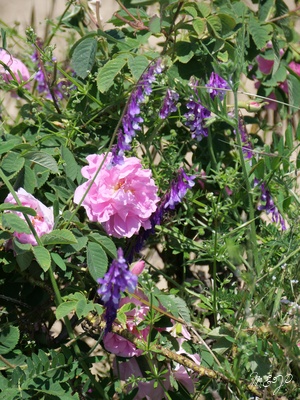
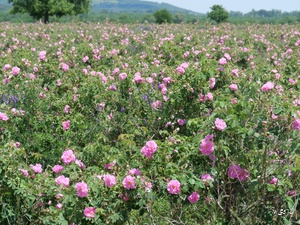
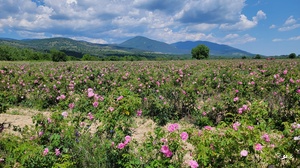
Bulgarian rose oil continues to be one of the most prominent aromas across the entire industry. Its rigorously specific harvesting methods and distillation processes keep availability low and its immensely distinctive aromatic profile makes the oil impossible to replicate synthetically.
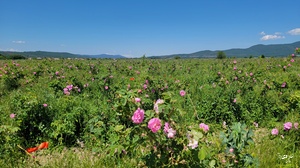
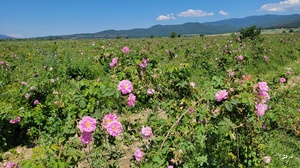
Called "the liquid gold" because of its high price but also its unique properties, rose oil is a natural elixir with countless benefits. It contains minerals, vitamins and antioxidants that have a soothing, anti-inflammatory and nourishing effect. It maintains the skin's moisture, making it soft and tender. Aromatherapy with rose oil reduces the level of cortisol (the stress hormone) and has a positive effect on depressive states. Rose oil is, above all, a fragrant pleasure for the senses. The most remarkable quality of rose oil is that its "shelf life" is eternal (it does not have an expiration date), as it does not change over time and thus shares the immortality of diamonds. Available only to the upper classes of society in the past, today it is the basis of the most elite products of the world's cosmetic and perfume companies. Chanel, Christian Dior, Nina Ricci, Yves Saint Laurent, Paco Rabanne, Bulgari, Kenzo, Guerlain, Prada, Givenchy and Gucci are just a few of the most famous brands that use Bulgarian rose oil in their perfumes and cosmetics, with Chanel No.5 being without any doubt the most famous perfume containing the precious substance. While it is used mainly in cosmetics, from skin care to hair care, and perfumes with France being the largest purchaser, followed by the USA and Japan, it is also an important component in the pharmaceutical and food industries, in particular in Japan and the Arab countries. For example, the petals are often dried and used for tea or candied and used as sweets.
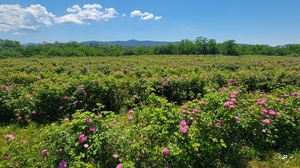
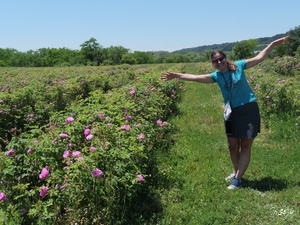
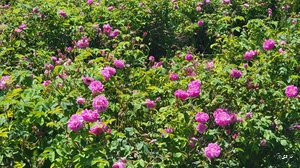
The unique properties of the Bulgarian rose oil make it the perfect ingredient for a wide range of skin care products, from cleansers, toners, lip balms, face creams and body lotions to soaps, shower gels and shampoos. It is a natural astringent and antioxidant, which means it helps firm and protect the skin. It also has anti-inflammatory and antibacterial effects and can reduce redness and inflammation, as well as analgesic properties and can be used typically to help alleviate headaches and other types of pain. On the other hand, rose water is a natural toner and can also be used as a facial mist, for hair rinse, or in cooking and baking. Perhaps one of the most popular companies for Bulgarian rose products is Balgarska Roza Karlovo (http://bulgarianrose.bg), but you can find many other products from other companies in the souvenir shops in Sofia and other cities and villages around Bulgaria.
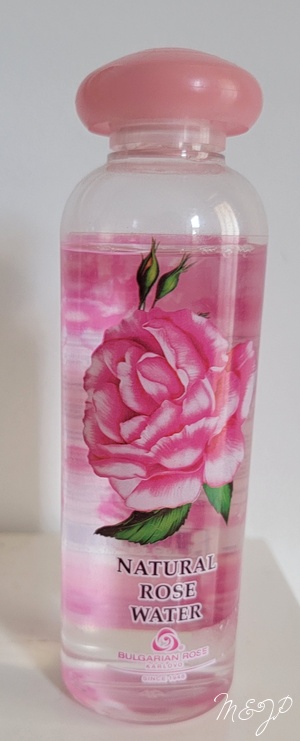
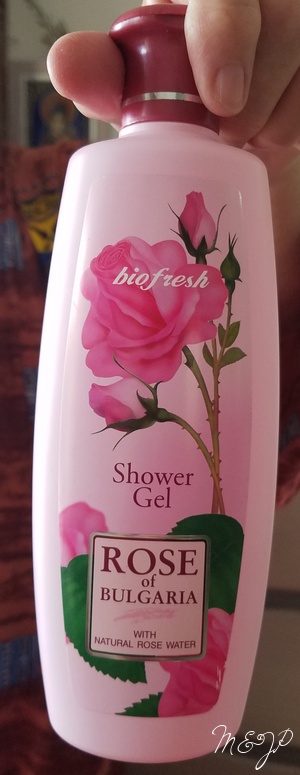
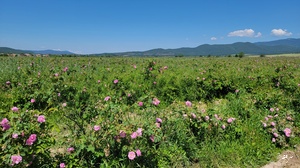
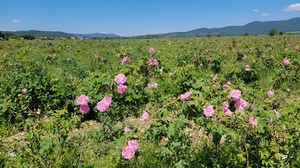
If you are a rose fan and want to see lots of roses, or even better, endless fields of roses in bloom, and why not join one of the local rose oil producers for a memorable rose-picking experience (possibly followed by a skin care workshop), the rose harvest season (when the roses are blooming and can be picked) is between mid-May and mid-June. In The Valley of Roses and Tundzha Ivan Vazov wrote: "You should visit the Valley of Roses in mid-May if you want to swim in a sea of roses."...
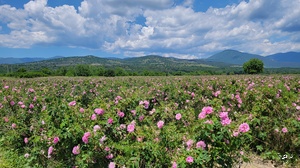
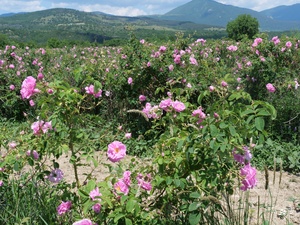
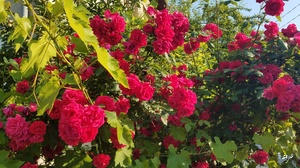
!=You do not need to join a tour to see the rose fields - just follow the roads of the Valley of Roses and sooner or later you will come across many of them. The rule of thumb is to go there in the morning, not only for the magnificent views of the flowers in the dawn light, but also to see the rose pickers gathering the blossoms, collecting them in large plastic sacks to hold their moisture and immediately bringing them to the local distilleries, so the roses can be distilled as quickly as possible. The longer you wait, the less oil you will get! During the flowering period, picking is carried out daily, only in dry weather and in the early morning, when there is still dew on the blossoms, which keeps them nice and moist and preserves their oil and fragrance. In general, rose picking begins before dawn at 5am and continues until 10am at the latest, as once the sun is out and dries the dew, the flowers fully bloom and their valuable oil accumulated on the surface of the petals evaporates. Once the delicate fragrance of the roses starts invading your senses, the petals dry up and your hands get sticky, it means that the fragrance molecules escape the petals and thus will not yield as much oil when distilling them. Only the blossoms that are fully opened or just about to fully open are being picked. Their colour is a rich pink but the longer they bloom, their colour will fade into a very pale pink to almost white. Not just the petals, but the whole blossom is being picked by hand, without damaging the branches and stems of the plant.
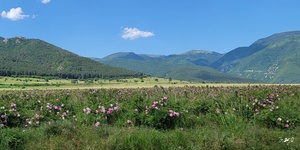
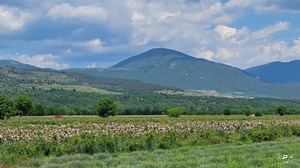
!=If you are in the Valley of Roses during the rose harvest, you might want to attend the famous Rose Festival (or Rozober). First held in 1903, it takes place in various cities of the region in the first week of June and includes various attractions such as rose-picking rituals, folklore concerts, processions, and the crowning of the Queen of Roses (usually from among local young girls). It is the modern version of the Roman rose festivals honoring Flora, the goddess of flowers, which involved massive floral displays and rose petal showers. You can also visit the Rose Museum of Kazanlak, established in 1967, which traces the history, origins, and traditional production process of rose oil through a multitude of photos, documents and objects (including a display of traditional Bulgarian rose oil distilling tools, which are still in use by local small-scale rose oil producers today).
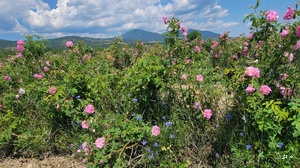
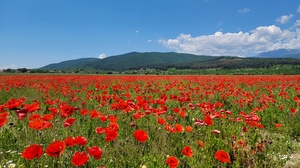
The rose harvest period is also the perfect time to see huge fields of poppies with the gorgeous Bulgarian mountains as a background!
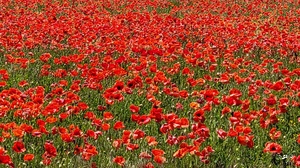
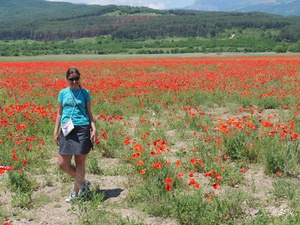
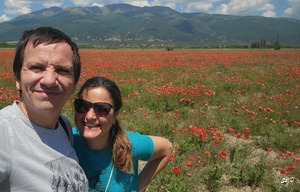
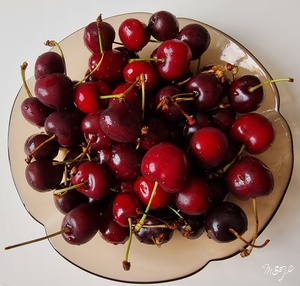
You will also be guaranteed to spot dozens of cute baby storks and enjoy the taste of the delicious local cherries!


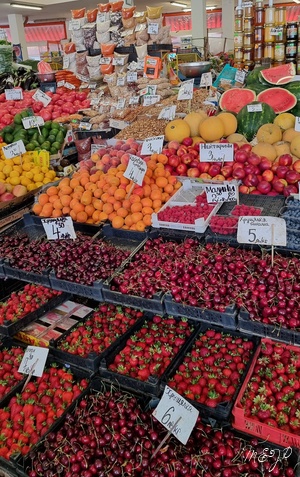
If you manage to get to the Valley of Roses at the end of June or beginning of July, you will not be disappointed either as Bulgaria is also the largest producer of lavender oil in the world (no, it is not France…), and most of the lavender fields are located there. They alternate with endless yellow patches of sunflowers!
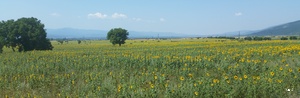
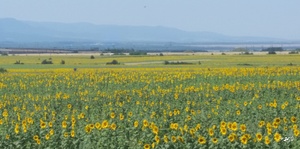
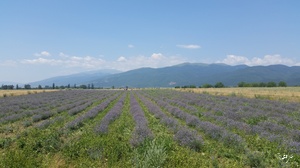
The Valley of Roses is famous not only for its roses, poppies and lavender, but also for its tombs of Thracian rulers. Because of that, it is also known as the Valley of Kings…

You like what you read?
Explore and learn more about Bulgaria !!!
-
 P for Paradise and Provence (part 2)
Stunning nature - You cannot leave Marseille without hiking to … -
 P for Paradise and Provence (part 1)
France used to be divided into historical regions, which do … -
 The Valley of Roses and Kings (part 2) The Valley of Kings
The Valley of Roses is famous not only for its … -
 The Valley of Roses and Kings (part 1) The Valley of Roses
Out of all the flowers in the world the rose … -
 In the heart of the Silk Road (part 4) Khiva and the Desert Castles
Khiva - It took us 6 hours, almost a whole … -
 In the heart of the Silk Road (part 3) Bukhara
Bukhara - While Tashkent is a modern city with some … -
 In the heart of the Silk Road (part 2) Samarkand
Samarkand - No name is so evocative of the Silk … -
 In the heart of the Silk Road (part 1) Tashkent
The Great Wall of China, Machu Picchu, the Pyramids of … -
 The Land of Giants at the End of the World (part 2)
We crossed for the third time the border between Argentina … -
 The Land of Giants at the End of the World (part 1)
No visitors come back from Antarctica in the same state … -
 A Vitamin Sea Christmas in the Mediterranean
Human beings are full of contradictions! When we used to … -
 Spring Colours in the Kingdom of the West (part 6) Morocco is yellow
Morocco is yellow - Besides the yellow hues of the … -
 Spring Colours in the Kingdom of the West (part 5) Morocco is red
Morocco is red - Besides the red hues of the … -
 Spring Colours in the Kingdom of the West (part 4) Morocco is orange
Morocco is orange - Our first encounter with the legendary … -
 Spring Colours in the Kingdom of the West (part 3) Morocco is green
Morocco is green - The Rif Mountains east of Tangier, …
