
.svg)
The Land of a Million Elephants (part 1)
Posted by: Maria in April 2020 (6 years, 6 months ago)
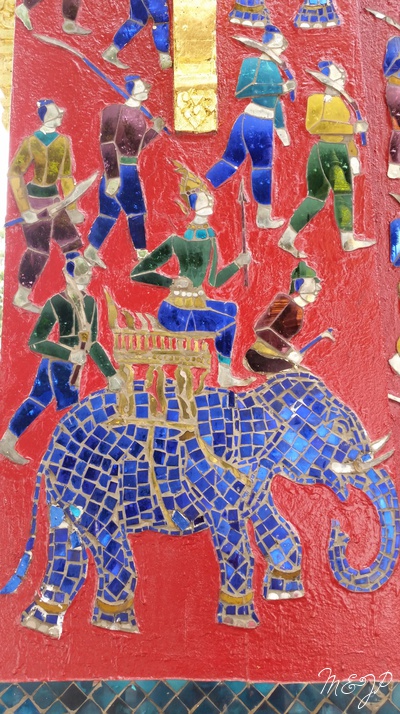
Everybody loves elephants but not so many people know that this beautiful majestic animal is also a symbol of greatness and plays an important role in Buddhism. According to the legend, it was a white elephant holding a white lotus flower in its trunk that announced the birth of Buddha in a dream to his mother Queen Maya. Elephants and Buddhism are closely connected!
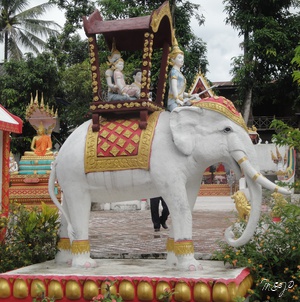
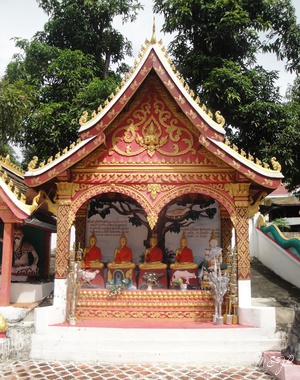
There is a country in Southeast Asia where the primary religion is Theravada Buddhism (or Buddhism’s oldest existent school which, in contrast to other schools such as Mahayana Buddhism, tends to be more conservative), and the name, symbol and image of the elephant are ubiquitous. Centuries ago, the kingdom that made up much of modern-day Laos was called Lan Xang, which in English means "Land of a Million Elephants". It existed as a unified kingdom from 1353 to 1707 and was one of the largest kingdoms in Southeast Asia.
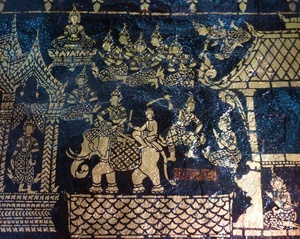
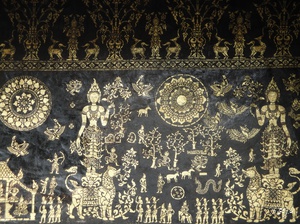
The elephant has been considered the national animal in Laos for a very long time - it is the symbol of prosperity and represents the strength of the nation. Also, Lao Buddhism is a unique version of Theravada Buddhism and is at the basis of ethnic Lao culture.
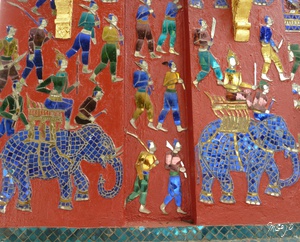
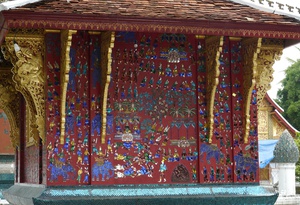
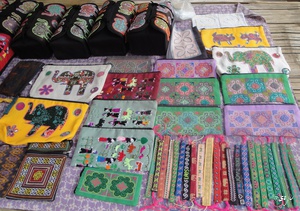
This explains why the image of the elephant is everywhere in Laos – the temples, the pagodas, the embroideries, the woodcarving, you name it!
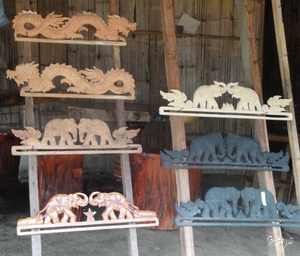
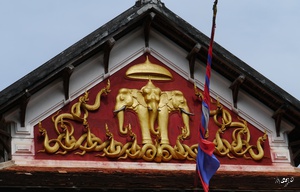
You will also spot at some places the image of a three-headed elephant. The three heads represent the three major Gods in Hindu mythology – Brahma the Creator, Vishnu the Keeper and Shiva the Destroyer. Until the dissolution of the Lao monarchy and the establishment of the Lao People's Democratic Republic in 1975, the symbol that also represented the royal monarchy was on the Lao flag. Some suggest that the three heads of the elephant symbolised the reunion under the white umbrella of the king of the three historical kingdoms, into which Lan Xang Kingdom had been divided at the beginning of the 18th century - Vientiane, Luang Prabang and Champasak.
Yet while the elephant may have endured as Laos’ cultural icon, the numbers tell a story of a species in crisis. The cruel elephant riding tourism industry is definitely for something! The Laos government and conservation groups estimate that there are only about 800 elephants left in the country - 400 wild elephants and 400 in captivity…
If you have to visit only one place in Laos, Luang Prabang (in English “Royal Buddha Image”) comes up as a no-brainer! The city was once the ancient first capital of the Lan Xang Kingdom. It later became the royal capital of the Kingdom of Laos (proclaimed in 1947 as part of the colonial French Union) while Vientiane - the current capital of the Lao People's Democratic Republic - was the administrative capital of the kingdom.
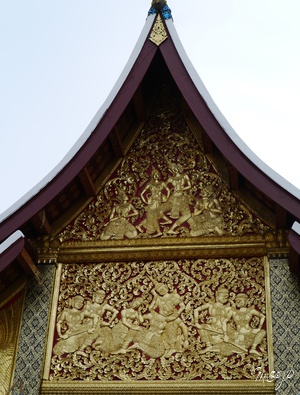
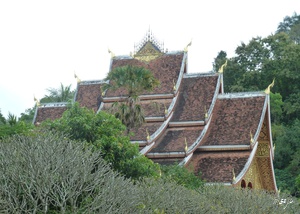
Set on a peninsula where the mythical Mekong River and the Nam Khan River meet and surrounded by misty green mountains, it must surely be one of the most beautiful and charming cities in the world.
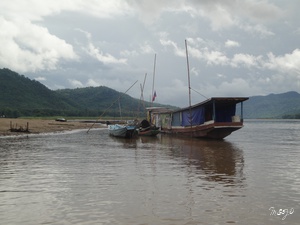
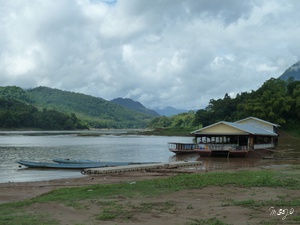
In 1995 it was added to UNESCO’s World Heritage list and recognised as the best preserved city in Southeast Asia.
It is the only city in Laos where the ethnic Lao population outnumbers other ethnic groups.
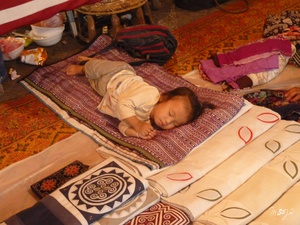
With more than 30 temples and monasteries and thousands of saffron-clad monks living in them, it is also the centre of religious life in Laos.
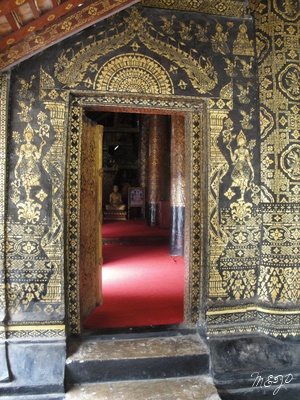
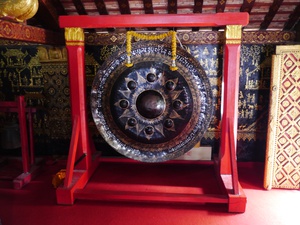
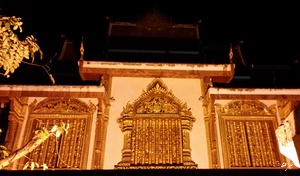
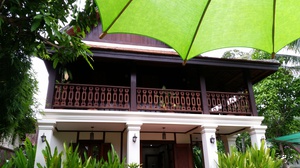
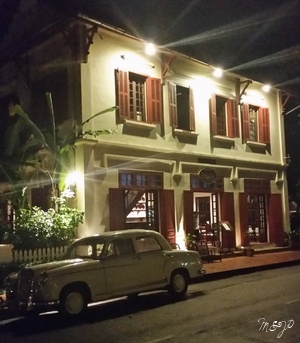
It has lovely old French-Indochinese colonial houses and two-storey shop houses featuring both French and Lao architectural influences.
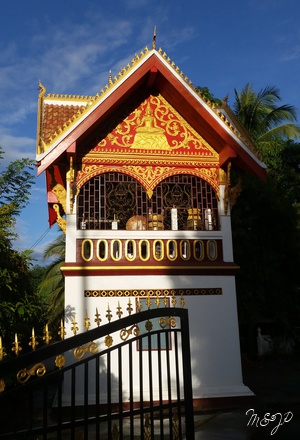
If you add to all this the colourful markets, the spas with amazing local fragrances and the short trips to gorgeous waterfalls, mysterious caves in the middle of the Mekong River and local villages with outstanding crafts, you are ready to explore the treasures of this tiny quaint place for at least a week!
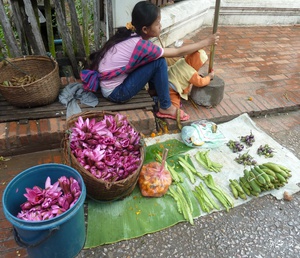
Strolling around Luang Prabang is a joy! You will feel like time has stopped and you have received a special invitation for meditation and self-awareness!
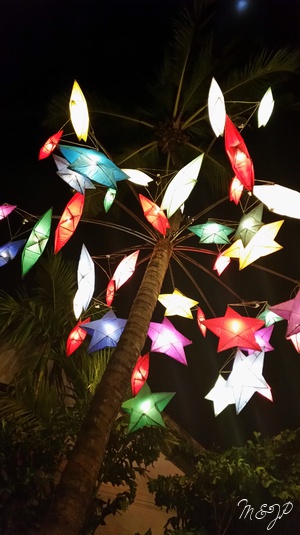
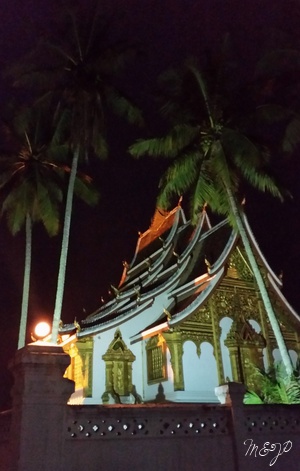
You will start soaking up in the serene and spiritual atmosphere of the city while visiting the 16th century temple Wat Xiengthong (in English “Temple of the Golden City”) which, more than any other temple in Luang Prabang, epitomises all the elegance and grace of Lao architecture.
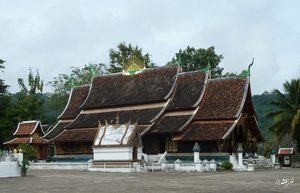
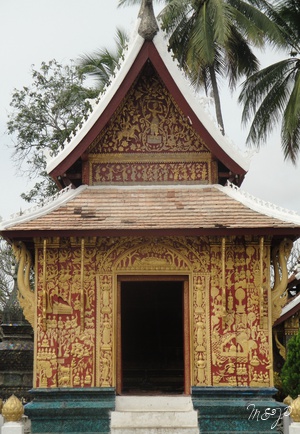
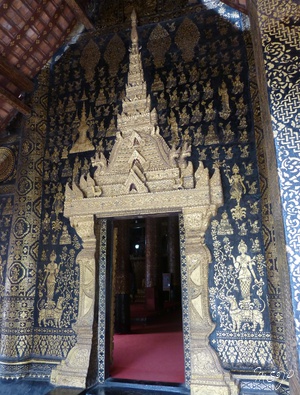
The temple, which once oversaw the coronation of Lao kings, remains in its original form and will enchant you with its mosaics, gilded carved wood walls and rare Buddhist deities.
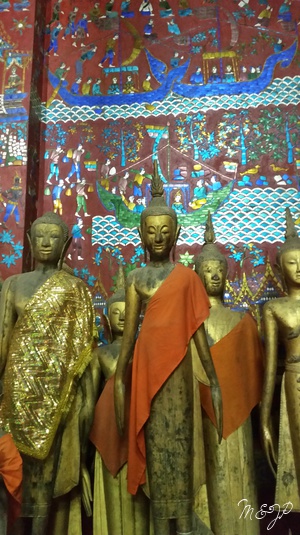
The most spectacular features of this wat (or temple) are the multiple elegant roofs cascading in an elaborate array.
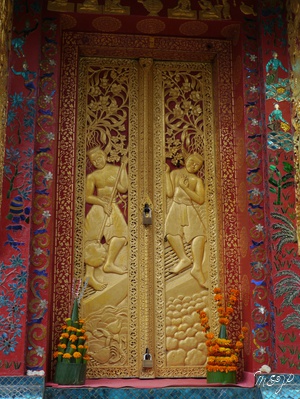
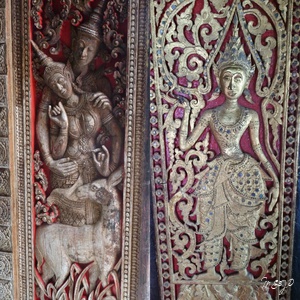
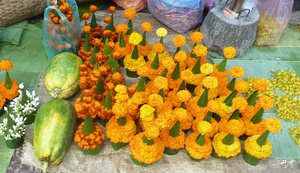
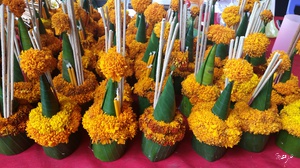
Just remove your shoes and enter into this peaceful sanctuary, full of banana leaf, marigold and frangipani sculptures in the shape of stupas that devotees use as flower temple offerings.
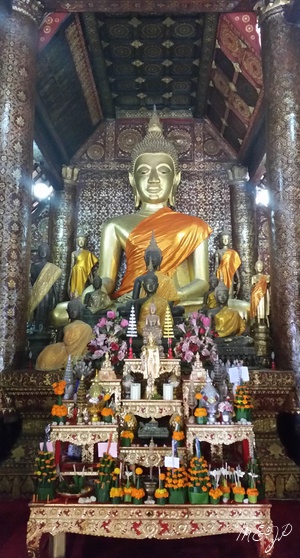
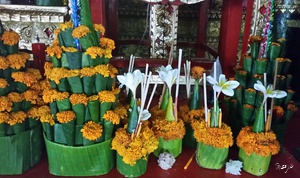
While the exquisitely perfumed frangipani flowers are the symbol of the Lao nation, the orange marigold flowers had found their way from South America to the banks of the Mekong - a legacy of European colonialism.
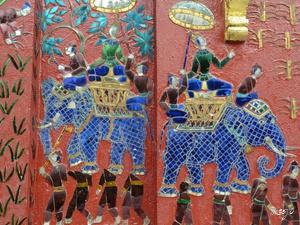
You can spend hours in the temple admiring the intricate mosaics featuring mythological and daily life scenes.
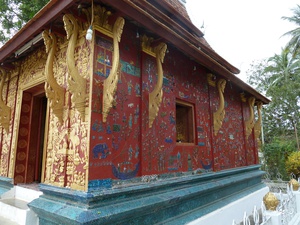
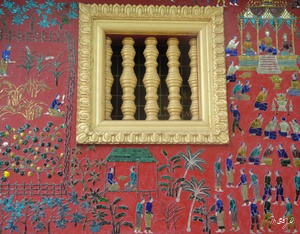
You will spot the stunning tree of life and, of course, the elephants.
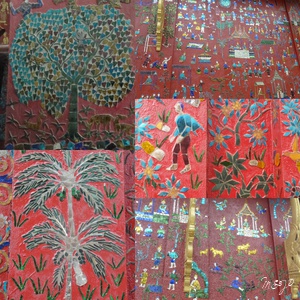
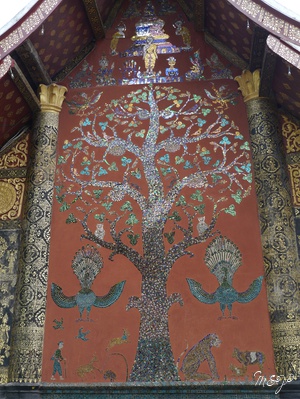
They are everywhere!
The nagas are another image omnipresent in the temple and everywhere else in the city. According to Lao mythology, these serpent-like semi-divine creatures, believed by locals to live in the Mekong River and possess supernatural powers, are the protectors of Laos.
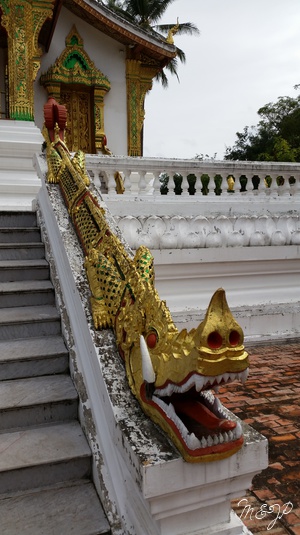
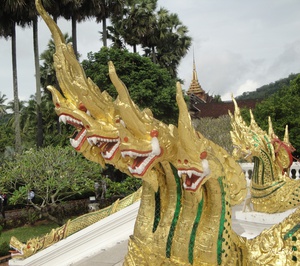
The gilded roofs of the temples pop up every few metres and their gongs echo around the town all day around.
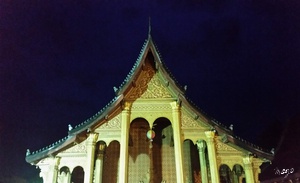
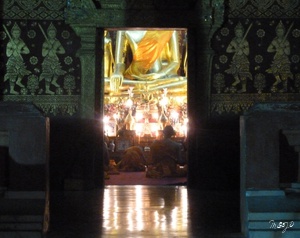
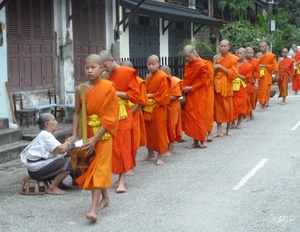
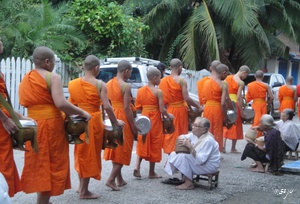
You need to wake up before dawn in order to witness one of the most unique rituals in Buddhist culture across Southeast Asia – the Sai Bat or Morning Alms. The daily morning procession of hundreds of saffron-robed monks, walking through the streets to collect alms (or their daily meal) offered by the faithful residents, dates back to the 14th century. Laos is the only Buddhist nation still preserving the tradition. It reminded us a little bit of the fire ceremony we witnessed in a monastery in Koyasan, Japan – a special and holy moment of austere beauty and contemplation.
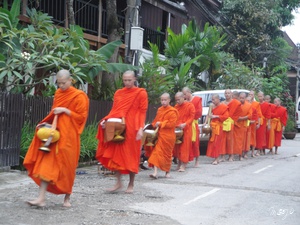
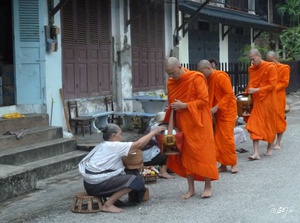
As the sun rises, the monks and novices emerge onto the streets with their bats (or alms bowls). Awaiting them by the roadside are the devotees, who have already prepared sticky rice, fresh fruits and traditional snacks and will place a portion of them in each bowl.
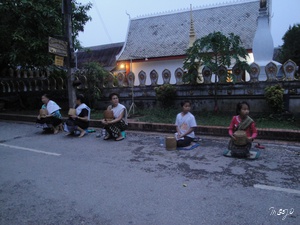
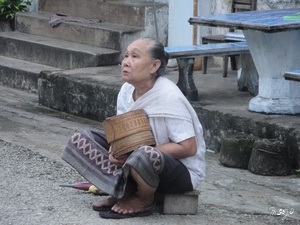
You can also spot small children from poor families kneeling down with their baskets, with whom monks often share some of their alms.
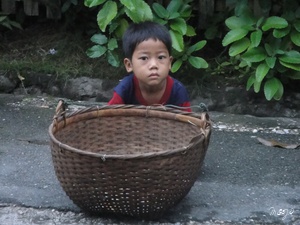
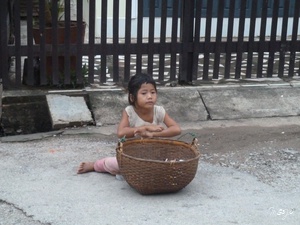
The shoulders, chests and legs of all participants are covered and the whole ceremony takes place in complete silence in compliance with Theravada Buddhism uses.
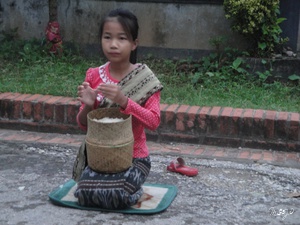
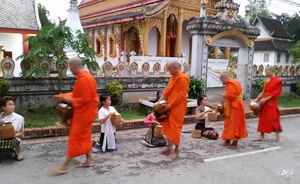
The saffron robes the monks wear date back centuries. The colour was chosen mainly because of the dye available at the time. The tradition stuck and saffron is now the colour of choice for Theravada Buddhist followers in Southeast Asia, as opposed to a maroon colour for Tibetan monks. The robes themselves are meant to symbolise simplicity and detachment of materialism, and the monks’ hair is shaved off for the same reason. Just think of how long you spend every day in front of the mirror to comb or style your hair… Exactly…
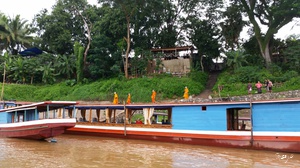
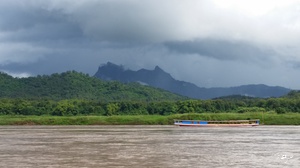
In order to continue your spiritual journey, you can take a boat ride for a few hours upstream on the Mekong to visit Pak Ou Caves, set in a dramatic limestone cliff.
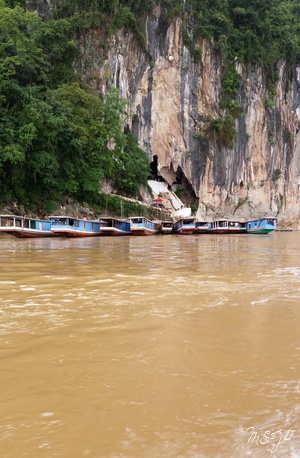
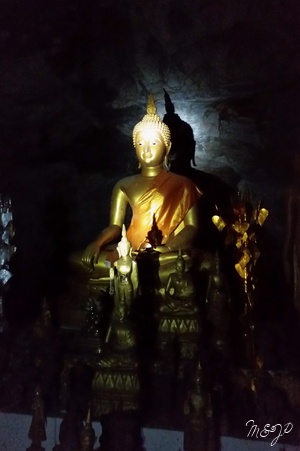
The caves are packed with thousands of Buddha icons believed to have been left there by local people for centuries.
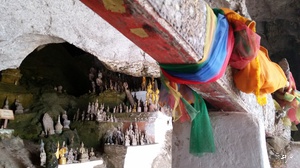
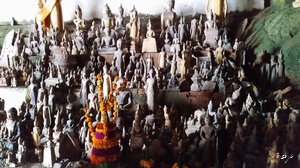
They range from mere centimetres to two metres in height, and take many different positions, including meditation, teaching, peace, rain, and reclining (nirvana).
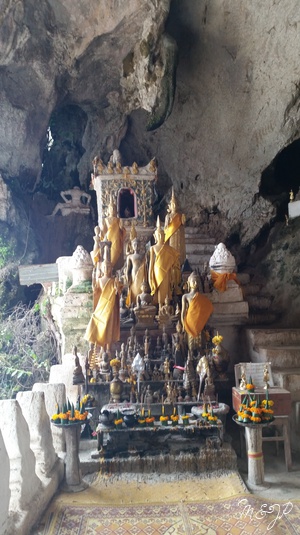
You can make a wish by presenting one of the marigold stupa sculptures. I will always remember this special moment - at this time of our life the only thing I could wish for was for the rain that was pouring that morning to stop… Was that happiness?
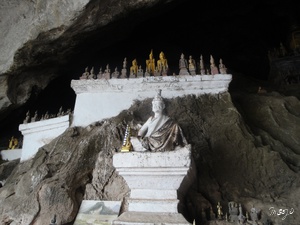
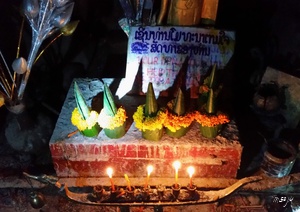
The trip to the holy caves is the occasion to meet more local people.
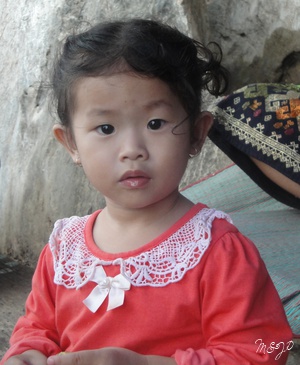
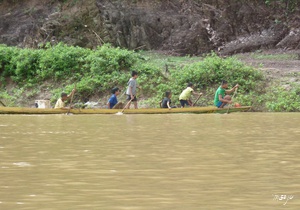
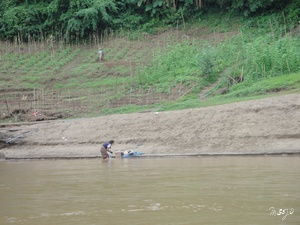
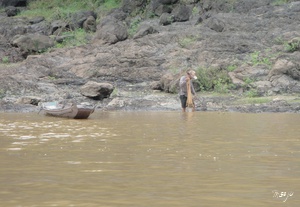
You will also spot Lao villages barely visible behind a screen of foliage, local gardens, slender canoes bobbing by the shore, and bamboo poles and floats marking the location of nets and fish traps.
In addition to the spiritual experience, Luang Prabang will offer you a lot of culture.

You like what you read?
Explore and learn more about Laos !!!
-
 The Valley of Roses and Kings (part 2) The Valley of Kings
The Valley of Roses is famous not only for its … -
 The Valley of Roses and Kings (part 1) The Valley of Roses
Out of all the flowers in the world the rose … -
 In the heart of the Silk Road (part 4) Khiva and the Desert Castles
Khiva - It took us 6 hours, almost a whole … -
 In the heart of the Silk Road (part 3) Bukhara
Bukhara - While Tashkent is a modern city with some … -
 In the heart of the Silk Road (part 2) Samarkand
Samarkand - No name is so evocative of the Silk … -
 In the heart of the Silk Road (part 1) Tashkent
The Great Wall of China, Machu Picchu, the Pyramids of … -
 The Land of Giants at the End of the World (part 2)
We crossed for the third time the border between Argentina … -
 The Land of Giants at the End of the World (part 1)
No visitors come back from Antarctica in the same state … -
 A Vitamin Sea Christmas in the Mediterranean
Human beings are full of contradictions! When we used to … -
 Spring Colours in the Kingdom of the West (part 6) Morocco is yellow
Morocco is yellow - Besides the yellow hues of the … -
 Spring Colours in the Kingdom of the West (part 5) Morocco is red
Morocco is red - Besides the red hues of the … -
 Spring Colours in the Kingdom of the West (part 4) Morocco is orange
Morocco is orange - Our first encounter with the legendary … -
 Spring Colours in the Kingdom of the West (part 3) Morocco is green
Morocco is green - The Rif Mountains east of Tangier, … -
 Spring Colours in the Kingdom of the West (part 2) Morocco is blue
Morocco is blue - The road along the Atlantic Coast … -
 Spring Colours in the Kingdom of the West (part 1) Morocco is white
If I had to use only a couple of words …
