
.svg)
The Land of a Million Elephants (part 2)
Posted by: Maria in April 2020 (6 years, 6 months ago)
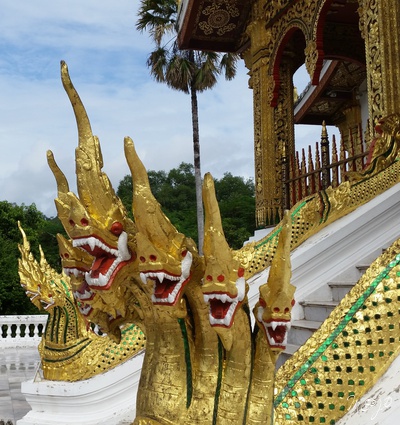
The Royal Palace, which was the residence of the kings during the French colonial era up until when the monarchy was overthrown in 1975, has been converted into a national museum with invaluable treasures.
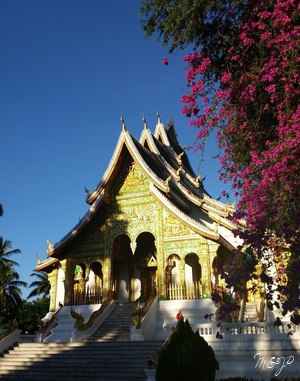
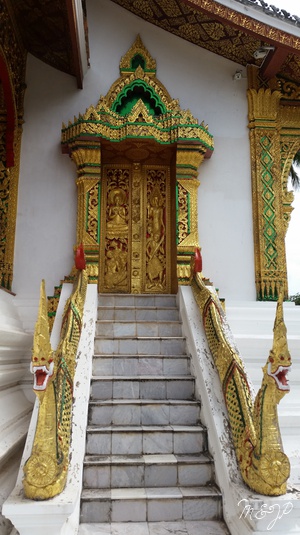
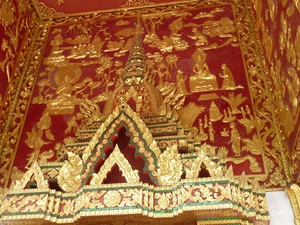
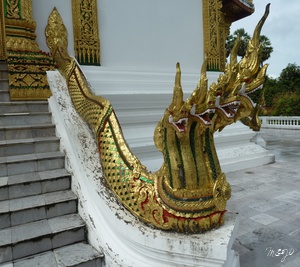
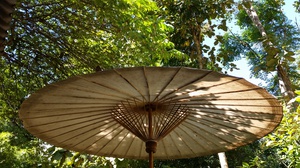
The elegant gilded structure, built between 1904 and 1909 (just a few years before the kingdom of Luang Prabang was declared a protectorate, and the rest of Laos - a French colony), is one of the highlights of French architecture in the city. It is designed in the French Beaux-Arts style, with many traditional Lao motifs such as the famous nagas. You can also spot above the entrance the symbol of the Lao monarchy - a three-headed elephant, sheltered by the sacred white parasol.
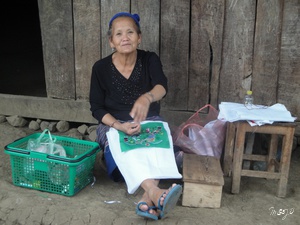
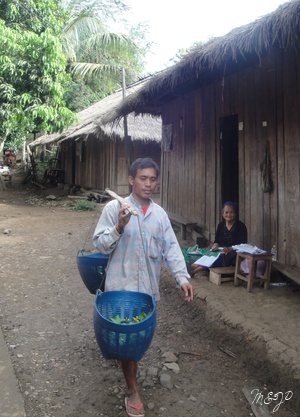
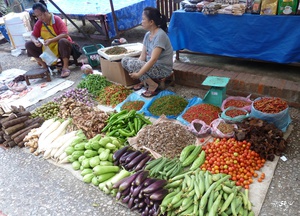
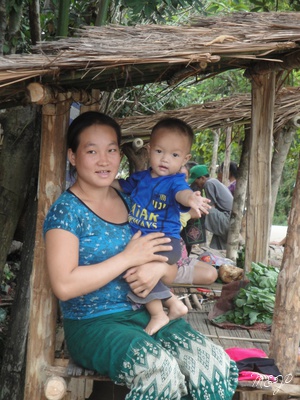
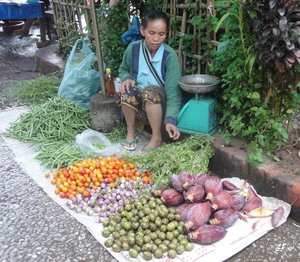
Also part of Lao culture are the local villages and markets, where you can see the traditional arts and lifestyles of the country’s many and diverse ethnic groups.
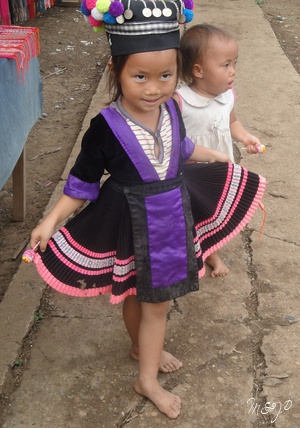
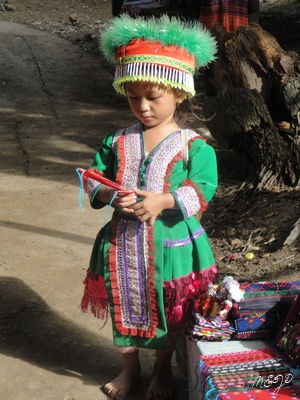
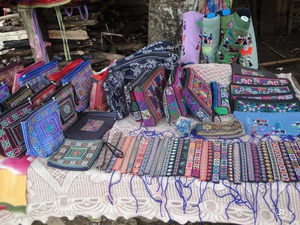
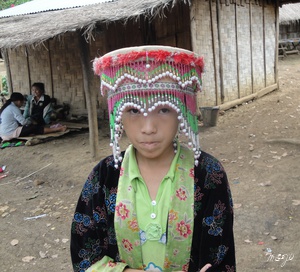
On the road you can stop at the very poor village of the Hmong people (probably the best-known minority group in Laos), where some villagers still dress in traditional costumes and offer handwoven crafts.
You can also take a boat ride to a typical Lao village and see the process of Lao traditional rice whisky being distilled.
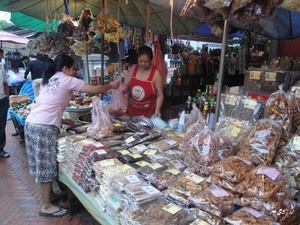
However, the most revealing cultural (and human!) experience will be watching the town come to life during a visit to the morning market, or immersing yourself in the excitement and buzzing of the night market.
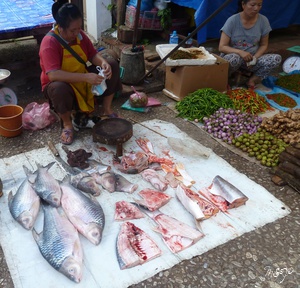
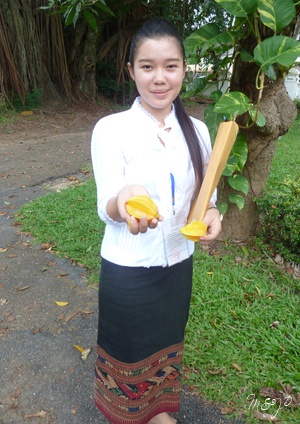
You will see many women wearing the traditional Lao sinh – a tube skirt, made of silk or handwoven cotton.
The markets are where your Lao culinary experience will start as well.
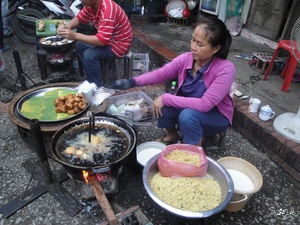
You will find various kinds of rice, local snacks, and the famous colourful Lao desserts.
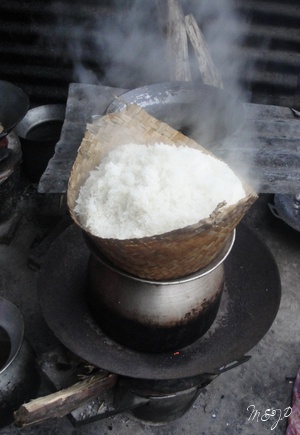
Most Lao desserts are super-sweet, containing cane sugar syrup, coconut cream, fresh fruit, pandan and sweet sticky rice.
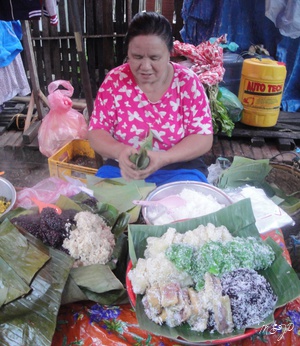
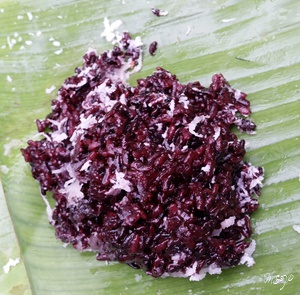
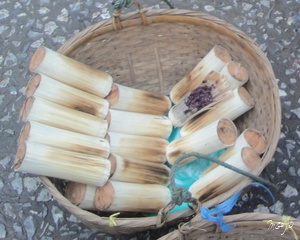
Our favourite one is the bamboo sticky rice. It is made of purple sticky rice, coconut milk and sometimes small chunks of sweet potato, packed into short lengths of bamboo tubing and roasted over hot charcoal until the rice is sweet and sticky. It is a lot of fun to peel back strips of bamboo while eating it and it is delicious!
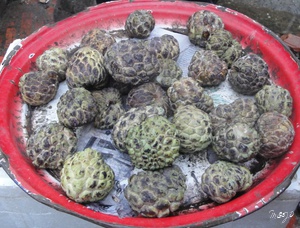
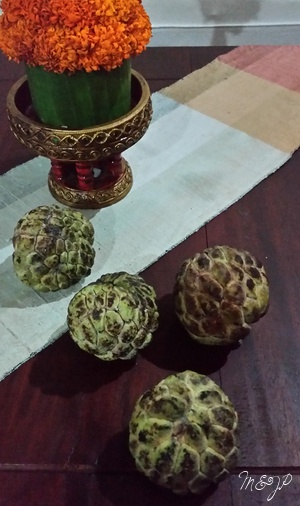
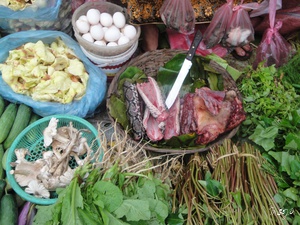
Even if you are familiar with Asian fruits and vegetables, you may still find some that you do not know at the markets.
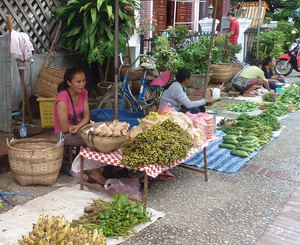
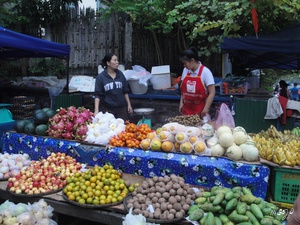
In our case, it was the sugar apple which is soft and tastes like a cinnamon apple cake!
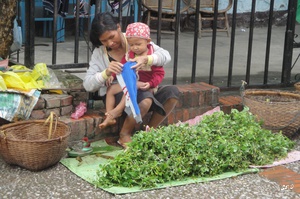
You can take your Lao culinary experience one notch further in the charming local restaurants. Lao people use a lot of vegetables and herbs, such as mint, coriander and lemongrass, for one of the most delicious and fresh cuisines in Southeast Asia.
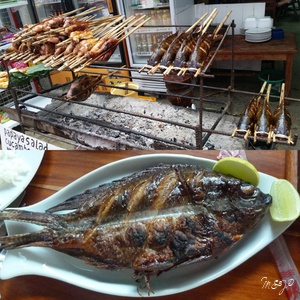
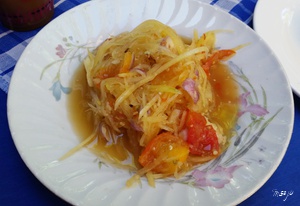
Whether you have a green mango salad at a riverside restaurant on the banks of the Mekong River or some grilled fish in a simple shack on the road, you will not be disappointed!
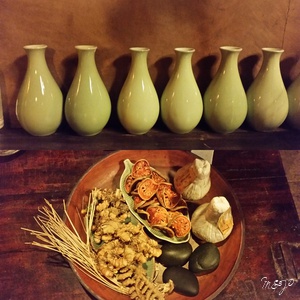
After strolling around the city for hours and enjoying a delicious meal, it is time for some relaxation! There is nothing better than a massage in one of the many spas in Luang Prabang to put you in an R&R mood… You can pick amongst tons of fragrances such as frangipani or lemongrass!
After that moment of pure heaven, you are ready to discover some of the natural wonders of Luang Prabang! The Tad Sae Falls, where you can relax and swim in the cool water, are only a boat ride away from the city.
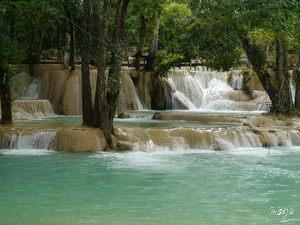
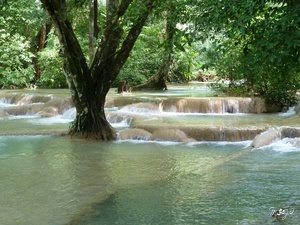
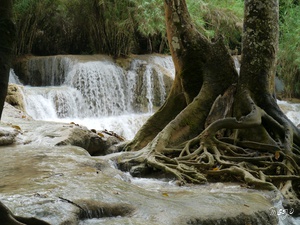
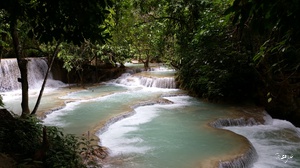
You can also drop by the breathtaking Kuang Si Falls, surrounded by lush tropical jungle.
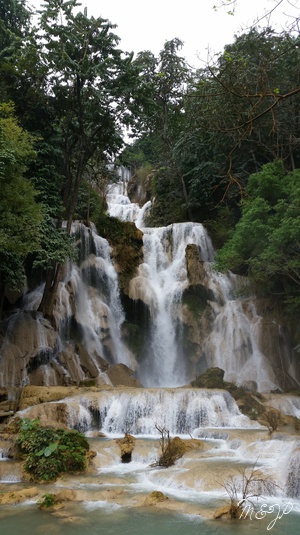
They have different tiers, leading to a 60-metre drop into shallow turquoise blue pools where you can swim as well.
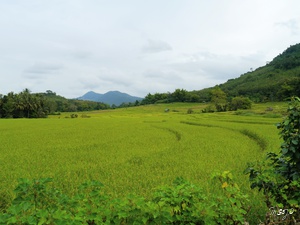
The views of rice fields along the way to the falls will enhance the feeling of serenity that is everywhere in Luang Prabang…
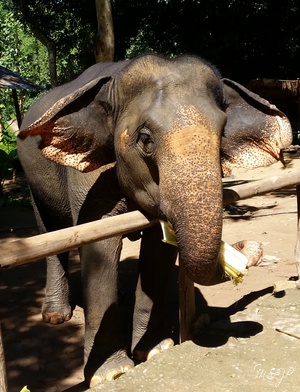
Last but not least - you can absolutely not leave Laos before saying hi to some cute elephants. After all, this is their country - the Country of a million elephants!

You like what you read?
Explore and learn more about Laos !!!
-
 The Valley of Roses and Kings (part 2) The Valley of Kings
The Valley of Roses is famous not only for its … -
 The Valley of Roses and Kings (part 1) The Valley of Roses
Out of all the flowers in the world the rose … -
 In the heart of the Silk Road (part 4) Khiva and the Desert Castles
Khiva - It took us 6 hours, almost a whole … -
 In the heart of the Silk Road (part 3) Bukhara
Bukhara - While Tashkent is a modern city with some … -
 In the heart of the Silk Road (part 2) Samarkand
Samarkand - No name is so evocative of the Silk … -
 In the heart of the Silk Road (part 1) Tashkent
The Great Wall of China, Machu Picchu, the Pyramids of … -
 The Land of Giants at the End of the World (part 2)
We crossed for the third time the border between Argentina … -
 The Land of Giants at the End of the World (part 1)
No visitors come back from Antarctica in the same state … -
 A Vitamin Sea Christmas in the Mediterranean
Human beings are full of contradictions! When we used to … -
 Spring Colours in the Kingdom of the West (part 6) Morocco is yellow
Morocco is yellow - Besides the yellow hues of the … -
 Spring Colours in the Kingdom of the West (part 5) Morocco is red
Morocco is red - Besides the red hues of the … -
 Spring Colours in the Kingdom of the West (part 4) Morocco is orange
Morocco is orange - Our first encounter with the legendary … -
 Spring Colours in the Kingdom of the West (part 3) Morocco is green
Morocco is green - The Rif Mountains east of Tangier, … -
 Spring Colours in the Kingdom of the West (part 2) Morocco is blue
Morocco is blue - The road along the Atlantic Coast … -
 Spring Colours in the Kingdom of the West (part 1) Morocco is white
If I had to use only a couple of words …
