
_zoom.svg)
The Little Red Dot (part 5)
Posted by: Maria in February 2021 (5 years, 7 months ago)
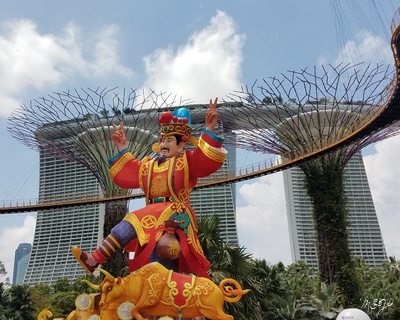
If Singapore was a neighborhood, it would be Little India, Chinatown, Kampong Glam, Katong and Orchard.
Each of these neighbourhoods will make you feel like you have visited different countries in a single day, without leaving Singapore or even the neighbourhood itself! China, India, Malaysia, Indonesia, Europe...
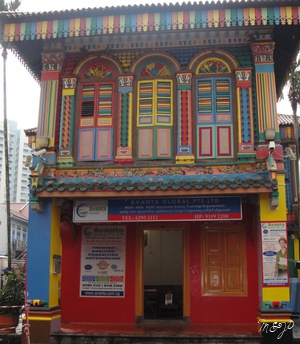
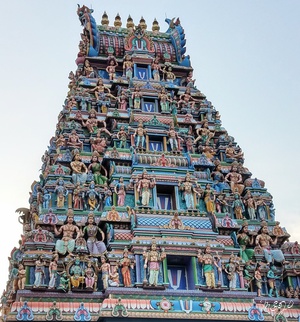
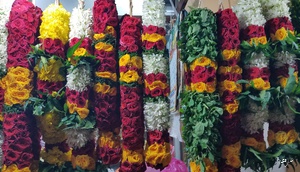
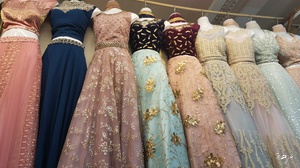
Your senses will be filled with the colours and aromas of the flower garlands, exotic fruits, veggies and spices, delicious Indian cuisine, elegant sarees and intricately carved temples in Little India.
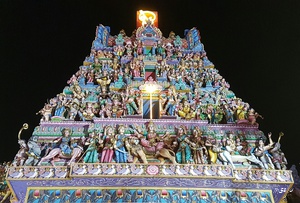
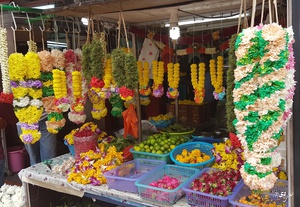
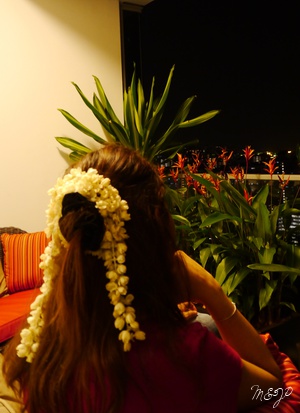
You can decorate your hair with a jasmine flower garland...
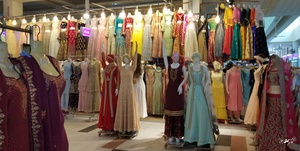
Stop at one of the local tailors for a made-to-measure colourful saree...
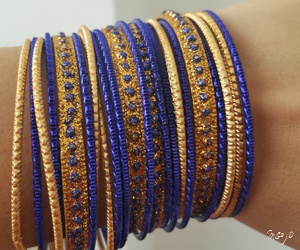
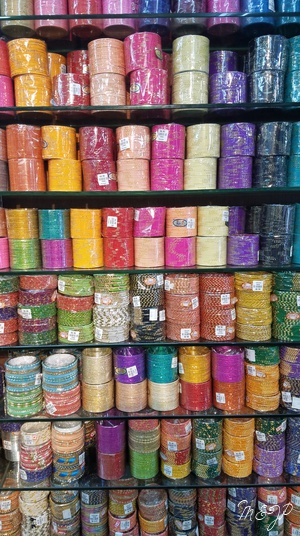
Or buy some sparkling rainbow bangles!
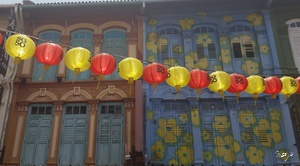
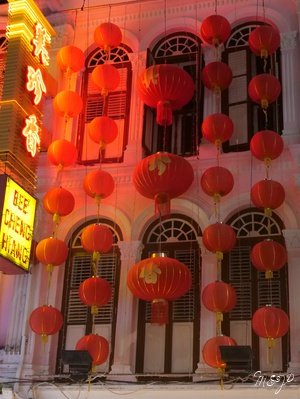
You can also dive into Singapore's rich Chinese culture with the shophouses, beautiful temples, lanterns and goodies in Chinatown!
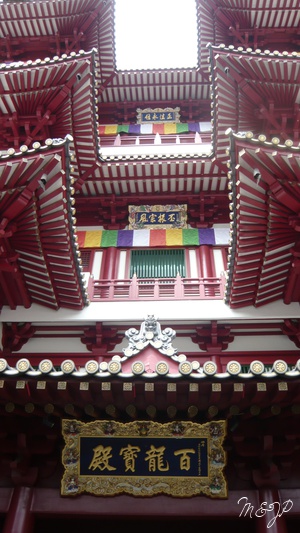
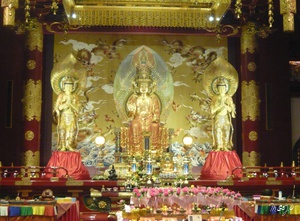
The impressive Buddha Tooth Relic Temple, the design of which was inspired by the Buddhist mandala (a symbol of Buddhist culture representing the universe), houses the Sacred Buddha Tooth Relic in a stupa made from 320 kg of gold (most of it donated by devotees).
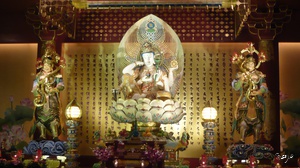
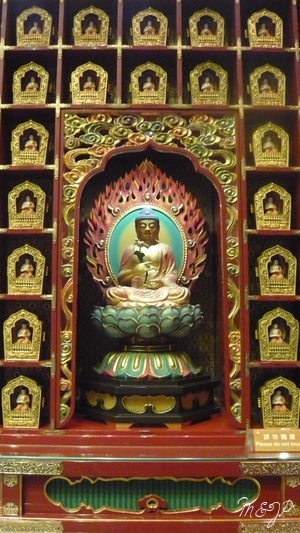
You can also admire the seated Buddha Maitreya, or future Buddha, flanked by two Bodhisattvas in the centre of the hall, as well as the multiple floors of Buddha statues and nagas (or snake-like deities).
Even though you are in Chinatown, you will come across the Sri Mariamman Temple.
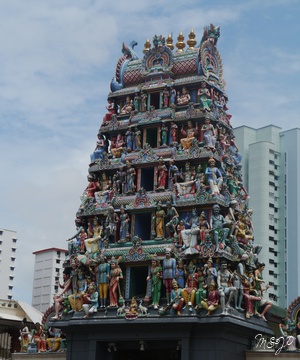
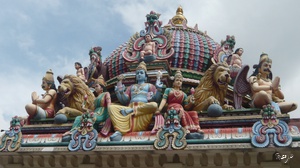
It is Singapore’s oldest Hindu temple with fascinating ornaments and details, constructed for the worship of Goddess Mariamman who is believed to be the “goddess mother” of South Indians and the bringer of rain and prosperity.
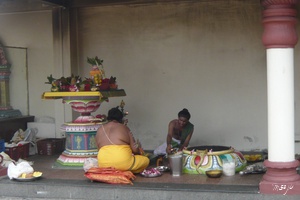
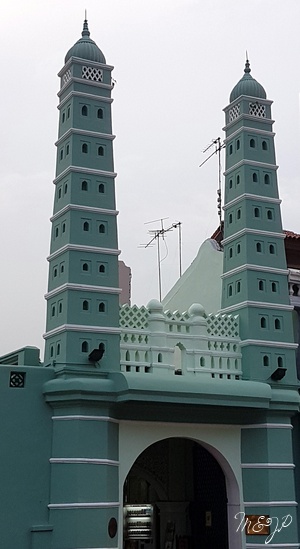
Nearby (still in Chinatown!) is also the pale green Masjid Jamae, one of Singapore’s oldest mosques founded in the 1820s.
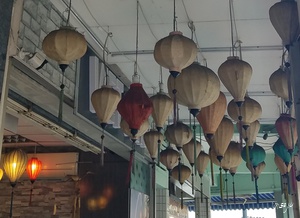
Kampong Glam, once the seat of the Malay royalty in Singapore after the island was ceded to the British in 1819, will teleport you somewhere in the Middle East with its Aladdin lamps, traditional handwoven carpets and exquisite fabrics straight out of 1001 Arabian Nights!
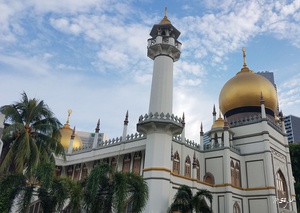
At the heart of the bustling alleys with beautiful street art is the Sultan Mosque, originally built in 1824 by Sultan Hussain Shah, the first sultan of Singapore - a real marvel of golden domes, minarets and balustrades, surrounded by palm trees!
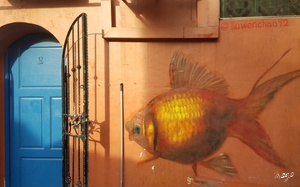
Katong will open for you the vibrant world of Peranakan culture and heritage.
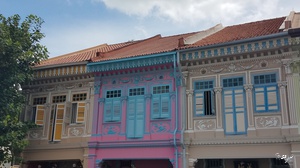
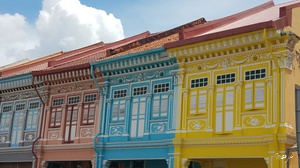
Once filled with coconut plantations and used as a weekend retreat by wealthy city dwellers, the neighbourhood had developed into a residential suburb by the early 20th century.
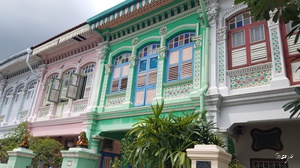
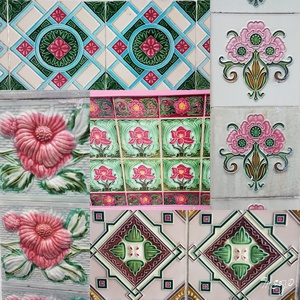
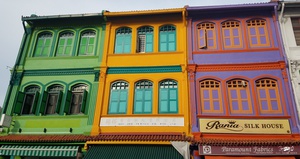
You can admire many well-preserved rainbow Peranakan shophouses with gorgeous flowers and mythical creatures tiles, try one of the many nonya delicacies, enjoy some nonya snacks at Kim Choo Kueh Chang, or buy a kebaya (a traditional nonya blouse-dress) and a pair of beaded slippers at Rumah Bebe.
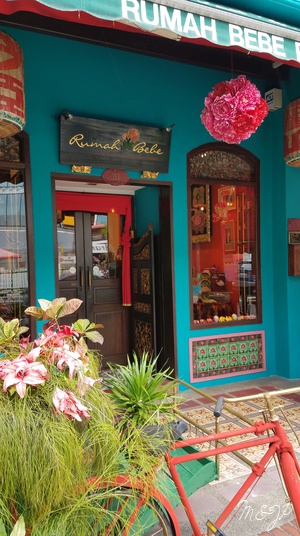
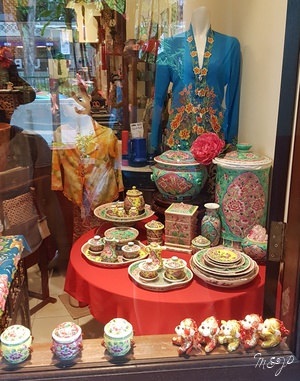
Finally, no visitor of Singapore can skip Orchard - it is the local equivalent of Champs-Elysees or Fifth Avenue.
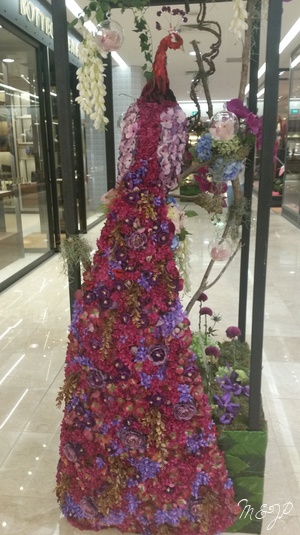
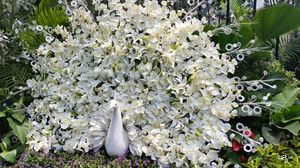
This shopping heaven derives its name from the numerous fruit orchards and plantations that used to span the area, and is one of the best places in Singapore to see the Christmas decorations!
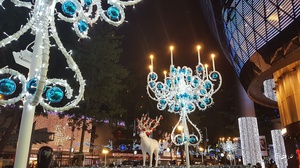
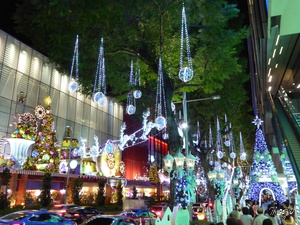
If Singapore was an architectural style, it would be colonial.
Singapore was planned by Sir Stamford Raffles in 1822, and his layout for the city largely survives to this day. It has an impressive number of well-preserved colonial marvels.
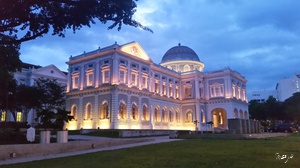
Some of the most famous ones include St Andrew’s Cathedral originally built in 1836, the Victorian-style Old Parliament House which is currently an arts events place...
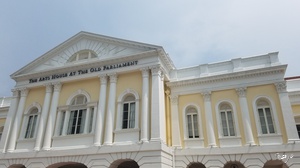
The Old Supreme Court Building which has been converted into the National Gallery of Singapore...
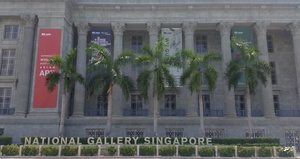
The Istana (which translates to “palace” in Malay) - the official residence and office of the president and fondly known as The White House of Singapore...
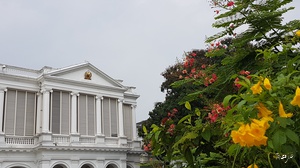
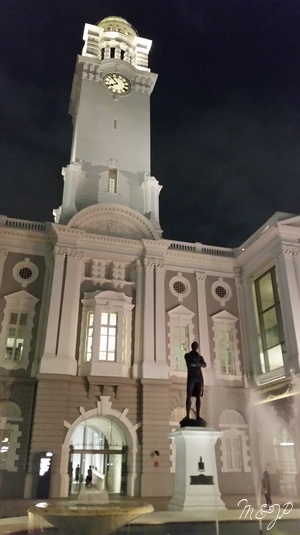
The Victoria Theatre and Concert Hall with its majestic clocktower, used as a performance venue by the Singapore Symphony Orchestra...
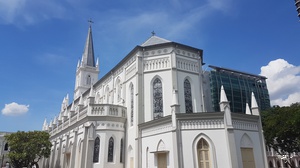
And Chijmes, a former convent with its Gothic-style chapel, which is today full of restaurants.
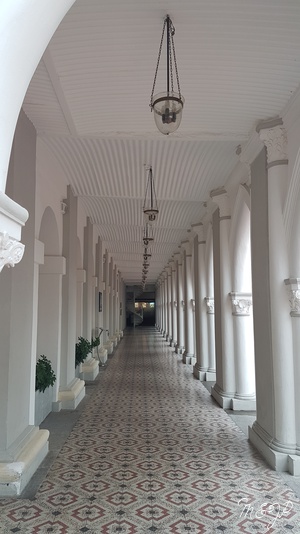
You cannot miss the Raffles Hotel, an iconic luxurious colonial-style hotel, originally built in the 1830s as a private beach house and bought over by the Armenian Sarkies brothers in 1887, which had hosted legendary guests such as Elizabeth Taylor and Charlie Chaplin! The Singapore sling cocktail - a unique concoction of gin, cherry brandy, pineapple juice, Cointreau and grenadine - is believed to have been created there.
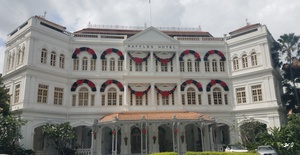
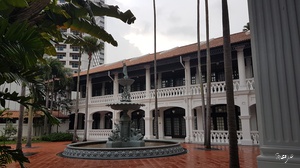
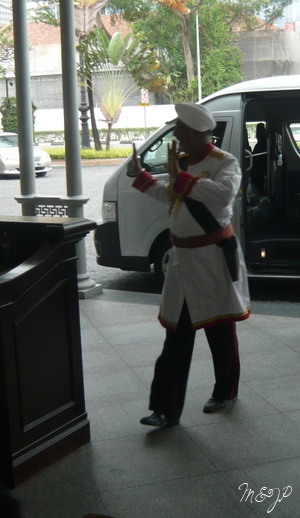
The doormen of the hotel, recognisable by their immaculate white turbans, are probably the most photographed members of the staff and will make you feel like you have moved back in time!
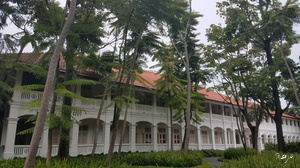
Another colonial hotel where you can stay is Capella Singapore with its restored British colonial buildings, originally built to accommodate the British officers of the Royal Artillery and their families.
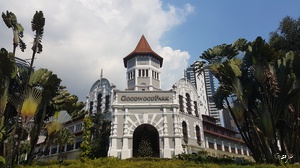
Even though built after the colonial era, other heritage hotel buildings will remind you of this period. You can enjoy the high tea of the Goodwood Park Hotel built in the 1900s, which had an illustrious list of royal guests such as the Duke of Windsor and the Prince of Wales.
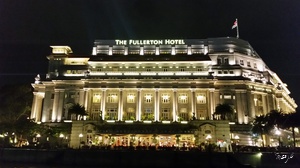
You might also be surprised to learn that the Fullerton Hotel, built in 1928 and distinguished with its Palladian architecture, colonnades and elaborate ornamentation, used to house the General Post Office.
However, like anything else in Singapore, the island is a kaleidoscope of architectural styles…
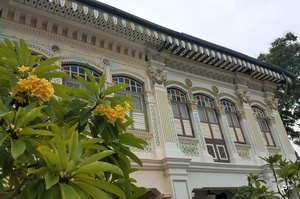
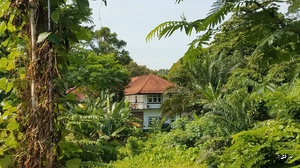
From the traditional vernacular Malay houses, shophouses and black and white bungalows to the European Neoclassical, Gothic, Palladian, Renaissance and Art Deco styles, as well as the modern architecture which will remind you of the decor of a science fiction movie...
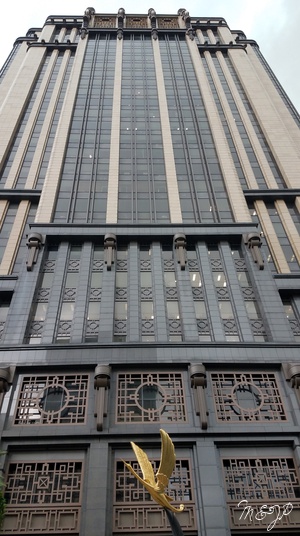
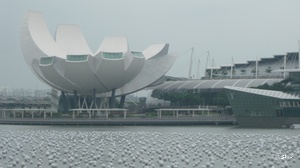
Some of the iconic buildings include the Neoclassical-style Old Hill Street Police Station with its 927 windows painted in rainbow colours, which was the largest government building when it opened in 1934...
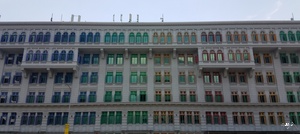
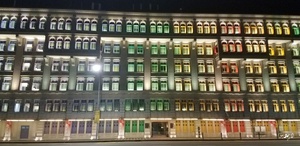
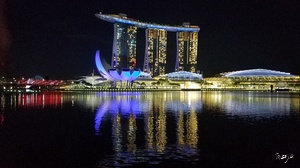
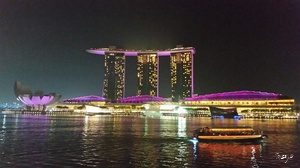
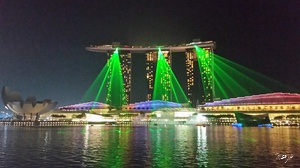
And, of course, Marina Bay Sands - the equivalent of the Eiffel Tower in Paris.
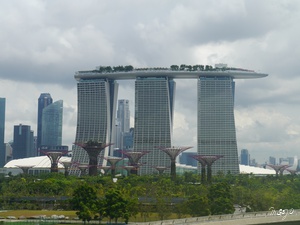
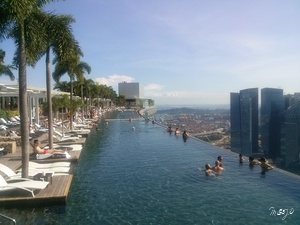
With a vertiginous infinity pool and stunning 360-degree views of the Singapore skyline, it is an architectural wonder.
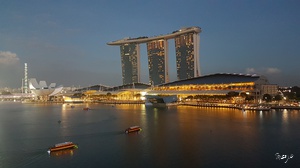
You can admire the iconic building at the free Light and Water show taking place every evening at 8pm and 9.30pm, either from the land or from one of the river cruise boats that can be rented for a couple of hours!
If Singapore was a building, it would be a condo, an HDB or a mall!
Most Singaporeans live in high-rise, low-cost, state-built flats, a.k.a. HDBs (for the Housing Development Board), located in housing estates with amenities such as hawker centres, shops, medical clinics and recreational facilities. These small cities in the big city have nothing to do with similar structures in Europe - they are modern, colourful, surrounded by greenery and feel so cosy! Their residents are young or elderly, Chinese, Indian or Malay, Christian, Hindu or Buddhist!
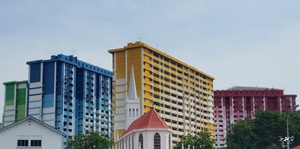
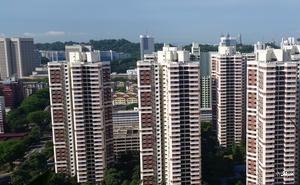
The Pinnacle@Duxton with its seven connected towers is probably the most famous one - it is the world's tallest public residential building and features the two longest sky gardens ever built on skyscrapers, each at 500 m above ground level.
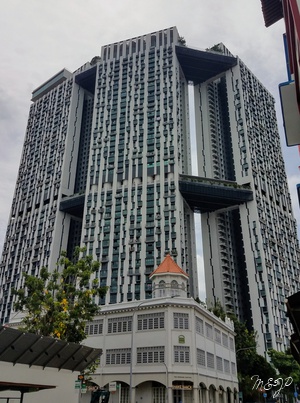
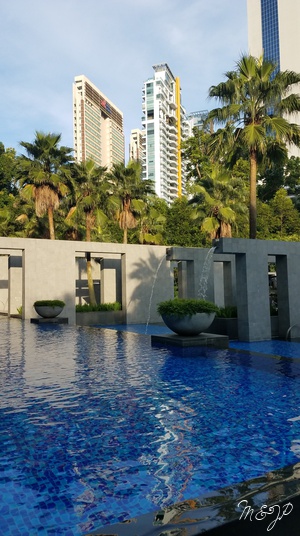
Almost all foreigners and wealthy locals live in condos with various facilities, which will make you think of summer resorts!
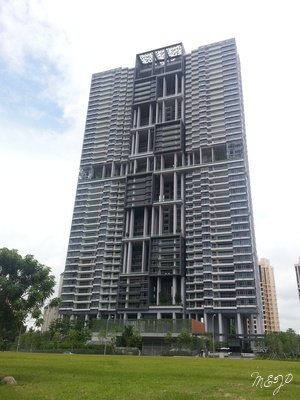
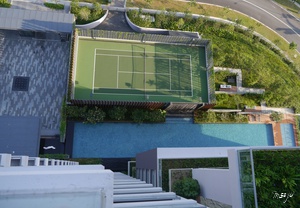
Most of them have at least a swimming pool, a barbecue area and a gym, and some also have jacuzzis, infinity pools, tennis, basketball or badminton courts, a golf practice range and even the less conventional water slide, rock climbing wall, bowling alley or boxing ring! It will definitely feel like heaven to play tennis, go for a relaxing swim and sip some champagne on the balcony after the effort!
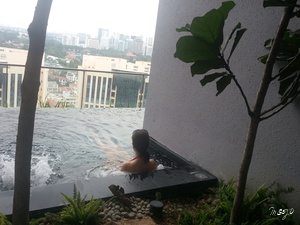
Contrary to Hong Kong, apartments in Singapore are quite spacious and, whether you live in a two- or a four-bedroom apartment, there will be at least two bathrooms, and even three and half for a four-bedroom apartment (the half being for a bathroom with a sink which is also used as a shower). Most apartments will have a bomb shelter, which people call the helper’s room as this is where she might sleep (there are no windows…), but it will definitely be better used as a storage room!
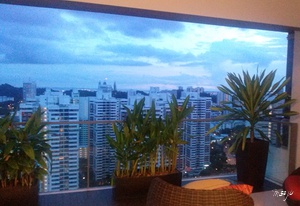
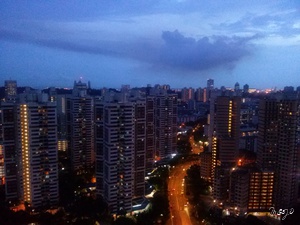
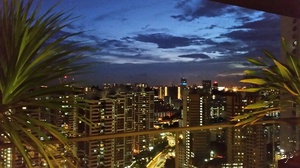
Of course the city has low-rise buildings as well, but living in a house in Singapore is actually a luxury - most people live in skyscrapers! The view from your 30th-floor balcony will definitely be amazing unless you suffer from vertigo…
Whether a person lives in an HDB or a condo, there are usually no floors numbered 4, 14, 24, etc. - the word for 4 in Mandarin sounds very similar to the word for death and is therefore considered an unlucky number. Also, Singapore being such a safe place, people have their bicycles and strollers stored in specific parking areas, and their shoe cabinets and shoes - outside their apartments. It goes along with the so-Asian (but also present in other parts of the world) custom to remove your shoes before entering anyone’s home!
In addition to residential buildings, Singapore has malls! One of my European friends and colleagues once told me that when she visited Singapore, she was afraid that she was going to spend her entire holiday in the malls! However, if you think about it, it is so hot outside that being in the A/Ced malls with various shops, restaurants and other facilities around is definitely the best option!
If Singapore was a culture, a celebration, a house or a religious place, it would be... (to be continued in the sixth part of this article)

You like what you read?
Explore and learn more about Singapore !!!
-
 The Valley of Roses and Kings (part 2) The Valley of Kings
The Valley of Roses is famous not only for its … -
 The Valley of Roses and Kings (part 1) The Valley of Roses
Out of all the flowers in the world the rose … -
 In the heart of the Silk Road (part 4) Khiva and the Desert Castles
Khiva - It took us 6 hours, almost a whole … -
 In the heart of the Silk Road (part 3) Bukhara
Bukhara - While Tashkent is a modern city with some … -
 In the heart of the Silk Road (part 2) Samarkand
Samarkand - No name is so evocative of the Silk … -
 In the heart of the Silk Road (part 1) Tashkent
The Great Wall of China, Machu Picchu, the Pyramids of … -
 The Land of Giants at the End of the World (part 2)
We crossed for the third time the border between Argentina … -
 The Land of Giants at the End of the World (part 1)
No visitors come back from Antarctica in the same state … -
 A Vitamin Sea Christmas in the Mediterranean
Human beings are full of contradictions! When we used to … -
 Spring Colours in the Kingdom of the West (part 6) Morocco is yellow
Morocco is yellow - Besides the yellow hues of the … -
 Spring Colours in the Kingdom of the West (part 5) Morocco is red
Morocco is red - Besides the red hues of the … -
 Spring Colours in the Kingdom of the West (part 4) Morocco is orange
Morocco is orange - Our first encounter with the legendary … -
 Spring Colours in the Kingdom of the West (part 3) Morocco is green
Morocco is green - The Rif Mountains east of Tangier, … -
 Spring Colours in the Kingdom of the West (part 2) Morocco is blue
Morocco is blue - The road along the Atlantic Coast … -
 Spring Colours in the Kingdom of the West (part 1) Morocco is white
If I had to use only a couple of words …
