
.svg)
The Hidden Gems of Africa (part 9)
The culture gems
Posted by: Maria in May 2025 (1 year, 5 months ago)
On top of their landscape, wildlife and adventure activity gems, Namibia and Botswana are a treasure trove of various tribes and their cultures just waiting to be explored. Like any other place on the continent, the Southern African countries are a kaleidoscope of tribes, languages, cultures and religions. Each of Namibia, Botswana, South Africa, Zambia and Zimbabwe has dozens of different ethnic groups.
A common feature is that the majority of the tribes belong to the linguistic cultural group of Bantu cattle herders who had migrated from Central Africa into Southern Africa. Along our trip, we heard a variety of different languages and when we asked about them, most of the time the answer was that they were Bantu languages.
Another thing these countries have in common is that their predominant religion is Protestant Christianity. While we did not see many buildings that looked like European churches, every Sunday we could not but notice that the people usually walking along the roads to run their errands were very nicely but conservatively dressed, and assumed rightly that they were heading to the Sunday mass!
Half of the population of Namibia belongs to the Ovambo tribe (which is part of the Bantu ethno-linguistic family), with the rest of the population being split between other ethnic groups including 11 major ones such as Kavango, Herero, Himba, Damara, Nama, Caprivian, San, Baster, Tswana, Afrikaner and German.
On the other hand, Botswana means "land of the Tswana" in the Tswana language (which is also one of the Bantu languages) in reference to the Tswana people who form 80% of the country’s population, with the rest being split between Bakalanga, Herero, Basubiya, Wayeyi, Mbukushu and San.
This tribal medley goes hand in hand with a remarkable diversity of about 30 spoken languages. While English is the official language in both countries - it is the sole official language in Namibia, and one of the two official languages, together with Tswana, in Botswana - only few people speak it as their first language.
Also, about 32% of Namibians speak German, which makes sense given that the country is a former German colony.
Finally, 60% of Namibians (but only a small number of Batswana - Botswana’s inhabitants) speak Afrikaans. This strange language sounds very much like Dutch which is used as its base, but also contains words from German, Malay and different African languages. We met a Dutch couple on the road who told us that they were able to understand Afrikaans! English and Afrikaans are also amongst the 12 official languages of South Africa, while only English is one of the multiple official languages of Zambia and Zimbabwe.
All this ethnic, linguistic and cultural diversity is related to the complex history of each country.
In order to make the long journey from Europe to Namibia more bearable, we decided to stop over in South Africa for a few days. The reason we chose its biggest city Johannesburg (aka Joburg or the City of Gold, as it was established in 1886 following the discovery of gold) instead of the more touristic Cape Town was our wish to visit the world-famous Apartheid Museum there. And what a moving and sobering moment that was…
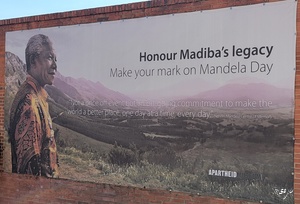
Everybody has heard of the apartheid regime (an Afrikaans word meaning "separateness", or "the state of being apart"), as well as Nelson Mandela who was awarded the Nobel Peace Prize for his work towards the apartheid’s peaceful termination, and for laying the foundations for a new democratic South Africa. Many of you have watched the inspiring movie "Invictus", directed by Clint Eastwood and starring Morgan Freeman and Matt Damon, which tells part of Mandela’s and his country’s story, and a few might even have read his autobiography "Long Walk to Freedom".
But in the same way the Hiroshima Peace Memorial Museum tells the stories of the real people who suffered from the nuclear bomb, Joburg’s Apartheid Museum describes this dark moment of South Africa’s history through the eyes of those who created and maintained the apartheid regime and those who suffered from and fought against it, and even makes you part of it.
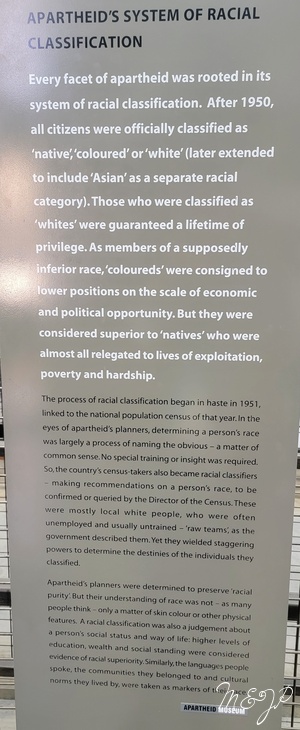
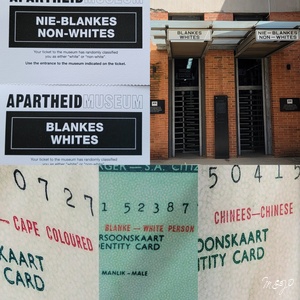
The entrance of the museum is already shocking and sobering…
Racial discrimination and inequality against Black people in South Africa dates to the beginning of a large-scale European colonisation with the Dutch East India Company's establishment of a trading post in the Cape of Good Hope in 1652, which eventually expanded into the Dutch Cape Colony. The apartheid laws were confirmed in 1809 by the British Colonial government which took over the Dutch colonisers (also known as Boers).
Racial classification was the foundation of all apartheid laws and placed individuals in one of four groups: "African", described in apartheid laws as "Bantu", "coloured", "Asian" or "white".
To illustrate the everyday reality, the visitors of the museum are arbitrarily classified on their entrance tickets as white or non-white and are only permitted to enter through the gate allocated to their race group. We felt a chill run down our spine as we were classified in different race groups and separated in the first building of the museum… It felt horrible even though we knew it was just an illusion - it was quite easy to imagine what it would involve if this separation was still the reality!
The colour of your skin defined which restrooms you could use, which places you could visit, what you were allowed to do… In the unfortunate scenario that you were born a non-white person, it defined your entire life.
The words of a member of the House of Assembly during the apartheid - "The White man is the master in South Africa, and the White man, from the very nature of its origins, from the very nature of his birth, and from the very nature of his guardianship, will remain master in South Africa to the end." - sounded horrible, almost unbelievable and so wrong!
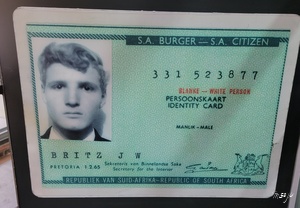
There were many videos, speeches of various people, pictures, objects, and so much information that we wished we could stay the whole day! We learnt that between 1994 and 1996 South Africa’s first fully democratic parliament drew the country’s new Constitution, which contains guarantees of equality more extensive than anywhere else in the world, and was also the first in the world to outlaw discrimination based on sexual orientation.
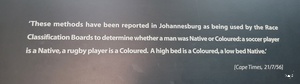
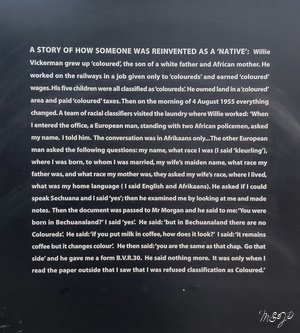
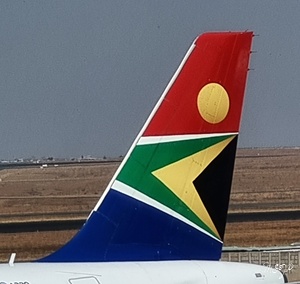
There was also a special exhibition about Nelson Mandela’s life and political fight. However, the most interesting part of the museum was the temporary exhibition "Born Free – Mandela’s Generation of Hope" by the Dutch photographer Ilvy Njiokiktjien with pictures and stories of the "rainbow nation". This term describes post-apartheid South Africa after its first democratic election in 1994 (just look at the country’s multi-coloured flag and you will understand the rainbow part), and in particular the so-called Born Frees - the generation of South Africans born after 1994 in a country without apartheid… The exhibition was full of hope but also showed that there was a long way to go and South Africa was still not out of the woods and its dark past.
During the trip, we came across a German lady who had visited the country ten years ago to attend one of Mandela’s events. She told us that she had visited again a year ago and, according to her, the life of non-white South Africans had unfortunately not changed that much - they still comprised the poorest and most vulnerable part of the population.
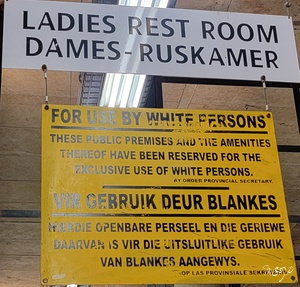
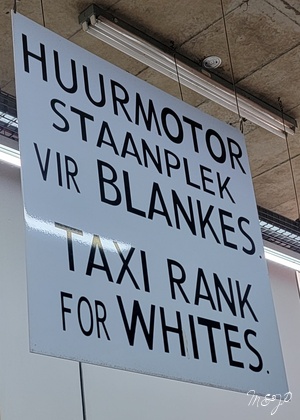
I exited the museum with tears in my eyes… In a world of ongoing conflicts based on religion and race, the experience makes you realise that there is no winner in any war, and the only way forward is to sit around the table and find a compromise for a peaceful life where all human beings are equal and free… Mandela’s words - “To be free is not merely to cast off one's chains, but to live in a way that respects and enhances the freedom of others.” - will resonate with you long after the visit.
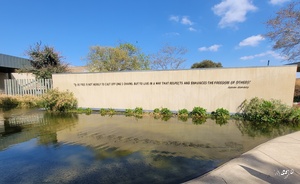
We did not know it back then but that visit was going to explain the history of the countries we were going to visit next.
Namibia’s history is the reason it carries the inspiring nickname "The Land of the Brave". It celebrates the nation's struggle for independence and the courage of its people in the face of adversity.
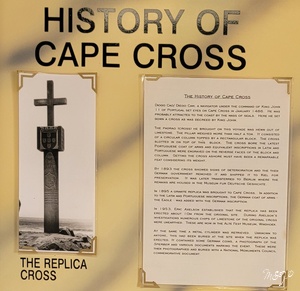
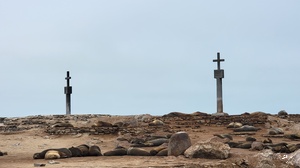
The first European to set foot on Namibian soil was the Portuguese Diogo Cão in 1485, who stopped briefly and raised a limestone cross on the Skeleton Coast (a replica of this cross ordered by the German Kaiser Wilhelm II remains at Cape Cross until today).
In 1793, the Dutch authority in the Cape decided to take control of Walvis Bay, since it was the only good deep-water harbour along the Skeleton Coast. When the British took control of the Cape Colony in 1805, they also took over Walvis Bay. In 1867 they annexed to the colony the rich coastal guano deposits - the excrement of seabirds used to make manure and a gunpowder ingredient - along the southern Namib Desert, and in 1878 - Walvis Bay as well.
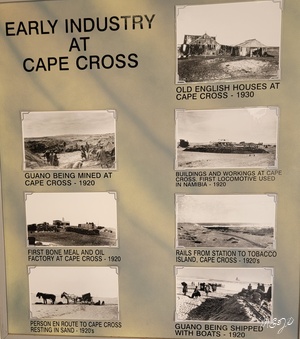
In 1883, a German trader, Adolf Lüderitz, bought some land rich in guano from a Nama chief where today’s city of Lüderitz is located. Believing that Britain was soon about to declare the whole area a protectorate, Lüderitz advised the German chancellor Otto von Bismarck to claim it.
In 1884 Namibia became a German colony under the name of German South West Africa and remained so until the First World War. When the Germans took over Namibia, they faced a problem - all the best lands fell within the territories of the Herero and Nama tribes. As with any European invasion in Africa, the solution was immediate, simple and brutal - at the beginning of the 20th century, the Germans had wiped out 80% of the Herero population.
The German government recognised and apologised for the colonial-era Namibia genocide only recently, in 2021… Some argue that this was the precursor of the Second World War’s genocide, with the only differences being the scale and the race of the victims of the murders…
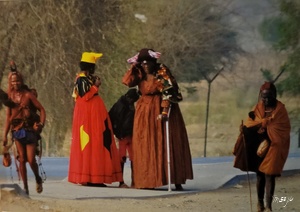
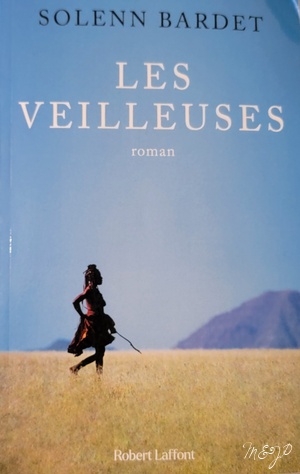
If you want to learn more about this dark period of history and the life and customs of the Himba tribes which are a Herero subgroup, you can read the excellent novel "The keepers" ("Les Veilleuses") from the French author Solenn Bardet.
It is the story of a young Himba woman with an indigenous mother and a French father, who shares her time between the Himba lands in Namibia and Paris in France, and tries to protect the traditional life and beliefs of her tribe from the various dangers of modern life, such as dam projects and tourism. As Alexis de Tocqueville has said it rightly, "When the past no longer illuminates the future, the spirit walks in darkness.".
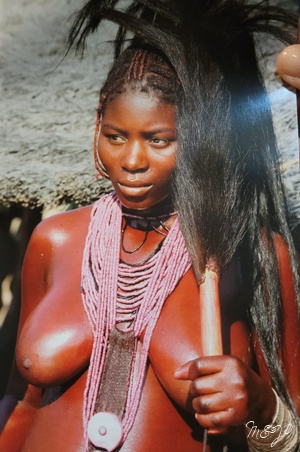
We learnt a lot about the Himbas from this wonderful book. For example, Himba women wear skirts and leave their upper bodies bare. They smear themselves with a fragrant mixture of ochre, butter and bush herbs, which dyes their skin a burnt-orange hue, and as strange as it might appear, they consider the dye to be their "clothes".
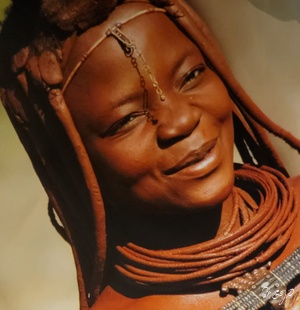
We preferred reading the book rather than visiting a Himba village or even staying there overnight as we had heard that it was a very tourist-oriented experience…
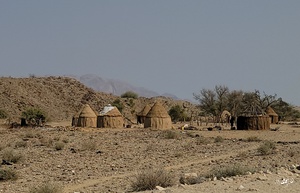
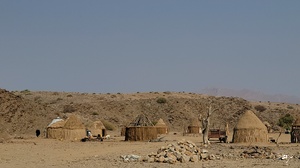
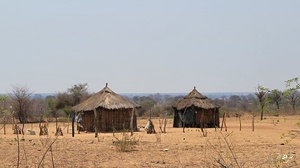
We saw a few Himba people selling their artefacts next to the art center in Windhoek - this seemed more authentic than us going to their villages as if they were amusement parks. On the road in Damaraland, we also saw Herero women dressed in traditional attires - the so-called ohorokova dresses which derive from those of Victorian-era German missionaries and consist of an enormous crinoline worn over a series of petticoats, complemented with a horn-shaped hat. They were waving at the cars with foreigners inviting them to stop… This was far from what we like seeing while travelling, so, of course, we did not stop and did not even take any pictures of the women (which is what we assume they were trying to sell…).
Unfortunately, the turbulent story of Namibia did not stop with the German invasion and the Herero and Himba genocide. At the beginning of the First World War, Britain pressured South Africa into invading German South West Africa.
The territory was first under South African administration from 1915 to 1966, under a mandate from the League of Nations (and later the UN) the terms of which South Africa - who wanted to simply annex the whole territory - violated, and then under South African occupation from 1966 to 1990. During this period, the tribes in German South West Africa suffered from the apartheid in the same way as their cousins in South Africa further south…
Thanks to a combination of guerrillas, international sanctions, the fact that South Africa was getting tired of the war and its economy was suffering badly, the country, renamed Namibia by the United Nations in 1968, finally became independent on 21 March 1990.
However, South Africa and white South Africans still control many sectors of the economy, and in particular tourism and gemstones. In most of the lodges and campsites we stayed at, the owners were white, while all the employees, waiters and drivers were black… We also saw only a handful of black tourists - almost all guests in the lodges and campsites were also white...
There were quite few opportunities to interact with the locals other than the guides, the taxi drivers, the waiters in the restaurants and, sometimes, the people along the road to whom we gave water, or if they had kids - packets of lollipops, notebooks, crayons and colouring books, which we had brought from Europe and appeared to be luxuries in this part of the world!
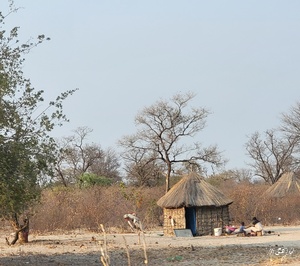
Once we had an issue with the power cable to plug our fridge and had to look for a car repairman, which was the occasion to drive to a local village in Sossusvlei and interact with real people living in the cute houses and their kids playing around. The inhabitants were really helpful and showed us the way, which we would not have found otherwise in the darkness of the desert and in particular, given that there was a sign indicating a closed road at the beginning of the village - I guess that the locals were just trying to keep the tourists from the surrounding campsites away from their home… As a sign of our gratitude, we gave lollipops to all kids playing in the center of the village and they were over the moon!
The chats with the locals were the most interesting conversations we had in the country. These were also the occasions when we discovered that Namibian people were generally super friendly and incredibly welcoming.
Each encounter started with a greeting, which was practically an art form and consisted of repeating many times things like "How are you? How are things? How was your day?" as the most minimal greeting. It is important that you greet everyone, and I mean literally everyone that you meet, as failing to do so would be considered extremely rude… And you do not want to be rude or make enemies in the middle of the desert - these are probably the people who would be the only ones able to stop and help you with a flat tyre or a charging elephant…
The only place where we thought that people, other than those in the lodges and campsites, were not that friendly, and sometimes even aggressive on the roads (we had stones thrown at our car a couple of times…), was in the northern part of Namibia, in a region which constitutes a real historical weirdness - the Caprivi Strip (now officially known as the Zambezi Region). Its odd shape has its own story.
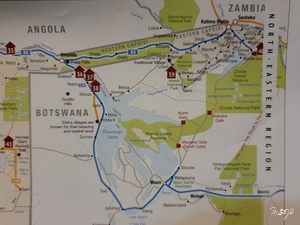
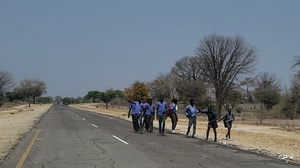
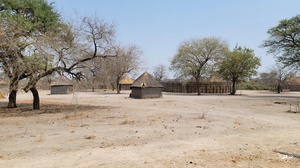
When Germany laid a claim to British-administered Zanzibar in 1890, Britain objected and, in the end, kept Zanzibar, but Germany was offered a vast strip of land from the British-administered Bechuanaland protectorate (now Botswana). This vital tract of land provided Germany with access to the Zambezi River, with the ultimate motivation to create a colonial empire that spanned from the South Atlantic Coast to Tanzania and the Indian Ocean. Unfortunately for them, the British colonisation of Rhodesia (now Zimbabwe) stopped the Germans well upstream of the Victoria Falls, which proved a considerable barrier to navigation on the Zambezi River.
The Caprivi Strip found peace only recently in 2002 as it had been subject to several years of civil war with local rebels, which involved attacks on civilians and even tourists making the headlines.
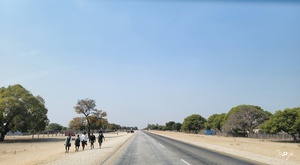
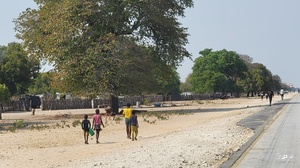
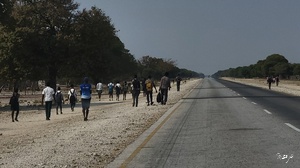
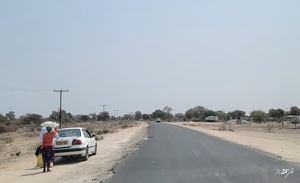
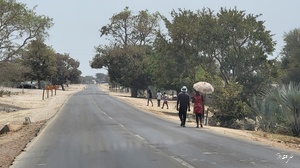
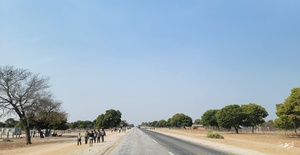
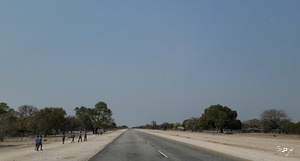
During the entire trip, we saw people walking and walking along the roads under the scorching sun, sometimes carrying heavy loads, including buckets of water, on their heads, but what we witnessed in the Caprivi Strip put the difficulties that the locals faced into a completely different perspective. Contrary to other parts of the country, the roads we drove on there were all sealed and in perfect condition, but the only cars on them were tourist ones with the locals walking on the side for hours and even days…
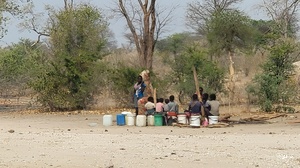
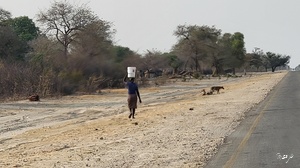
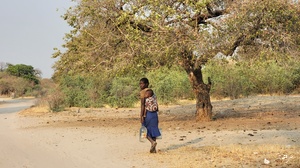
Also, we spotted very few water pumps along the road and it was already a luxury, while all the lodges and campsites had running water for the tourists…
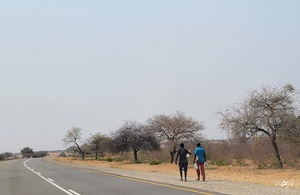
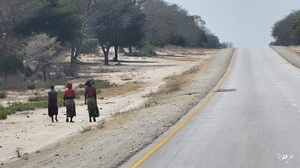
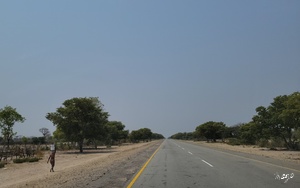
During our trips across the world, we had of course visited many countries, in particular in Asia or the Americas, where poverty was ubiquitous.
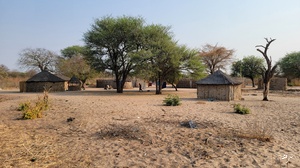
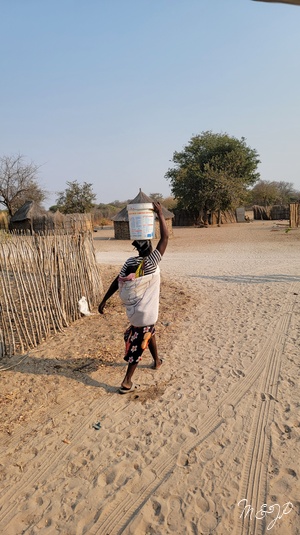
But I think that never before had we seen a place where the colour of your skin determined to such an extent whether you were rich or poor, whether you had access to basic necessities like water, whether you had the right to live a decent life…
Botswana’s history is a little bit less turbulent than Namibia’s, but is still tragic as the country was also subject to invasions and colonialism. Bechuanaland was a British protectorate for 80 years, but with the particularity that the local tribes asked the British to take over their country in order to avoid the Boer and German invasions. It became an independent country under the name of the Republic of Botswana on 30 September 1966, much earlier than Namibia.
Even though the transition from British rule into independence was a more peaceful one, it was triggered by the marriage of the born into a local influential royal family Sir Seretse Goitsebeng Maphiri Khama to a white Englishwoman. This decision was opposed by the white-minority government of South Africa and led to a controversy, resulting in the British government making him stay in England in exile so as not to sour the U.K.-South African relations. After the end of his exile, Khama led his country's independence movement and served as the first President of Botswana.
Other than their interrelated history, South Africa, Namibia and Botswana have in common their ancestors. The first modern humans to inhabit all three countries were the San people. Africa is sometimes nicknamed the "Mother Continent" as it is the oldest inhabited continent on Earth, and the San people (also called Bushmen) are the original inhabitants of Southern Africa. Their presence stretches back as much as 20,000 years! These hunter-gatherers had been travelling across the vast plains of Southern Africa for thousands of years until armed migrants looking for new land to graze their animals and plant their food had driven them further and further east into the Kalahari Desert.
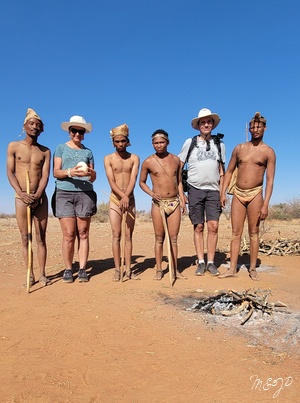
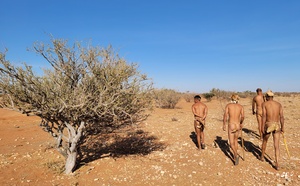
Opportunities to interact with the descendants of the San people exist In both Botswana and Namibia. We went for a bushwalk in the Kalahari Desert, which was very interesting and informative.
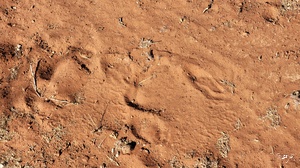
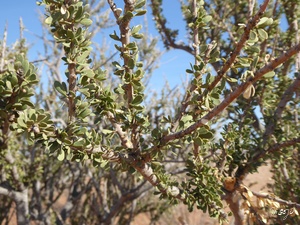
Our San guides showed us how to read animal tracks, and taught us a lot about both the medicinal benefits and the poison effects of some endemic plants. It was incredible how this tribe’s knowledge of various plants had evolved through generations, experimentations, and their survival needs. How to protect your skin from the strong desert sun? How to heal your belly ache? How to get meat for supper?
We got a demonstration as to how to light a fire in the desert despite the strong winds, which our San guides called "Bush TV"! We were also shown "the San shop in the desert" - a tree the branches of which were covered with jewelry, handmade from ostrich eggshells by our guides’ wives, sisters and daughters. We bought a few beautiful pieces, which was our contribution to the San community.
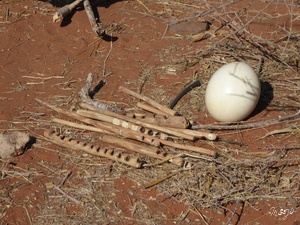
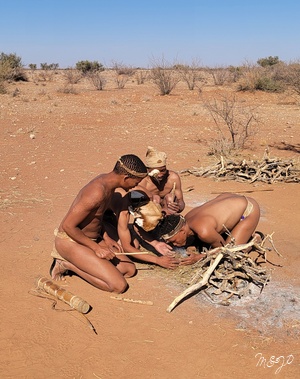
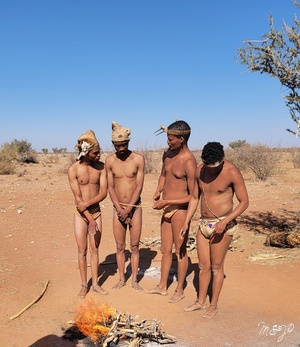
The most interesting part of the walk was listening to their language, known for the characteristic "clicks" that can be heard in their pronunciation, and are represented in writing by symbols such as ! or /. Later on, we learnt that Damara, Nama and even Zulu and Xhosa people also speak click languages! We tried to repeat a couple of words, but found it incredibly difficult!
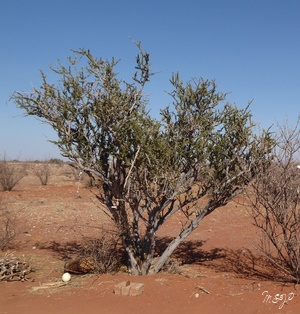
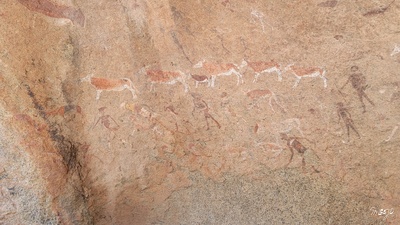
In addition to speaking a unique language, the San people are famous for their spectacular rock art. Both Namibia and Botswana have some of the largest concentrations of rock art in Africa. Whether you decide to visit the Tsodilo HIlls in Botswana - a Unesco World Heritage Site with more than 4,000 paintings, which is sometimes referred to as the "Louvre of the Desert", or Twyfelfontein, Spitzkoppe or the Brandberg in Namibia, you will not be disappointed! We chose the last two locations and what we saw reminded us a little bit of the aboriginal rock art we had seen in Australia, as well as in some caves in the south of France.
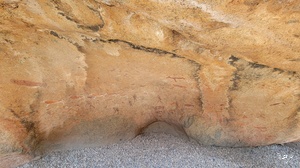
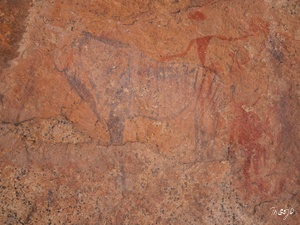
Spitzkoppe is famous for its ancient Bushmen paintings, which are the icing on the cake on top of the stunning landscapes of the area. We stopped to admire some of them at Small Bushman’s Paradise. The rock paintings were rendered in ochre-hued natural pigments which had survived for thousands of years, and told stories about the relationship between the San tribes and the natural world around them. They also provided an insight into the cultural and spiritual practices of the indigenous people who had lived in the region centuries ago. It was like the history book of the San people, but engraved in the rocks!
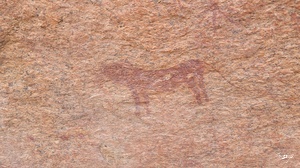
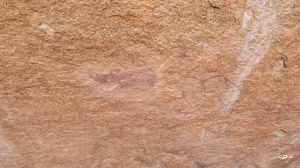
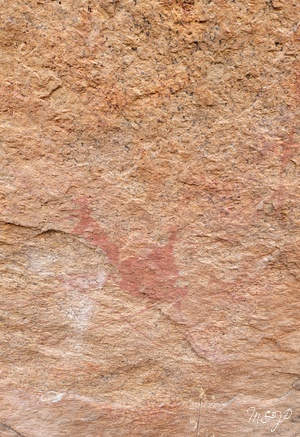
Further north, the Brandberg is another fascinating outdoor gallery in the middle of the gorgeous pink granite mountains.
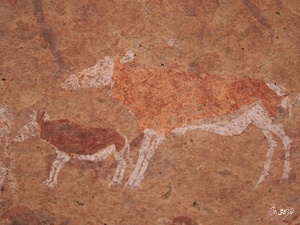
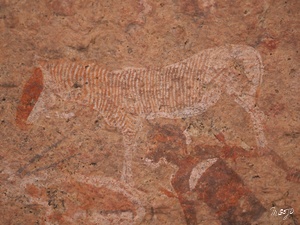
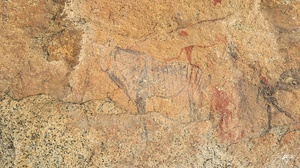
Most people visit the place only to see the famous White Lady. The figure, part of a large painting depicting hunters and various animals, is at least 2,000 years old and still open to interpretation.
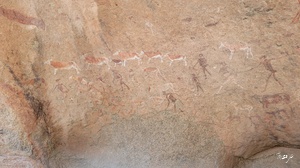
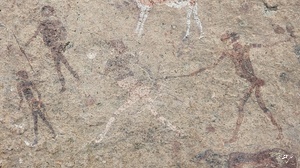
Contrary to what the name might imply, it is not necessarily a lady, nor a white one, but might be a shaman painted in white as part of a ceremony to protect his tribe. He is holding an ostrich egg in one hand and a bow and arrows in the other hand.
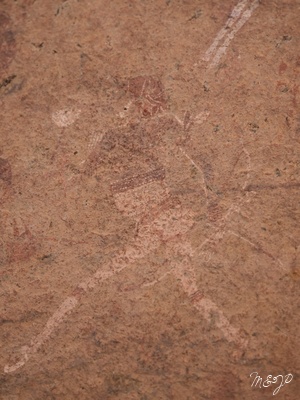
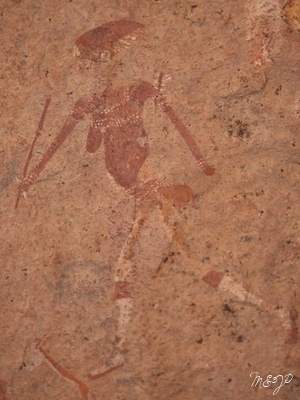
The area hides other rock paintings, which are at least as beautiful, full of mystery and symbolism, but are less accessible as they are located further away than the White Lady. Our amazing guide showed us another wonder - the White Giraffe, standing under a shower of rain and surrounded by people who seemed to be praying and calling the sacred animal for rain! We wanted to visit more sites but had unfortunately left too late in the morning to drive there, the heat was becoming unbearable, and we had to head back to our car.
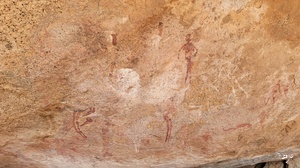
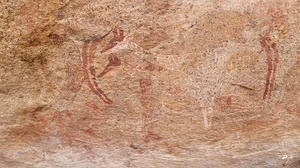
We enjoyed the 3-hour hike and the rock paintings, but also the fascinating conversation with our guide. He was only 19 years old, born 15 years after Namibia’s independence in 1990, but he was so wise and his English was perfect. When we asked him how Namibians felt towards Germans and Boers, he answered that the only person he hated was Hitler. He also told us that when people were rude to him (for example some South Africans who insisted that he speaks Afrikaans with them instead of English), he did not take it personally as it was not really their fault - they only did it because they felt vulnerable and unhappy. After my trip to India, this philosophy clearly rang a bell!
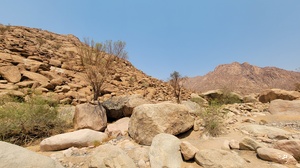
We also learnt that our guide’s mother lived in Swakopmund where he was raised, but his father was in Damaraland and he had walked for days to come and live with him. In addition to being a guide, he was taking care of his father’s goats. This appeared to be quite normal in this region of Namibia as we saw many kids running after the goats, helping with the herding after school.
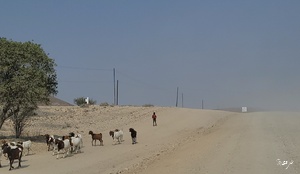
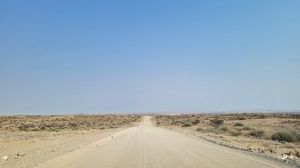
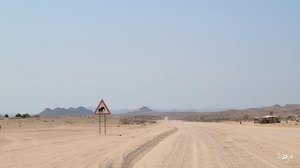
From the book about the Himba people and our discussions with some locals, we learnt that goat meat was only for celebrations and the everyday meal was usually a basic porridge made from maize and known by its Afrikaans name "mealie pap"!

Our guide also told us a funny story about looking after his younger brothers and sisters - if he was looking after one of them, it was fine, but two at the same time was difficult as they were necessarily going to argue with one another. We also learnt that his family was Damara but his older sister and brother had each married a Herero, and so he joked that now he had to find a Herero wife as well in order not to be put aside at family reunions!
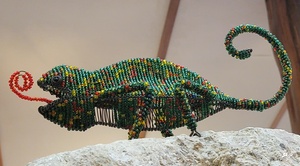
Another form of art that we saw almost everywhere along the road was the beadwork. It is traditionally the domain of the Bushmen and Himba peoples. The Bushmen make beads from ostrich-egg shells, porcupine quills, seeds, nuts, branches and commercially produced glass beads, while the Himba people use iron beads and shells. You can bring back home some impressive artifacts made from tons of colourful beads!
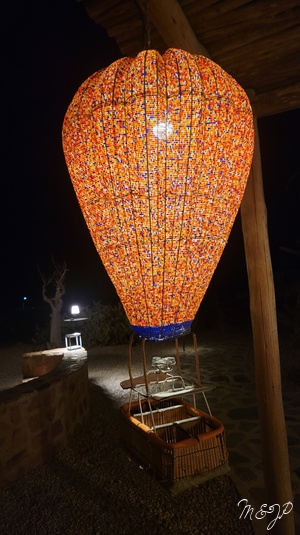
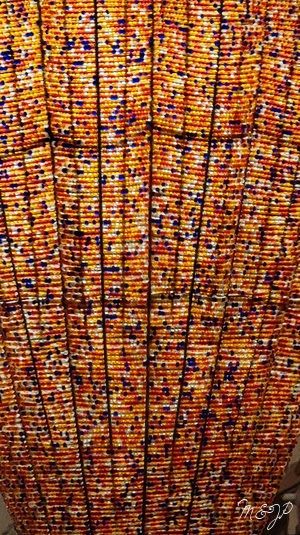
If in addition to being a culture-vulture, you are an architecture fan, Southern Africa has some architecture gems up its sleeve thanks to its colonial past…

You like what you read?
Explore and learn more about Namibia, Botswana, South Africa, Zambia, Zimbabwe !!!
-
 The Valley of Roses and Kings (part 2) The Valley of Kings
The Valley of Roses is famous not only for its … -
 The Valley of Roses and Kings (part 1) The Valley of Roses
Out of all the flowers in the world the rose … -
 In the heart of the Silk Road (part 4) Khiva and the Desert Castles
Khiva - It took us 6 hours, almost a whole … -
 In the heart of the Silk Road (part 3) Bukhara
Bukhara - While Tashkent is a modern city with some … -
 In the heart of the Silk Road (part 2) Samarkand
Samarkand - No name is so evocative of the Silk … -
 In the heart of the Silk Road (part 1) Tashkent
The Great Wall of China, Machu Picchu, the Pyramids of … -
 The Land of Giants at the End of the World (part 2)
We crossed for the third time the border between Argentina … -
 The Land of Giants at the End of the World (part 1)
No visitors come back from Antarctica in the same state … -
 A Vitamin Sea Christmas in the Mediterranean
Human beings are full of contradictions! When we used to … -
 Spring Colours in the Kingdom of the West (part 6) Morocco is yellow
Morocco is yellow - Besides the yellow hues of the … -
 Spring Colours in the Kingdom of the West (part 5) Morocco is red
Morocco is red - Besides the red hues of the … -
 Spring Colours in the Kingdom of the West (part 4) Morocco is orange
Morocco is orange - Our first encounter with the legendary … -
 Spring Colours in the Kingdom of the West (part 3) Morocco is green
Morocco is green - The Rif Mountains east of Tangier, … -
 Spring Colours in the Kingdom of the West (part 2) Morocco is blue
Morocco is blue - The road along the Atlantic Coast … -
 Spring Colours in the Kingdom of the West (part 1) Morocco is white
If I had to use only a couple of words …
