

European Snow Trip to the Arctic (part 1)
Our first snow in ages
Posted by: Maria in December 2024 (1 year, 9 months ago)
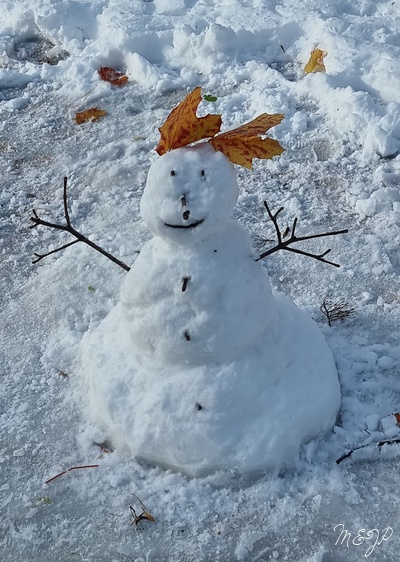
There are people who do not like the cold and I used to be one of them until Covid happened… We were “stuck” for more than a year on the tiny island of Singapore with a territory of around 715 square kilometres (a little bit smaller than New York City), with no seasons, high humidity and an average temperature of 30°C. We did not have the possibility to travel anywhere. Not even to the neighbouring islands of Batam or Bintan - part of Indonesia - displaying the same range of temperatures, let alone to any part of the world where people had ever heard of winter, snow or cold temperatures, other than those displayed on the air-conditioning thermostat. This was the moment we realised that life was short and it was important to live in the present, carpe diem and simply feel alive!
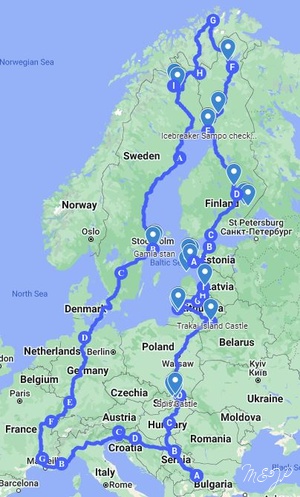
So the first thing we did when we were able to travel again was go looking for snow. Since we never do things halfway, we decided to drive to the coldest part of Europe - the Arctic - during the chilliest months of winter, for what we called our European Snow Trip!
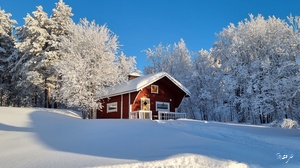
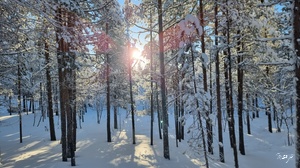
It took us driving more than 20,000 kilometres and crossing almost 20 countries to realise that temperatures of minus 30°C were not good either and move back to Singapore! But this was, and still remains, one of our most epic road trips ever…
The Arctic is the northernmost region of Earth. Along with the Arctic Ocean and the adjacent seas, it consists of parts of a few countries located north of the Arctic Circle - Norway, Sweden, Finland, Russia, the U.S. state of Alaska, Canada, the island of Greenland (an autonomous territory of the Kingdom of Denmark close to the North American continent), and a small offshore island of Iceland. The position of this line of latitude running about 66°33′48″ north of the Equator is not fixed as it depends on the Earth's axial tilt, which fluctuates due to tidal forces resulting from the orbit of the Moon. The circle is the approximate southernmost limit where the sun can stay continuously below or above the horizon for 24 hours, resulting in the phenomena known as the Midnight Sun in summer and the Polar Night in winter. This is also the line beyond which your chances of seeing the famous magical northern lights (or aurora borealis) increase considerably. Think of the Arctic Circle as the northern equivalent of the southern Antarctic Circle boasting the southern lights (or aurora australis)!
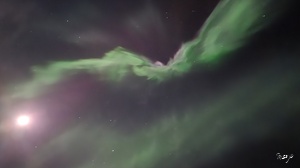
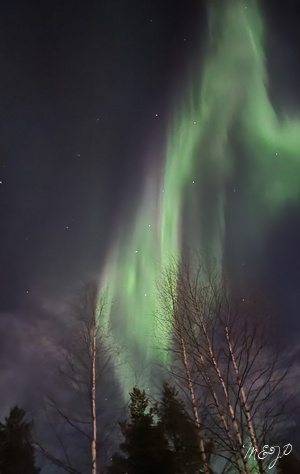
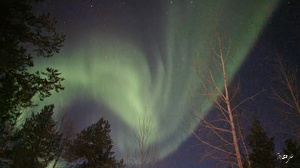
The word “Arctic” comes from Greek and means “bear” or “near the Bear, northern”, referring to the constellations of the “Great Bear” in the northern portion of the celestial sphere and the “Little Bear” containing the celestial north pole. On the other hand, the word “Antarctica”, also coming from Greek, means “opposite the Bear(s)”, “opposite to the north” or, put simply, “opposite to the Arctic”. Contrary to Antarctica which has its own continent, the Arctic is almost entirely covered with water, much of it frozen and forming the famous sea ice.
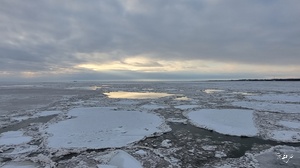
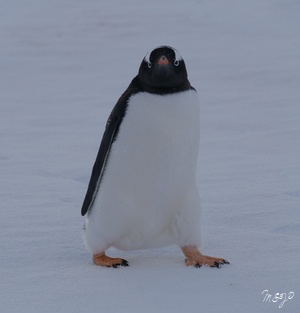
In other words, Antarctica is mostly land surrounded by water, while the Arctic is mostly an ocean surrounded by land. Also, the Arctic is much warmer than Antarctica due to the solar radiation that the Arctic Ocean absorbs. While both Antarctica and the Arctic have whales, dolphins, seals, sea lions and many birds, each of them is a unique area among Earth's ecosystems. You can see walruses, mooses (aka elks in Eurasia), caribou (aka reindeers in Eurasia) and polar bears in the Arctic but not in Antarctica, while the penguins have chosen the southern hemisphere, and mostly Antarctica, as their home and are not to be seen anywhere in the Arctic!
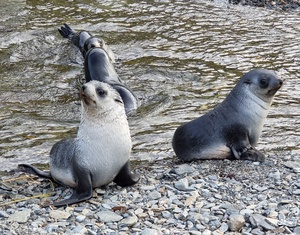
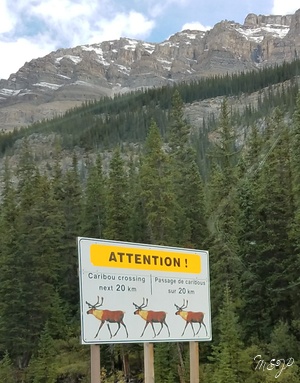
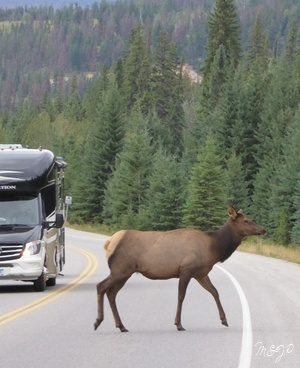
The penguins are also the main permanent “inhabitants” of Antarctica where, out of all camps, bases and settlements existing since 1899, only two are civilian settlements. On the other hand, several indigenous peoples, such as the Inuit in Canada and Greenland and the Sami in Scandinavia and northwestern Russia, have adapted to the cold and extreme conditions of the Arctic and been living in the region for thousands of years.
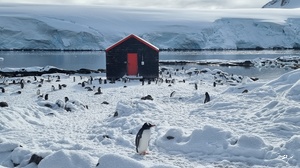
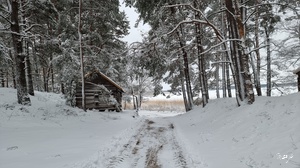
Our goal was to reach the northernmost parts of the European Arctic which can be accessed by car and to discover some of its fauna, flora, people and cultures, but most of all - the snow and the northern lights! We decided that flying from Singapore directly to the Arctic - from plus 30°C to minus 30°C - would involve too much of a temperature amplitude and our bodies needed to acclimatise beforehand. Driving to Scandinavia from a relatively warm part of Europe - the south of France, crossing Northern Italy, Eastern and Central Europe where snow is a common sight in winter, and then slowly moving north through the Baltic countries came up as the obvious choice!
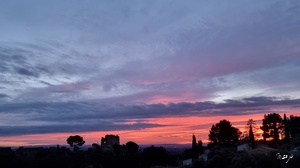
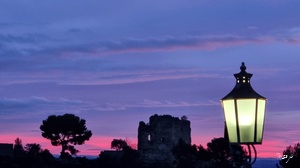
At the beginning of our trip, Provence in the south of FRANCE waved a stunning goodbye with its winter sky bursting into sunset flames.
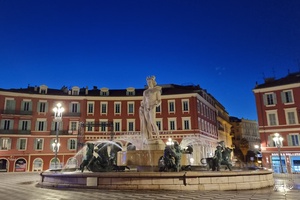
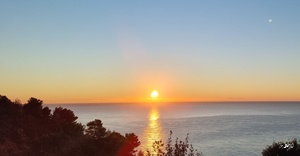
The city of Nice on the French Riviera and MONACO sent us a “have a nice trip” message with some sparkling night lights and a gorgeous sunrise!
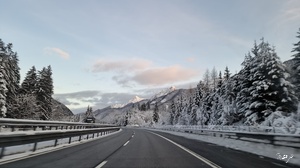
And then, after several years living in the tropics, we saw our first snow covering the majestic Dolomite mountains (aka the Dolomitic Alps) in Northern ITALY!
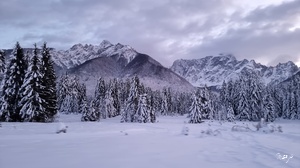
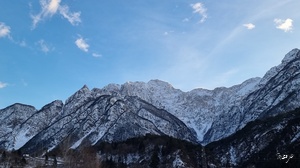
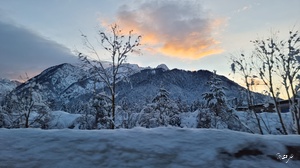
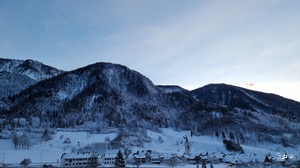
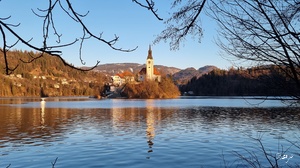
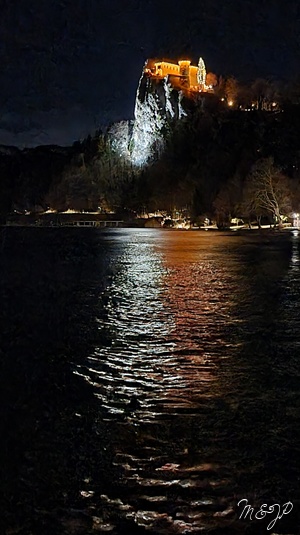
We decided to stop overnight at another beautiful mountain range - the Julian Alps in SLOVENIA - and visit the picturesque Lake Bled.
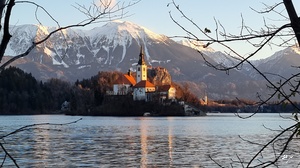
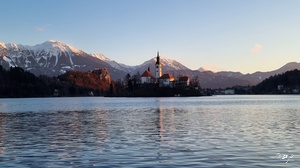
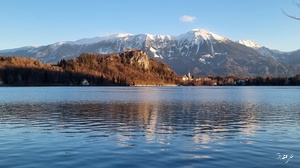
The views of the small island in the middle of the lake with its cute church, the Bled Castle perched on a huge steep rock and the surrounding forests and snow-capped mountains were gorgeous at any time of the day!
Driving further east, we reached CROATIA’s capital - Zagreb!
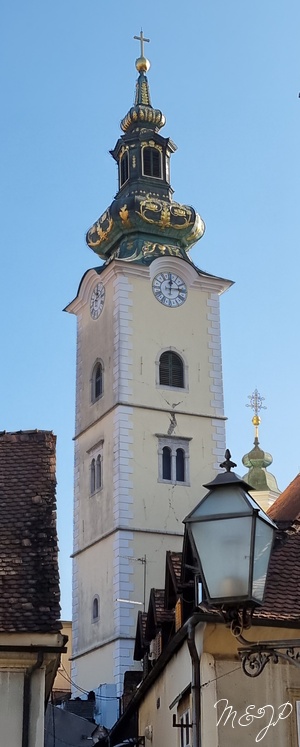
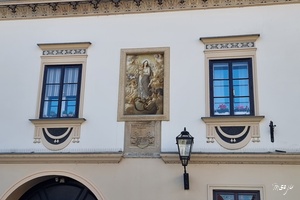
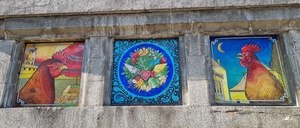
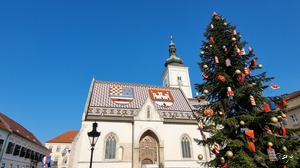
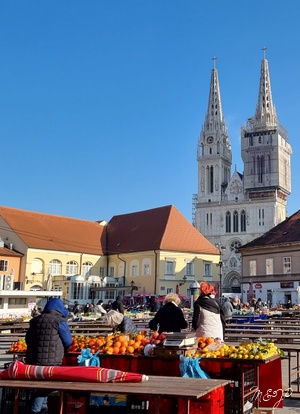
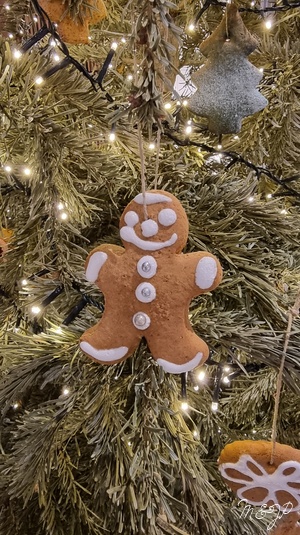
There was no snow but the winter sun was the perfect setting to admire the beautiful architecture, from the twin-spired Gothic Zagreb Cathedral to the 13th-century St. Mark’s Church with a colourfully tiled roof, including a representation of the coat of arms of the city - a white castle on a red background. The fruits and veggies market in the centre was busy even in early January and the magical Christmas decorations were still standing.
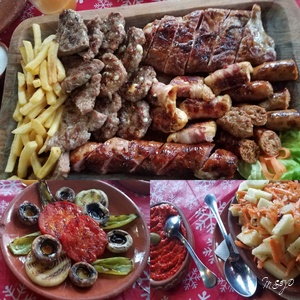
The snow reappeared when we drove through SERBIA where we stopped for the usual barbecue meal - simply delicious!
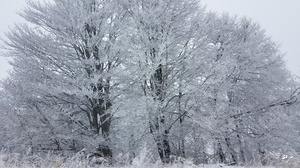
BULGARIA, which was our southeasternmost stop, welcomed us with its dazzling mountains and the fluffiest snow ever!
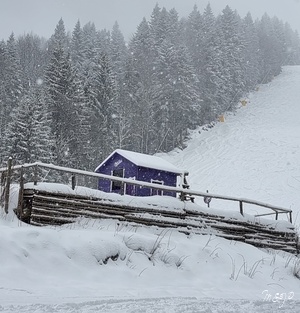
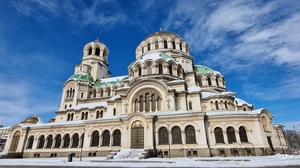
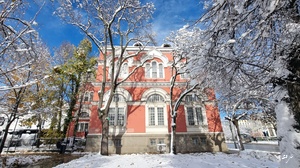
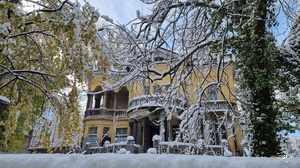
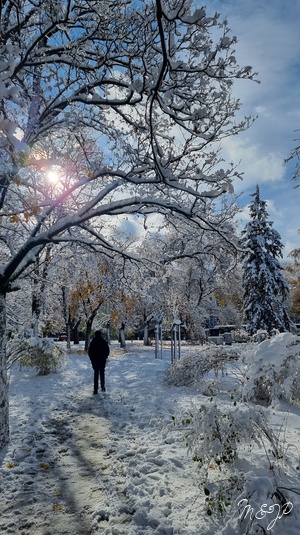
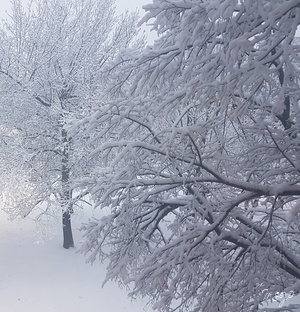
There was something so pure, quiet and beautiful in the snowy parks of its capital Sofia.
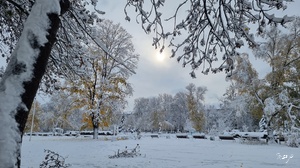
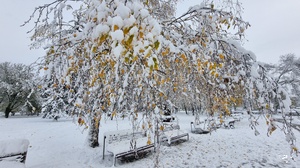
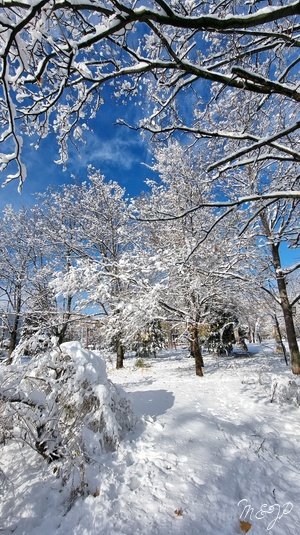
Nature looked asleep…
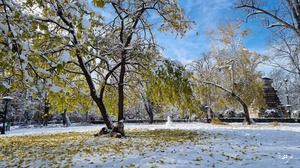
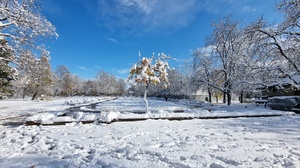
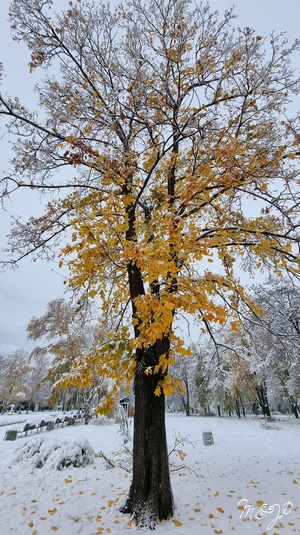
We almost felt like we were disturbing it and, startled by the crunching sound of our shoes on the fresh snow, instinctively tried to soften our footsteps…
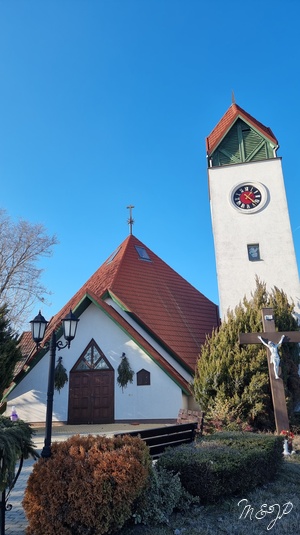
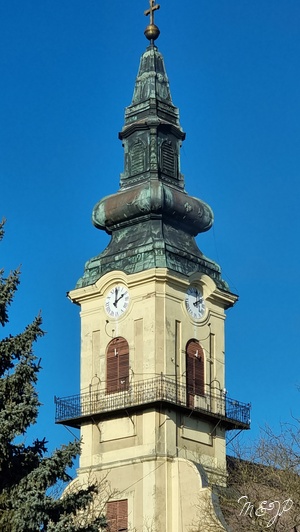
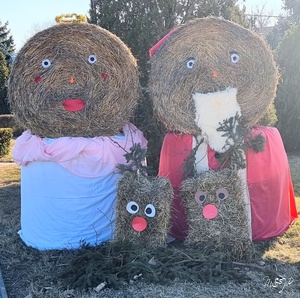
And then we were off north! HUNGARY did not have any snow on offer but lots of nice churches, cute human-size dolls made from haystacks and some delicious comfort food.
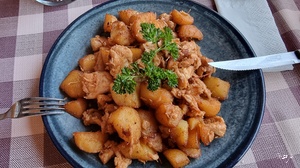
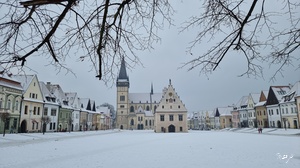
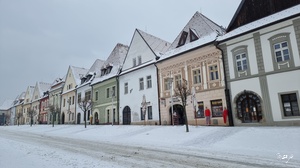
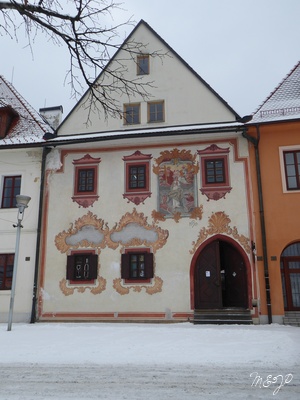
Finally, the snow popped up again on the Carpathian Mountains in SLOVAKIA! This tiny country in Central Europe, the name of which means “Land of the Slavs”, has so much to offer, even in winter! We chose the little town of Bardejov in North-Eastern Slovakia as our home for a few days. It is a UNESCO World Heritage Site and will enchant you with its completely intact mediaeval centre.
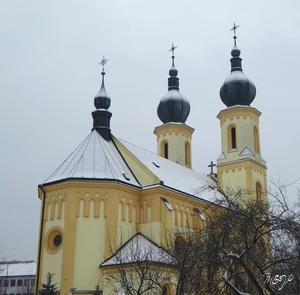
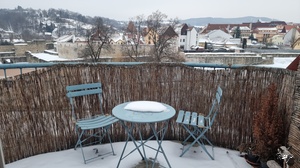
The main square with its rows of cute houses in pastel colours sticking out against the whiteness of the snow was a beauty!
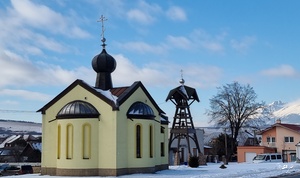
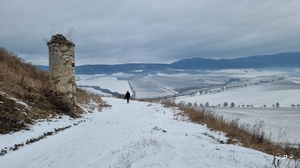
Bardejov’s surroundings did not disappoint either.
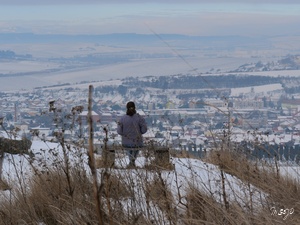
The 12th-century mediaeval Spis Castle - one of Europe’s largest castles and a UNESCO World Heritage Site - looked like it had come straight out of a fairy tale. It could be seen from far away, standing majestically on a high hill, a little bit like a mirage against the misty and snowy background.
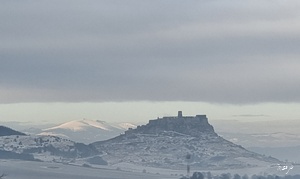
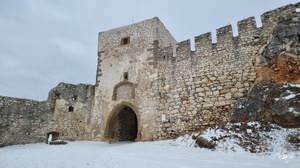
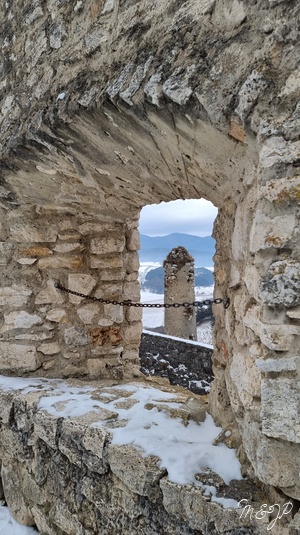
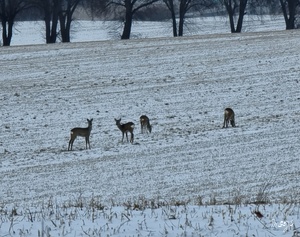
Even though we could not visit as it was closed during winter, the views from the top were breathtaking and became even more magical once we spotted a herd of wild deers in the surrounding meadows. And the best part was that we were the only visitors in this winter wonderland…
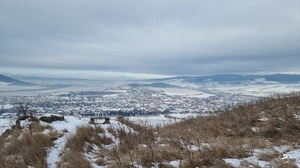
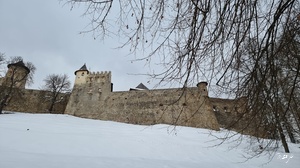
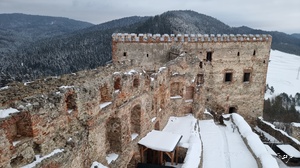
Less than an hour-drive away from Spis Castle, we visited Stara Lubovna Castle. Built at the turn of the 13th-14th century, it looked more intimate, cosy and romantic, which is not surprising with such a name coming from the Slavic root meaning “lovely”. If the words were to be translated from the Bulgarian language, they would have meant “old love”! Still, when you finish reading the stories of hidden crown jewels and prisoners, the castle and its imposing tower would probably trigger some macabre thrills… The last private owner Ján Kanty Zamoyski lived in the castle until 1944 with his wife - the Spanish infanta Isabella de Bourbon, which explains why the place is relatively well-preserved as compared to Spis Castle.
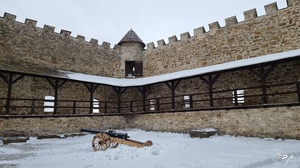
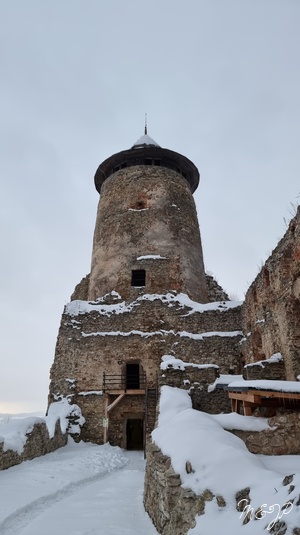
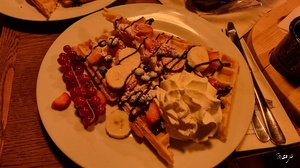
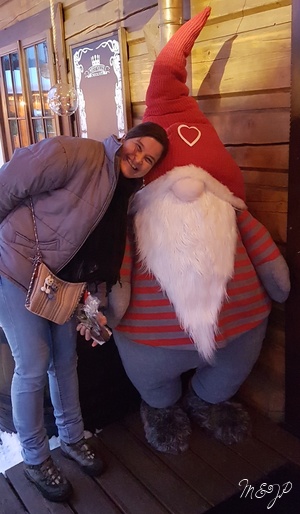
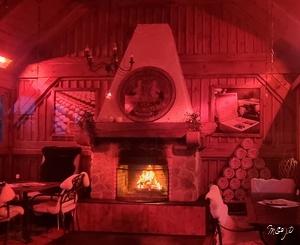
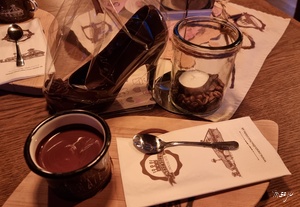
It was freezing but, after all, this is what we came looking for! We appreciated the cold even more when we stopped at a chocolate factory near the castle, offering mouth-watering waffles with various toppings, thick hot chocolate and the warmth of a few fireplaces. We did not have the courage to fight against so much temptation and it was worth it! The cute giant dwarf at the entrance of the factory made us smile and got a huge hug… Something else we could not resist was buying a few pieces of their chocolate artefacts - the chocolate shoes were fancy and delicious at the same time! Somehow snow, fireplace, waffle and chocolate sounded like the perfect combination and went a long way in our search for winter happiness!
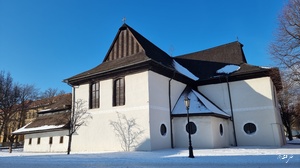
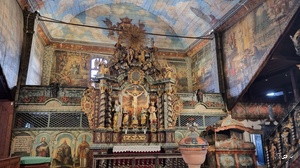
If, like us, you are a fan of traditional wooden churches, there are a few of them in the area. The hurdle is that they are not open all the time and you may need to call a local person, which sometimes involves a language barrier, but then this is part of the excitement of travelling and discovering “off the beaten track” places! We called the number written on the door of the wooden church of Kezmarok and tried English and French, but the local lady only spoke German and Slovak. As a last hope, I decided to practise my slightly rustic Russian and we agreed on a rendez-vous at 1pm, without any certitude that we had understood each other correctly! We decided to give it a try and waited in front of the church at what we thought was the agreed timing but there was no one… Luckily, we persevered and the lady showed up, together with a group of an Italian guy and two locals who kindly translated for us. The 17th-century church was a protestant one and its Renaissance and Baroque-styles interior was jaw-dropping…
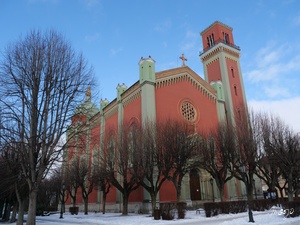
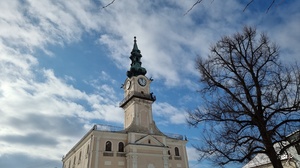
Next to it, the 19-century New Evangelical Church could be seen from far away with its bright red and green colours and a delightful combination of Byzantine, Romanesque, Renaissance and Oriental elements. The sounds of the carillon coming from the elegant city hall nearby were captivating as well...
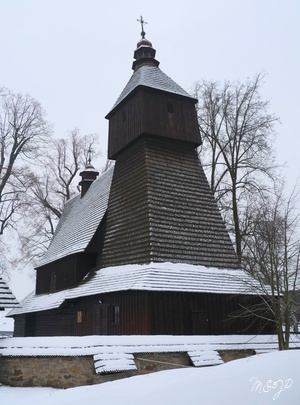
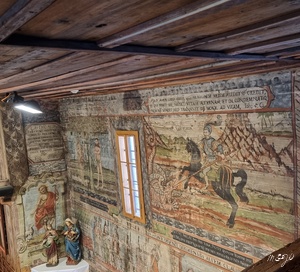
A little bit closer to Bardejov, in the quaint village of Hervatov, was hiding another wooden gem and UNESCO World Heritage Site - the 16th-century Roman Catholic Church of Saint Francis of Assisi. Its interior was richly decorated with stunning frescoes and many houses around the church were painted in gorgeous bright blue!
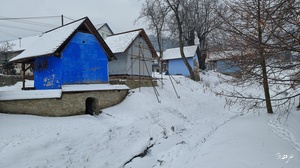
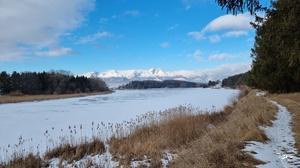
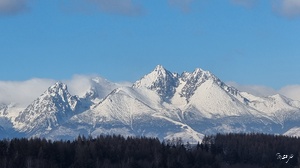
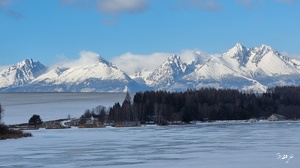
Amidst all these wonders, the stars of the area were the High Tatras - the tallest range within the Carpathian Mountains, forming a natural border between Slovakia and Poland! The views of the frozen lakes and the snow-capped peaks in the background were breathtaking! We saw so many birds and even spotted two baby foxes running around, it could not get better…
We headed further north and crossed POLAND. As with all the other countries we drove through, we wanted to stop at so many gorgeous places on the way but, not without an internal conflict, tried to keep our focus on the ultimate end - the snow, the Great North and the Arctic! Unfortunately, Poland will have to stay on our bucket list for a little bit longer…

You like what you read?
Explore and learn more about Slovakia, Bulgaria, Croatia, France, Hungary, Italy, Monaco, Poland, Serbia, Slovenia !!!
-
 The Valley of Roses and Kings (part 2) The Valley of Kings
The Valley of Roses is famous not only for its … -
 The Valley of Roses and Kings (part 1) The Valley of Roses
Out of all the flowers in the world the rose … -
 In the heart of the Silk Road (part 4) Khiva and the Desert Castles
Khiva - It took us 6 hours, almost a whole … -
 In the heart of the Silk Road (part 3) Bukhara
Bukhara - While Tashkent is a modern city with some … -
 In the heart of the Silk Road (part 2) Samarkand
Samarkand - No name is so evocative of the Silk … -
 In the heart of the Silk Road (part 1) Tashkent
The Great Wall of China, Machu Picchu, the Pyramids of … -
 The Land of Giants at the End of the World (part 2)
We crossed for the third time the border between Argentina … -
 The Land of Giants at the End of the World (part 1)
No visitors come back from Antarctica in the same state … -
 A Vitamin Sea Christmas in the Mediterranean
Human beings are full of contradictions! When we used to … -
 Spring Colours in the Kingdom of the West (part 6) Morocco is yellow
Morocco is yellow - Besides the yellow hues of the … -
 Spring Colours in the Kingdom of the West (part 5) Morocco is red
Morocco is red - Besides the red hues of the … -
 Spring Colours in the Kingdom of the West (part 4) Morocco is orange
Morocco is orange - Our first encounter with the legendary … -
 Spring Colours in the Kingdom of the West (part 3) Morocco is green
Morocco is green - The Rif Mountains east of Tangier, … -
 Spring Colours in the Kingdom of the West (part 2) Morocco is blue
Morocco is blue - The road along the Atlantic Coast … -
 Spring Colours in the Kingdom of the West (part 1) Morocco is white
If I had to use only a couple of words …
