
.svg)
A search for happiness above the clouds... (part 1)
Posted by: Maria in September 2016 (10 years ago)
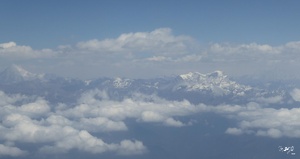
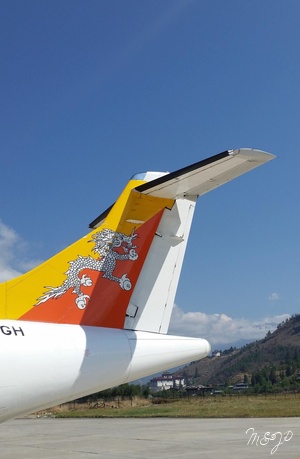
The first and the last view of the Dragon’s Kingdom commonly known as Bhutan for any visitor is the white magic of the Himalayas, mixed with the thrill of landing and taking off from one of the most dangerous airports in the world. But the magic and the thrill are far from stopping there.
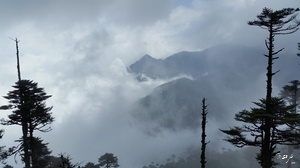
This is a journey in a wonderland, on another planet, in the mystery of humankind wisdom. This is a journey above the clouds. This is a search for happiness.
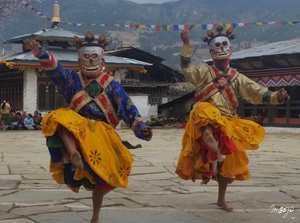
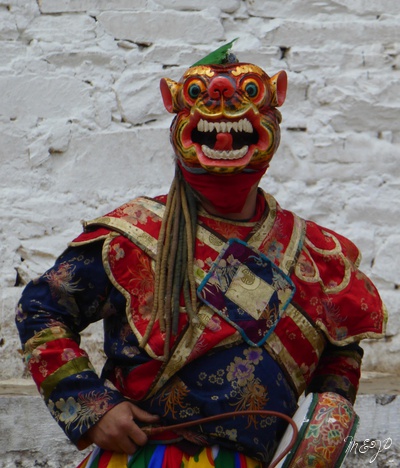
Bhutan will not look like any other country you have visited before. Probably because the country has never been colonised. Bhutanese culture, spirituality, mystery, religion and way of life are intact and uncontaminated by foreign influences. The only foreign traces were brought by a British guy who travelled across the country and planted potatoes everywhere he stopped and, a little bit more recently, a Swiss guy who married a local lady and started producing the local Red Panda barley beer. Also, Bhutan remained recluse until recently - television and internet only appeared in the country in 2000 and the first tourists were allowed in the 70s.
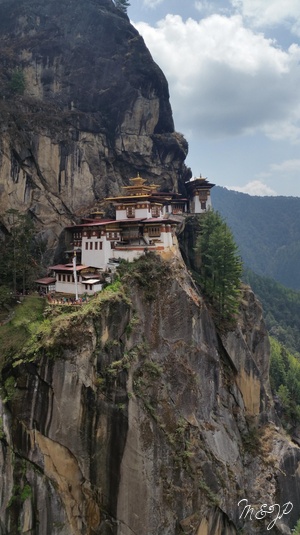
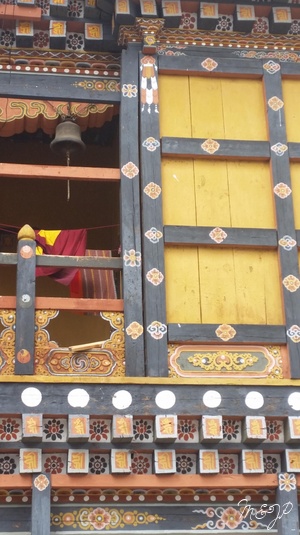
What made Bhutan internationally famous however is not its amazing culture but the Gross National Happiness (GNH) which replaced the Gross National Product. It has been implemented by the previous king who wanted to measure the state of the country not based on economic criteria and material richness but on his people’s satisfaction. He did not want to know whether Bhutanese were rich in their wallets but whether they were rich in their hearts, whether they were happy!
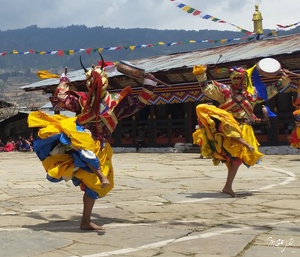
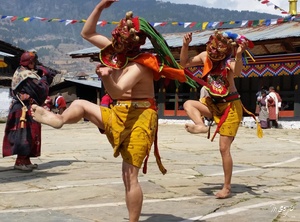
The search for happiness is so present that Bhutanese even organise competitions at local gatherings in order to choose the happiest family!
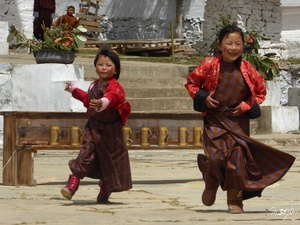
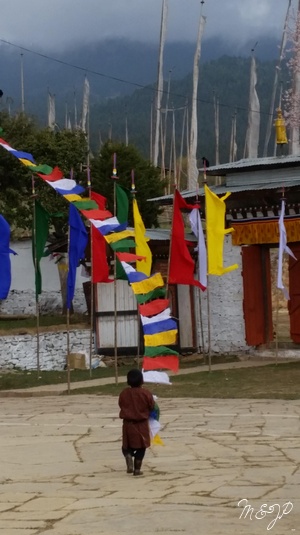
According to a Bhutanese member of the government: ‘Happiness itself is an individual pursuit. Gross National Happiness then becomes a responsibility of the state, to create an environment where citizens can pursue happiness. It’s not a guarantee of happiness by the government. It’s not a promise of happiness. But there is a responsibility to, you know, create the conditions for happiness. When we say ‘happiness,’ we have to be very clear that it’s not fun, pleasure, thrill, excitement, all the temporary fleeting senses. It is permanent contentment — with life, with what you have. That lies within the self. Because the bigger house, the faster car, the nicer clothes, they don’t give you that contentment. GNH means good governance. GNH means preservation of traditional culture. And it means sustainable socio-economic development.’
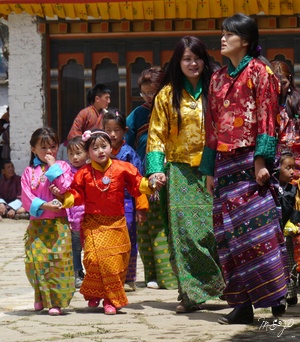
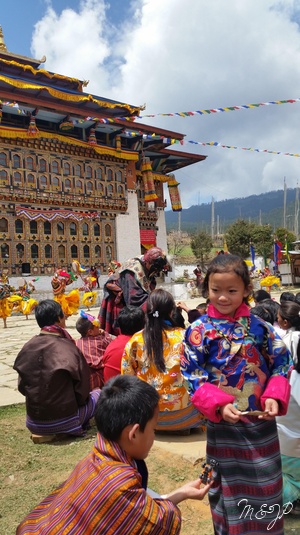
The easiest way to understand what GNH means is with the story of a farmer who one year reaped a huge harvest of a special variety of rice and the government wanted to make a hero of him to encourage other farmers to cultivate the same variety of rice. However, the next year the farmer refused to cultivate rice leaving the government completely baffled. His reason was simple – he said he had enough rice to see his family through the second year too and therefore he would rather live leisurely and spiritually. This is the story of a content man who has set his priorities in life and is happy with what he has. The notion of balance in life is the key to the philosophy of GNH.
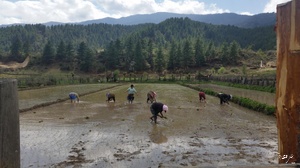
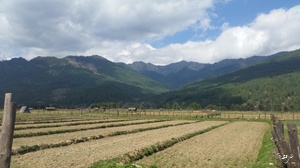
Another important aspect of the GNH vision, which coincides with the Buddhist philosophy Bhutanese are raised and live their everyday life with, is that there is no ‘I’ but ‘we’, not ‘mine’ but ‘ours’, not ‘me’ but ‘us’. They consider that the ‘I’ is the issue of all sins and try to forget the ‘self’ and think of the good of humankind. They do not even like taking pictures of themselves, or pictures in general. Bhutanese live for the others and not through the look and opinion of the others, they live in the present and not through their memories. They do not have surnames and even their first names are often chosen by the monks just in order to distinguish one child from another.
Their previous king abdicated a couple of years ago in favour of his son in order to enjoy his retirement cycling across the country... For his 60th birthday some Bhutanese wanted to organise celebrations but the king asked them to use their funds and efforts to help people in need instead! When you think of the celebrations for the 90th birthday of Elizabeth II, there is a kind of a huge gap of royal reality!
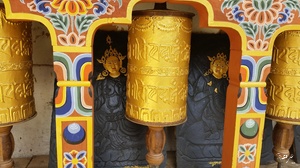
This can partly be explained by the fact that the king is not an unreachable person living in his palace far away from his people (which actually looks more like a big two-floor house than a palace) but one of his people. He is simply the first amongst equals as his coronation speech shows it: “Throughout my reign I will never rule you as a King. I will protect you as a parent, care for you as a brother and serve you as a son. I shall give you everything and keep nothing; I shall live such a life as a good human being that you may find it worthy to serve as an example for your children; I have no personal goals other than to fulfil your hopes and aspirations. I shall always serve you, day and night, in the spirit of kindness, justice and equality.”
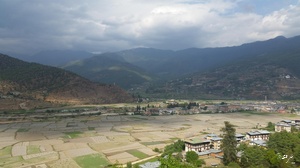
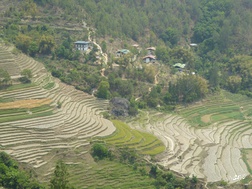
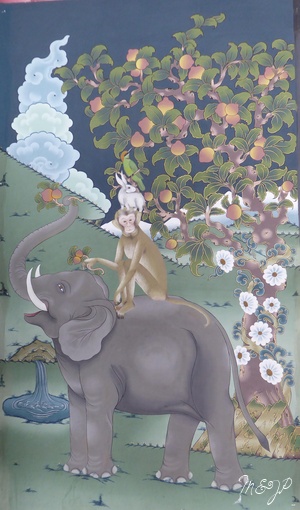
Helping each other, being part of a community is paramount for Bhutanese. While we were there, we read in a local newspaper that some elderly devotees were spending months praying at the Guru Rinpoche statue in eastern Bhutan and as they were camping in very basic conditions, the local farmers provided wood and organised baths for the devotees. Helping each other is reflected in one of the most commonly seen paintings in the temples known as ‘ the four harmonious friends ’ – an animal pyramid of an elephant, a monkey, a rabbit and a parrot reaching for the fruits of a very tall tree.
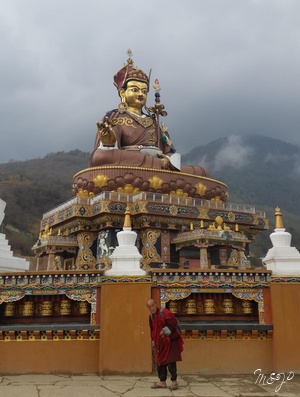
Bhutanese live in big multi-generation families which constitute the core of the community, which explains that they do not really need special days for gathering like Chinese for Lunar New Year or Christians for Christmas. They do not even celebrate their birthdays as they consider this day means that a person is one year closer to death and there is really not much to celebrate!
So, what is happiness?

You like what you read?
Explore and learn more about Bhutan !!!
-
 The Valley of Roses and Kings (part 2) The Valley of Kings
The Valley of Roses is famous not only for its … -
 The Valley of Roses and Kings (part 1) The Valley of Roses
Out of all the flowers in the world the rose … -
 In the heart of the Silk Road (part 4) Khiva and the Desert Castles
Khiva - It took us 6 hours, almost a whole … -
 In the heart of the Silk Road (part 3) Bukhara
Bukhara - While Tashkent is a modern city with some … -
 In the heart of the Silk Road (part 2) Samarkand
Samarkand - No name is so evocative of the Silk … -
 In the heart of the Silk Road (part 1) Tashkent
The Great Wall of China, Machu Picchu, the Pyramids of … -
 The Land of Giants at the End of the World (part 2)
We crossed for the third time the border between Argentina … -
 The Land of Giants at the End of the World (part 1)
No visitors come back from Antarctica in the same state … -
 A Vitamin Sea Christmas in the Mediterranean
Human beings are full of contradictions! When we used to … -
 Spring Colours in the Kingdom of the West (part 6) Morocco is yellow
Morocco is yellow - Besides the yellow hues of the … -
 Spring Colours in the Kingdom of the West (part 5) Morocco is red
Morocco is red - Besides the red hues of the … -
 Spring Colours in the Kingdom of the West (part 4) Morocco is orange
Morocco is orange - Our first encounter with the legendary … -
 Spring Colours in the Kingdom of the West (part 3) Morocco is green
Morocco is green - The Rif Mountains east of Tangier, … -
 Spring Colours in the Kingdom of the West (part 2) Morocco is blue
Morocco is blue - The road along the Atlantic Coast … -
 Spring Colours in the Kingdom of the West (part 1) Morocco is white
If I had to use only a couple of words …
